How Big Is 5 mm? Everyday Objects That Show the Size
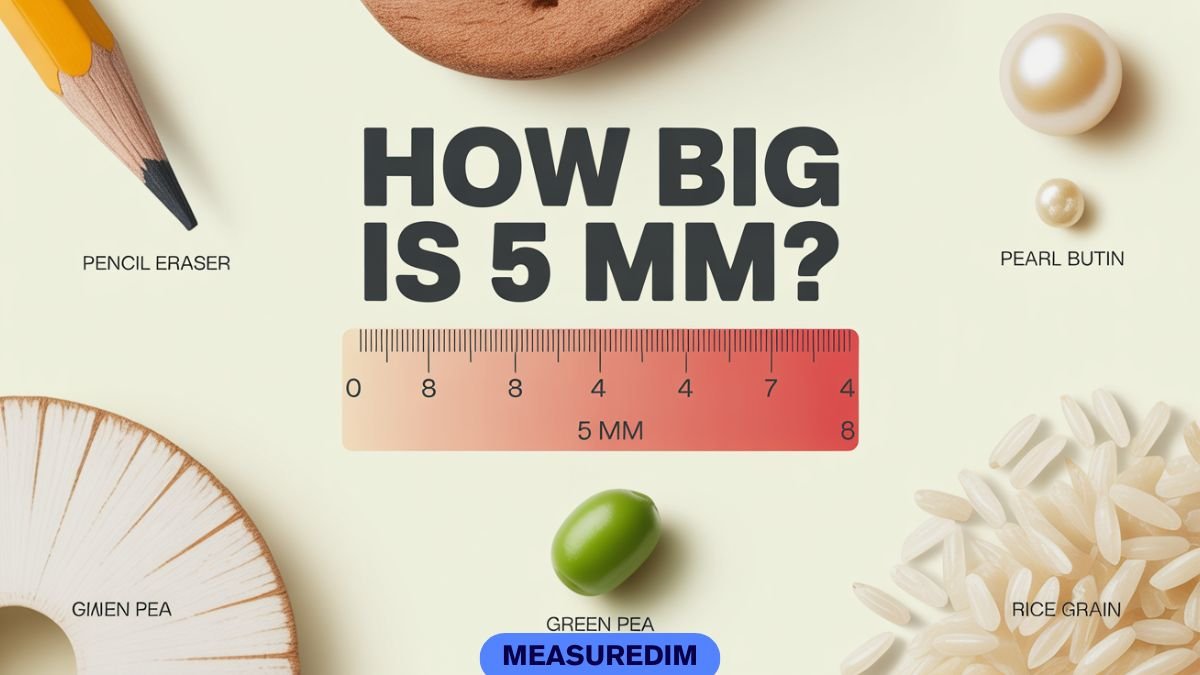
Five millimeters is a very small length. It equals half a centimeter, or 0.5 cm. In inches, that’s about 0.2 inch, just under a fifth of an inch. It sits between 3/16 inch and 1/4 inch on a ruler.
You’ve seen 5 mm more times than you think. A single black peppercorn is about this wide. So is the round stud on top of a LEGO brick. Once you spot it, you can’t unsee it.
This size shows up all over daily life. Think LED lights, craft beads, hex keys, and rain forecasts. A 5 mm LED and a 5 mm bead match it exactly. Keep one object in mind and you’ll picture 5 mm instantly.
The Short Answer, Before Anything Else
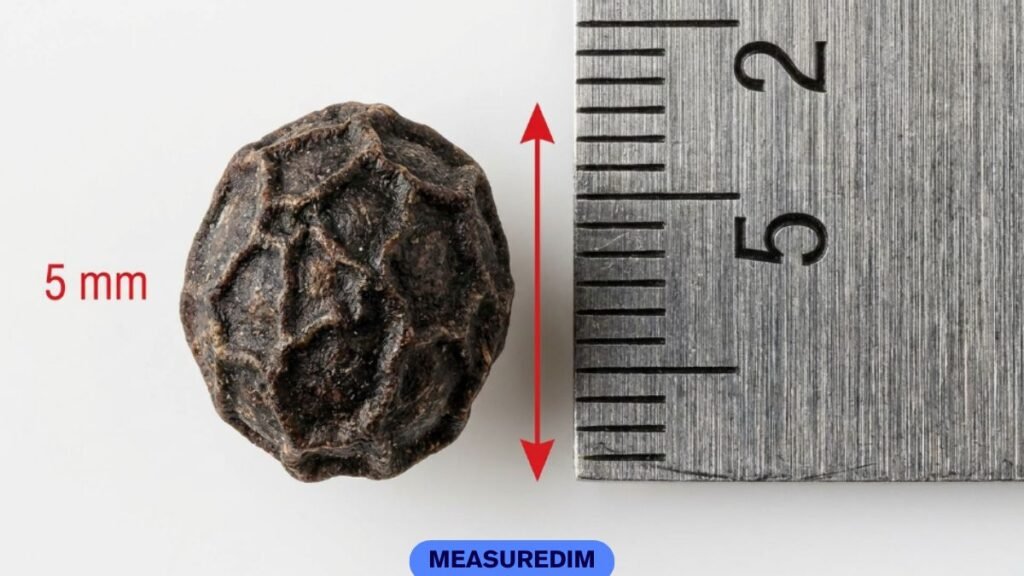
Five millimeters equals half a centimeter and just under a fifth of an inch (0.197 in). It’s a touch over 3/16 inch and noticeably smaller than 1/4 inch. If you want one object to anchor it forever: a whole black peppercorn is about 5 mm across, and a classic through-hole LED is 5 mm wide by definition.
5 mm in Every Unit You Might Need
Here’s the full conversion set, rounded sensibly. Every figure below refers to the same length, so nothing here will contradict itself.
| Unit | Value for 5 mm |
| Millimeters | 5 mm |
| Centimeters | 0.5 cm |
| Meters | 0.005 m |
| Inches (decimal) | 0.197 in (≈ 0.2 in) |
| Inches (fraction) | ≈ 13/64 in (just over 3/16 in) |
| Feet | 0.0164 ft |
| Yards | 0.00547 yd |
A quick sanity check on the imperial side: one inch is 25.4 mm, so 5 mm is roughly one-fifth of an inch. That also means 5 mm is smaller than a quarter-inch (which is 6.35 mm), a distinction that trips up a lot of people mid-project. [INTERNAL LINK: mm to inches conversion chart]
What 5 mm Actually Looks Like in Your Hand
Picture the head of a standard wooden matchstick, then a hair more. That’s the neighborhood. Five millimeters is the width of a small dried bean, the diameter of a decent bead, or the thickness of about 50 sheets of printer paper pressed together. It’s small enough to sit comfortably on a fingertip, but big enough that you’d never lose it in the carpet the way you would a grain of sand. Hold your hand flat and it covers roughly half of your pinky fingernail — more on that trick later.
Everyday Things That Measure About 5 mm
Below are nine reliable references, ordered from “spot on” to “close enough to trust.” Each entry states whether the match is exact or approximate, because honest labeling is the whole point.
A Through-Hole 5 mm LED
The most common indicator light in hobby electronics is the 5 mm LED, and the “5 mm” is literally its dome diameter — this is an exact match, not a rough one. Pull one out of a drawer of old gadgets and you’re holding a physical, purpose-built 5 mm ruler.
What makes it such a dependable reference is that the size is standardized across manufacturers worldwide; a 5 mm LED from any supplier measures the same across its rounded body. If you build circuits, model railways, or LED cubes, this is the object to keep on your bench when someone asks you to eyeball five millimeters.
The New iPad Pro’s Thickness
Apple’s M4 iPad Pro (13-inch) is 5.1 mm thick, the thinnest device the company has ever shipped — which makes it an almost perfect, and very memorable, stand-in for 5 mm. Turn one on its side and that slim edge is the length we’re talking about.
This one earns its place because so many people have handled a modern tablet and remember how startlingly thin it felt. The 11-inch version measures 5.3 mm, so the whole product line clusters right around our target. Next time you set a tablet down edge-on, you’re looking at roughly 5 mm of aluminum and glass.
Read Also: How Big Is 3 mm? Real-World Objects and Quick Conversions
A Whole Black Peppercorn
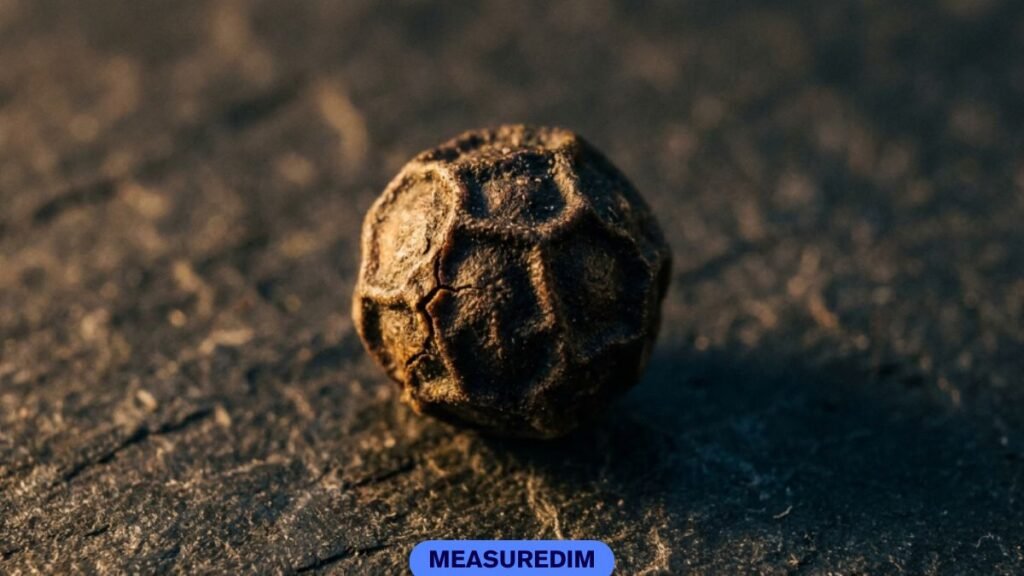
A single black peppercorn typically runs 4–5 mm across, landing right in the pocket. It’s an approximate match that skews perfectly, since the larger, rounder corns sit almost exactly at 5 mm.
Nearly every kitchen has these, which is what makes the peppercorn such a practical yardstick. Tip a few onto the counter and the plumpest one is your reference. I reach for this comparison constantly when describing small hardware — a 5 mm bead, a stone chip, a nodule — because everyone can instantly conjure a peppercorn.
The Stud on Top of a LEGO Brick
Each raised stud on a LEGO brick is 4.8 mm in diameter, a whisker under 5 mm and close enough to trust. If there’s a LEGO bin in your house, you have thousands of near-perfect 5 mm circles.
The reliability here comes from LEGO’s famously tight manufacturing tolerances — those studs are molded to a fraction of a millimeter so bricks click together identically every time. Press a fingertip onto one stud and you’re feeling roughly 5 mm of plastic. It’s a handy cue when you’re picturing bead sizes or the head of a small screw.
A Grain of Short-Grain (Sushi) Rice
A single grain of cooked short-grain rice measures about 5 mm long, making it a solid everyday approximate reference. Long-grain rice runs longer, around 6–7 mm, so stick with the short, plump sushi variety for this one.
Rice works because it’s cheap, universal, and small enough that a single grain forces you to focus on a genuinely tiny length. Line three grains end to end and you’re looking at roughly 15 mm, a useful trick for scaling up. I lean on this when explaining seed-bead sizes or the gap left by a small grout line.
A Whole Cumin Seed
A cumin seed is roughly 5 mm long (and only about 1 mm wide), so its length is a tidy match for our target. It’s an approximate reference that’s dead-on for the longer seeds in the jar.
Spice-drawer objects are underrated rulers because they’re consistent in size and always within reach. Shake a few cumin seeds onto a dark plate and their length gives you an honest feel for 5 mm without any measuring at all. Caraway and fennel seeds sit in the same range if cumin isn’t handy.
A Stack of 50 Sheets of Printer Paper
Standard 20 lb copy paper is about 0.1 mm per sheet, so 50 sheets stacked come to roughly 5 mm — an easy way to build the size out of something you have by the ream. A full 500-sheet ream is about 50 mm (2 inches) tall, and one-tenth of that is our length.
This reference shines when you need thickness rather than width. Thumb off a modest wad of paper — about a tenth of a fresh ream — and you’ve got a 5 mm slab. It’s the mental model I use for laminate, acrylic, or plywood thicknesses labeled “5 mm.”
Three US Quarters Stacked
A single US quarter is 1.75 mm thick, so three stacked come to 5.25 mm — a shade over 5 mm, and a great pocket-change reference. For a lower bracket, three pennies (1.52 mm each) stack to about 4.56 mm, just under.
Coins make a reliable ruler because their dimensions are minted to legal tolerances and never drift. Stack three quarters between two fingers and you’ve bracketed 5 mm almost perfectly — a fraction high with quarters, a fraction low with pennies. It’s an instant estimate when you’re standing at a store shelf with no measuring tool.
A Standard 5 mm Craft Bead
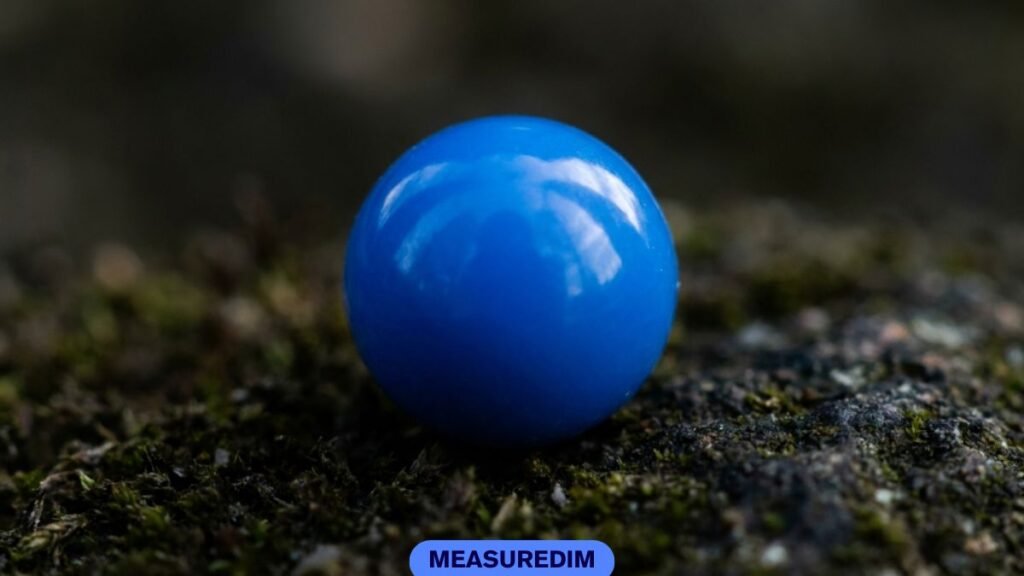
Beads are sold by millimeter size, and the 5 mm round bead is one of the most common in jewelry making — an exact match by specification. If you or anyone in the house beads, there’s a bag of physical 5 mm references in a drawer.
Because beads are calibrated to their labeled size, a 5 mm bead is as trustworthy as the LED. It’s also close in scale to a small freshwater pearl, which explains why “5 mm” is such a familiar figure on jewelry tags. Roll one between your fingers to lock the size into muscle memory.
The 5 mm Lineup at a Glance
| Object | Real measurement | Match to 5 mm |
| 5 mm LED | 5.0 mm diameter | Exact |
| 5 mm craft bead | 5.0 mm diameter | Exact |
| iPad Pro (M4, 13″) | 5.1 mm thick | ≈ exact |
| Black peppercorn | 4–5 mm across | Very close |
| LEGO stud | 4.8 mm diameter | Just under |
| Short-grain rice grain | ~5 mm long | Very close |
| Cumin seed | ~5 mm long | Very close |
| 50 sheets of copy paper | ~5 mm stack | Very close |
| Three stacked quarters | 5.25 mm | Slightly over |
Guessing 5 mm With Nothing but Your Hand
No ruler in sight? A few body-based tricks get you within a hair.
The most portable is your pinky fingernail. On most adult hands the nail is roughly 10–11 mm wide, so half its width lands right around 5 mm. Glance at your little finger and mentally split the nail — that’s your length.
The second method uses coins, which you almost always have. Three quarters stacked sit just over 5 mm; three pennies just under. Squeeze a small stack between finger and thumb and you’ve bracketed the size from both sides.
The third is the peppercorn or cumin-seed cue from your kitchen. It sounds unserious, but a single plump peppercorn is a genuinely accurate 5 mm object, and you’ll never be far from one. When precision matters, though, use an actual scale — these estimates get you close, not exact.
Read Also: How Big Is 2mm? A Down-to-Earth Guide to Picturing Two Millimeters
Where 5 mm Sits Between a Grain and a Pea
Understanding a size means knowing its neighbors. Below 5 mm you drop into seed-and-crumb territory: a sesame seed is about 3 mm, and a matchstick is roughly 2 mm across its width. Above it, things get noticeably chunkier — a green pea is around 7.5 mm, a standard pencil is about 7 mm wide, and a full centimeter (10 mm) is double our length.
On the imperial side, 5 mm threads a fine needle: it’s just over 3/16 inch (4.76 mm) and just under 1/4 inch (6.35 mm). That in-between spot is exactly why measurements get botched — people round 5 mm up to a quarter-inch and end up 1.35 mm too big.
Places 5 mm Quietly Shows Up
This measurement earns its keep across surprisingly different fields. In jewelry, 5 mm is a popular medium width for wedding bands and a common size for pearls and gemstones. In electronics, the 5 mm LED is a workshop staple. In the toolbox, you’ll meet 5 mm hex (Allen) keys, M5 screws and bolts, and 5 mm drill bits.
Step outside and the number keeps appearing. A weather forecast calling for 5 mm of rain means a moderate, steady shower — enough to soak the ground but not to flood it. In watersports, a 5 mm wetsuit is a cold-water thickness, the kind you’d wear in roughly 10–15 °C seas. In construction and DIY, 5 mm describes plywood, acrylic and glass sheets, tile spacers, and grout lines.
The figure also turns up in health contexts — a 5 mm nodule, polyp, or kidney stone is a size clinicians often note. That’s genuinely small, but interpretation belongs to a medical professional, not a comparison chart, so treat any such measurement as a prompt to ask your doctor rather than to self-assess.
The Mix-Ups That Trip People Up
The single most common error is confusing millimeters with centimeters — reading “5 mm” as if it were 5 cm, a tenfold blunder that turns a peppercorn into a golf ball. If a size sounds absurdly large or small for its context, check the unit first.
The second is assuming 5 mm equals half an inch. It doesn’t: half an inch is 12.7 mm, more than double our length. Five millimeters is about a fifth of an inch.
The third is rounding 5 mm up to 1/4 inch on a ruler. A quarter-inch is 6.35 mm, so you’ll overshoot by more than a millimeter — plenty to ruin a snug fit in woodworking or beading. When accuracy counts, read the metric side of the ruler directly rather than converting on the fly.
Myths vs Facts
Myth: “5 mm and 3/16 inch are the same thing.” Fact: They’re close but not identical — 3/16 inch is 4.76 mm, so 5 mm is slightly larger. For rough work they’re interchangeable; for precise fits they aren’t.
Myth: “5 mm of rain is a downpour.” Fact: It’s a moderate shower. Heavy rain in a forecast usually means 10 mm or more in an hour.
Myth: “A 5 mm bead and a 5 mm ring width look about the same on the body.” Fact: A 5 mm bead is a small sphere, while a 5 mm band is a medium, clearly visible width on the finger — same number, very different visual weight because of shape and context.
Quick-Fire Questions
How big is 5 mm visually?
It’s about the width of a black peppercorn or the round stud on a LEGO brick. Roughly half your pinky fingernail.
What is the actual size of 5 mm?
5 mm equals half a centimeter (0.5 cm) or about 0.2 inch. That’s just under a fifth of an inch.
What is something that is 5 mm?
A standard through-hole LED and a 5 mm craft bead are both exactly this size. A peppercorn is close too.
What size is equivalent to 5 mm?
It equals 0.5 cm, 0.005 m, or about 0.197 inch — a little over 3/16 inch and just under 1/4 inch.
What is 5 mm on a ruler?
On the metric side, it’s the fifth small line, sitting halfway between 0 and the 1 cm mark.
Locking 5 mm Into Memory
So now you know how big is 5 mm. It is half a centimeter. In inches, it is about 0.2 inch, just under a fifth of an inch. That makes it a little smaller than a quarter-inch. You can hold this size on your fingertip with ease. Real objects make it simple to picture. A black peppercorn is about 5 mm across. The stud on a LEGO brick is close too. A 5 mm LED light matches it exactly.
Keep one of these objects in your mind. Next time you read “5 mm,” you will see it right away. You will not need a ruler at all. Half a centimeter, a fifth of an inch, and just under a quarter-inch — that sums it up. Now you can measure this size with confidence.
Written by a measurements editor who checks every figure against real objects before it goes live.
Related Guides:
1: How Long Is 20 Inches? 10 Everyday Objects to Picture It
2: How Big Is an Inch? A Length You Can Picture Without a Ruler
3: How Much Is 10 Inches? A Real-World Size Guide
4: How Big Is 5 Inches? 9 Everyday Objects to Picture It
5: How Long Is 2 Inches? Real Objects That Show You Exactly