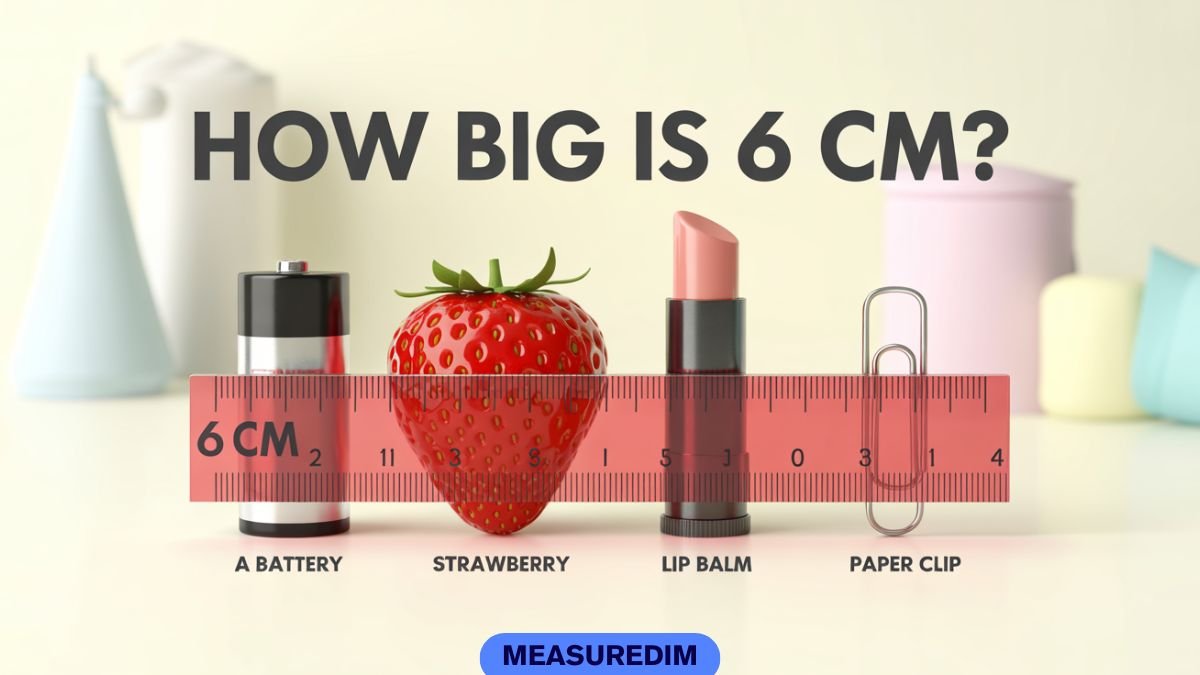
How Big Is 6 cm? Compare It to Real Everyday Objects
Six centimeters is a small length. It equals 60 millimeters. In inches, that is about 2.36. It is just under two and a half inches. Picture a large egg standing on its end. That is how big 6 cm is.
Ever been told something is 6 cm and drawn a blank? You are not alone. The number means little until you see it. So hold up three fingers together. That width is close to 6 cm. Now you can picture it fast.
You meet 6 cm more than you think. A Rubik’s Cube edge is near this size. A D battery stands about this tall. It shows up when you shop online or pack a bag. It is small but easy to spot. One object fixes it in your mind.
6 cm in One Line
Six centimeters is 60 mm, or about 2.36 inches — just shy of two and a half inches. Picture the long side of a large chicken egg, the edge of a classic Rubik’s Cube, or three adult fingers pressed together. It’s small enough to hide in a closed fist, but chunky enough that you’d never call it “tiny.”
Convert 6 cm to Inches, Millimeters, and Beyond
Before the object comparisons, here are the numbers you’ll actually need. Every value below describes the same length — 6 cm — just expressed in a different unit.
| Unit | 6 cm equals |
| Millimeters | 60 mm |
| Centimeters | 6 cm |
| Inches | 2.36 in (≈ 2⅜ in) |
| Feet | 0.197 ft |
| Meters | 0.06 m |
| Yards | 0.066 yd |
The two conversions worth memorizing are the simple ones: 6 cm is exactly 60 mm, and it lands almost perfectly on 2⅜ inches on an imperial tape measure. If someone quotes 6 cm and you only own a ruler marked in inches, aim a hair past the 2¼-inch line and you’re there.
What 6 Centimeters Actually Feels Like
Numbers on a screen don’t build intuition — physical anchors do. Six centimeters is a length you can wrap your hand around comfortably. Hold your thumb and index finger apart the width of a golf ball plus a little extra, and that gap is roughly 6 cm.
It’s the scale of small handheld things: a chunky bottle cap stack, the diameter of a snack can, the height of a travel-size toiletry. Not pocket-lint small, not deck-of-cards big. Once you tie it to one or two objects below, you’ll spot 6 cm across a room without reaching for a tape.
Everyday Objects That Are About 6 cm
Each item below is something most households already have. I’ve noted whether the match is essentially exact or just close, so you know how much to trust the comparison.
A Large Chicken Egg
Stand a large hen’s egg on its end and it measures roughly 5.7 to 6.2 cm from tip to base, with jumbo eggs sitting at the top of that range. A standard large egg lands almost dead-on 6 cm along its long axis — one of the most reliable everyday matches you’ll find. This is an approximate reference, since egg size shifts with the hen and the grading, but the variation is small.
The reason an egg works so well is that nearly everyone has a mental image of one and a carton in the fridge to check against. If a listing says a decorative stone or a bath bomb is “about 6 cm,” picturing a large egg’s length gives you an instant, trustworthy read — no measuring required.
The Edge of a Classic Rubik’s Cube
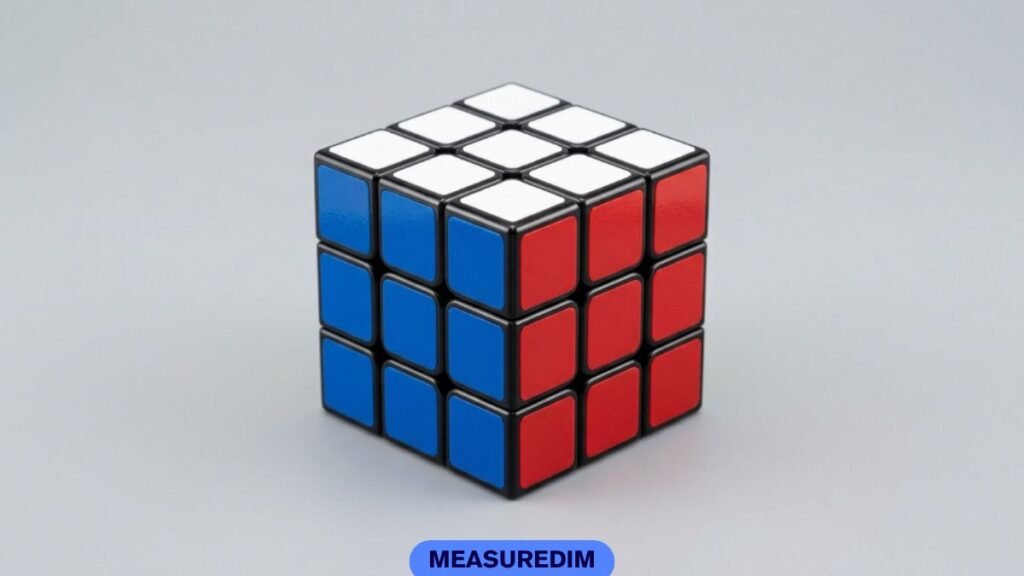
The original 3×3 Rubik’s Cube measures 5.7 cm along each edge — a whisker under 6 cm. Set the cube down and the width of one full face is your visual stand-in for six centimeters, give or take a couple of millimeters.
What makes the cube handy is its crisp, straight edges; unlike a rounded egg, you’re reading a clean flat line, which is easier to compare against a box or a shelf. Keep one on your desk and you’ve got a permanent, recognizable 6 cm ruler that never rolls away.
Read Also: How Big Is 11 Inches? 9 Everyday Objects That Show You the Size
A D-Cell Battery
Of everything on this list, a D battery is the closest match. Stand one upright and it reaches 6.15 cm — barely a millimeter and a half over the target. These are the fat cylindrical cells that power flashlights and older boomboxes.
Because the height is so precise, a D battery doubles as a genuine field measuring stick. Need to check whether a gap, a slot, or a phone stand is around 6 cm? Grab a D cell from the junk drawer, stand it in the space, and you’ll know immediately. That’s a level of accuracy most kitchen-object comparisons can’t offer.
An American Pool Ball
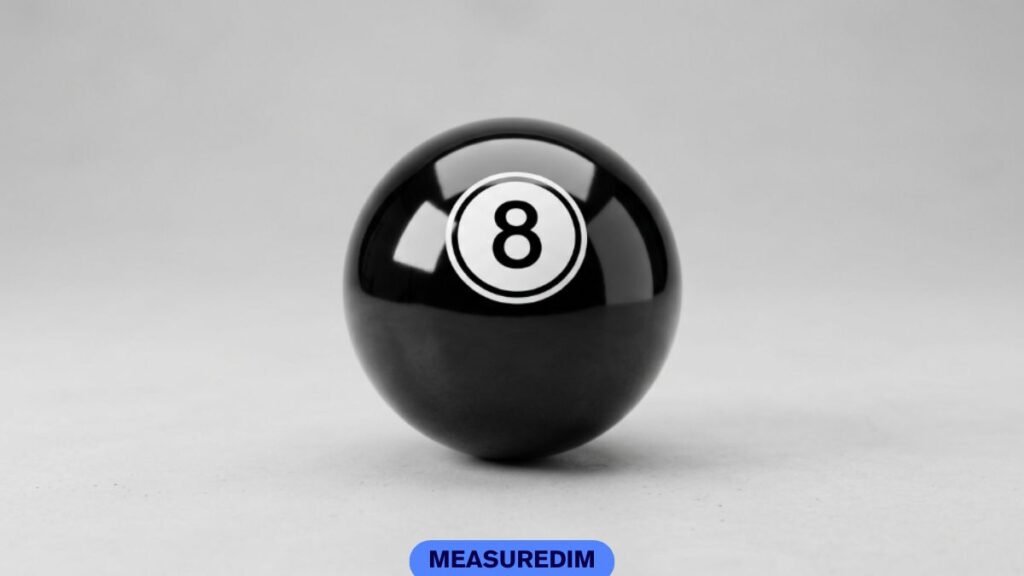
A regulation American-style pool ball is 5.7 cm in diameter — the same 2¼-inch spec used on bar tables and in league play. Rest one in your palm and its widest point spans just under 6 cm.
Spheres are the trickiest shape to eyeball, so this reference earns its place by being a diameter you can feel, not just see. If you’re judging the size of a round object — a large marble, an ornament, a ball of dough — imagining a pool ball’s girth translates far better than trying to picture a flat 6 cm line curved around.
A Mini Bic Lighter
The pocket-size Bic Mini lighter stands about 5.7 cm tall, roughly three millimeters short of 6 cm. It’s a shape almost everyone has handled, which is exactly what makes it useful.
Slip one alongside whatever you’re sizing up — a USB stick, a lipstick, a small charger — and you get a fast, honest read on anything in the 5.5-to-6 cm band. This is an approximate cue rather than a precise one, but for quick “is it about six centimeters?” checks, a mini lighter rarely steers you wrong.
Three Adult Fingers Side by Side
Press your index, middle, and ring fingers together and the combined width comes to roughly 6 cm on an average adult hand. Each finger runs close to 2 cm across, so three of them stack up to the length you’re after.
This is the one reference that’s always with you — no drawer, no batteries, no cube required. It’s an estimate, and hand size varies, so calibrate once against a ruler to learn your own three-finger width. After that, you can gauge 6 cm literally at your fingertips whenever you’re shopping, packing, or measuring in a pinch.
A Standard House Key
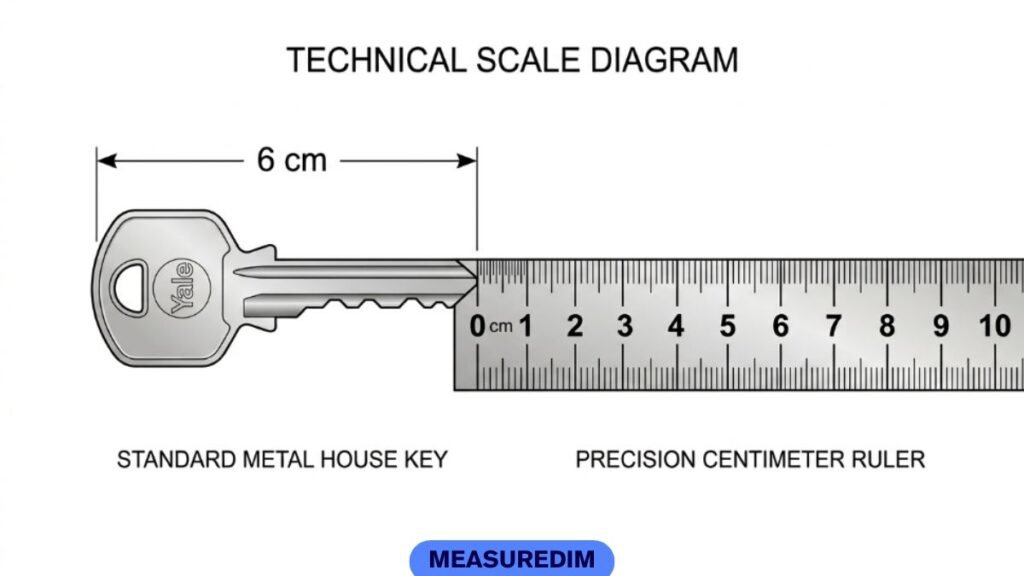
A typical brass house key measures about 5.5 to 6 cm from the tip of the blade to the top of the bow. Pull one off your keyring and you’re holding a rough 6 cm reference that lives in your pocket all day.
Keys vary by brand and cut, so treat this as a ballpark rather than a precise gauge — some run a few millimeters shorter or longer. Still, when you need a quick sanity check on a small parcel slot or a screw length and there’s nothing else around, your front-door key does the job.
Quick Comparison Table
Here’s every object above lined up against the 6 cm target so you can scan the best match at a glance.
| Object | Real dimension | How it compares to 6 cm |
| D-cell battery (height) | 6.15 cm | Almost exact |
| Large–jumbo egg (length) | 5.7–6.2 cm | Spot on |
| Rubik’s Cube (edge) | 5.7 cm | A hair under |
| Pool ball (diameter) | 5.7 cm | A hair under |
| Mini Bic lighter (height) | 5.7 cm | A hair under |
| Three adult fingers (width) | ~6 cm | About right |
| House key (length) | 5.5–6 cm | Close, varies by cut |
How to Measure 6 cm Without a Ruler
No tape measure handy? These body- and object-based tricks get you within a few millimeters.
The three-finger method is fastest: index, middle, and ring fingers together span close to 6 cm for most adults. Calibrate yours once and it’s a lifelong tool.
The battery method is the most accurate if you have one nearby — a standing D cell is 6.15 cm, so it’s practically a purpose-built gauge. The card-plus-a-bit method works too: the short edge of a credit card is 5.4 cm, so 6 cm is that width plus roughly two millimeters — a fingernail’s thickness more. And if you carry cash, a standard banknote’s width is close to 6.6 cm in many countries, so a hair inside the long edge lands you near 6.
Read Also: How Tall Is 60 Inches? A 5-Foot Size Guide With Real Examples
Where 6 cm Turns Up in Real Life
This measurement shows up more than you’d expect. In online shopping, jewelry pendants, phone accessories, and small home décor are frequently listed at around 6 cm, and knowing the size stops you from ordering something bigger or smaller than you pictured. In DIY and crafts, 6 cm is a common spacing for hooks, tiles, and hardware.
People also search “how big is 6 cm” after a medical appointment — a doctor might describe a cyst, kidney stone, or a stage of labor using centimeters. In that setting, a large egg or a lime is a fair visual for the size itself, but only your clinician can tell you what a given measurement means for your health, so treat the object comparison as a picture, not a diagnosis.
6 cm Compared to the Sizes Just Above and Below
Context sharpens intuition, so here’s how 6 cm sits between its neighbors.
A step down (around 5 cm): an AA battery stands 5.05 cm and the short edge of a credit card is 5.4 cm — noticeably stubbier than 6 cm once you set them side by side.
A step up (around 6.5–7 cm): a standard soda can is 6.6 cm across and a tennis ball spans about 6.7 cm — both clearly beefier. That roughly one-centimeter jump from a Rubik’s Cube edge to a soda can’s diameter is easy to see once you hold the two together.
Mistakes People Make With This Measurement
Confusing 6 cm with 6 inches. This is the big one. Six inches is 15.24 cm — more than twice as long. If a product feels shockingly small when it arrives, a cm-versus-inch mix-up is usually why.
Assuming 60 mm is a different size. It isn’t. Sixty millimeters is six centimeters; some spec sheets just prefer millimeters for precision. Same length, different label.
Over-trusting rounded conversions. Six centimeters is 2.36 inches, not a clean 2.5. That rounding error is small on one item but compounds fast if you’re stacking or spacing several, so measure from the exact figure when precision matters.
Questions People Actually Ask
How big is 6 centimeters visually?
About 2.36 inches, or just under two and a half inches — roughly a large egg standing on its end.
What object is equivalent to 6 cm?
A D-cell battery, which stands 6.15 cm tall, is the closest everyday match.
How many fingers is 6 cm?
About three adult fingers pressed together, since each finger is close to 2 cm wide.
What is 6 cm comparable to?
A Rubik’s Cube edge, an American pool ball, or a mini Bic lighter — all around 5.7 cm.
What size fruit is 6 cm?
A small lime or a medium plum measures close to 6 cm across.
Locking 6 cm Into Your Mind’s Eye
So now you know how big is 6 cm. It is 60 millimeters. It is about 2.36 inches. That is just under two and a half inches. You can picture a large egg on its end. You can also picture a Rubik’s Cube edge or a D battery. Each one shows you this size in a clear way. Hold three fingers together and you get very close to 6 cm. These simple tricks help you every day.
Keep one object in your mind and you will spot 6 cm fast. Use the egg, the battery, or your own fingers. You do not need a ruler each time. This small length shows up when you shop or pack. Now you can measure it with confidence and ease.
Related Guides:
1: How Long Is 30 Feet? 10 Everyday Objects to Picture It
2: How Big Is 30cm? 11 Everyday Objects That Show the Length
3: How Big Is 20cm? 11 Everyday Objects That Nail the Size
4: How Big Is 14 Inches? Real Objects That Show You the Size
5: How Long Is 2 Meters? 9 Everyday Objects to Picture It