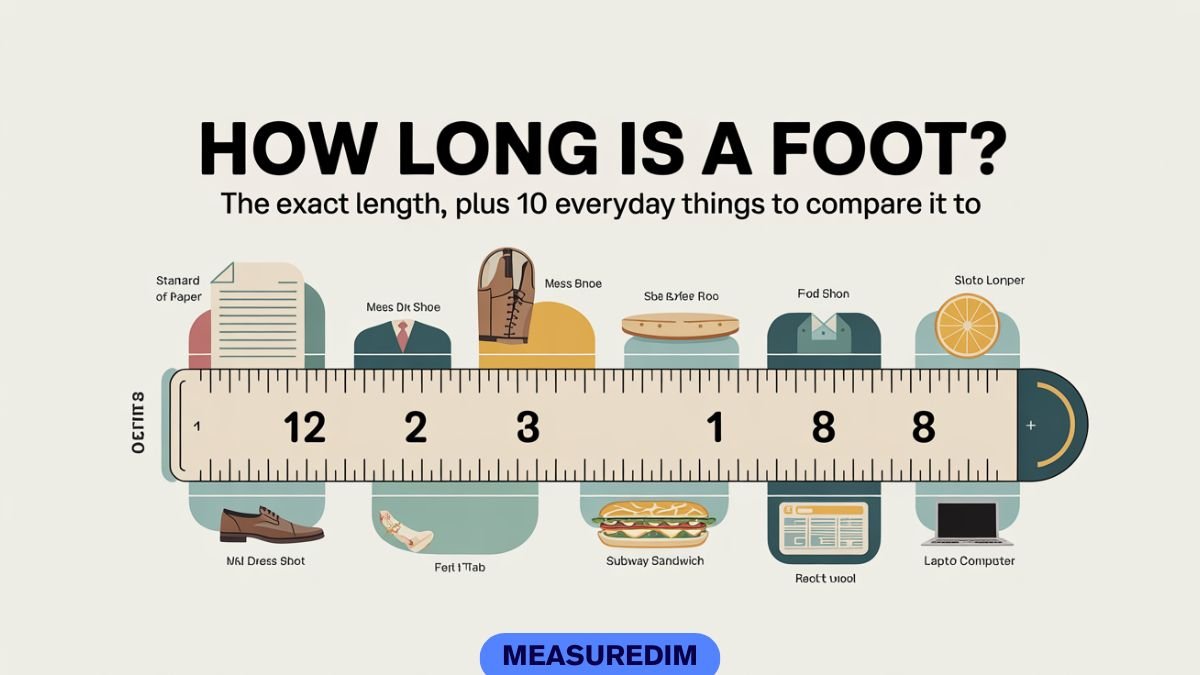
How Long Is a Foot? The Exact Length, Plus 10 Everyday Things to Compare It To
A foot is a unit of length. It equals exactly 12 inches. That comes to 30.48 centimeters, or 0.3048 meters. It is part of the imperial system. People use it to measure height, rooms, and distance every day.
Here is a fact that surprises most people. A “foot” is longer than your real foot. The average adult foot is only about 10 inches. So the unit is bigger than the body part it was named after. Once you see it, you never forget it.
You can picture a foot with common objects. A vinyl record is 12 inches wide. A license plate is 12 inches across. So is one square floor tile. Two dollar bills laid end to end come close too. Each one gives you a quick, ruler-free way to judge a foot.
Quick Answer: A Foot Is Exactly 12 Inches
A foot is exactly 12 inches. Not “about,” not “roughly” — the international foot has been defined as precisely 0.3048 meters since 1959, which pins it to 30.48 cm, 304.8 mm, and one-third of a yard. Every conversion below flows from that single fixed definition, so the numbers on this page never drift.
If you only remember one mental image: a foot is the width of a car’s license plate or the face of a vinyl record. Both are dead-on.
Every Conversion You’ll Actually Need
Because the foot is defined against the meter, these are exact, not rounded guesses.
| Convert a foot to… | It equals |
| Inches | 12 in |
| Centimeters | 30.48 cm |
| Millimeters | 304.8 mm |
| Meters | 0.3048 m |
| Yards | 0.333 yd (exactly ⅓) |
| Hands (equestrian) | 3 hands (4 in each) |
Reading in the other direction helps too: one meter is about 3.28 feet, and 100 cm is a hair over three feet (3 ft 3.4 in). That’s why a metric “30 cm” ruler isn’t quite a foot — more on that in a moment.
What 12 Inches Actually Feels Like
Twelve inches is roughly the span from the crook of your elbow to your wrist bone on an average adult arm — close enough to gut-check a length, not close enough to build a shelf. It’s also about the width of a standard keyboard’s letter keys, the reach of a spread hand and a bit, and the long side of a laptop screen box.
The honest catch: a foot is bigger than most people expect, because it’s noticeably longer than an actual human foot. Hold your hand flat and picture stacking one span on top of it — you’re already close. Keep that in mind as we walk the objects, because the ones that feel “too big to be a foot” are usually the accurate ones.
10 Everyday Things That Are About a Foot Long
Some of these are exact to the millimeter. Some are close-but-not-quite, and I’ve flagged which is which — fake precision is how thin articles lose trust.
A 12-Inch Ruler
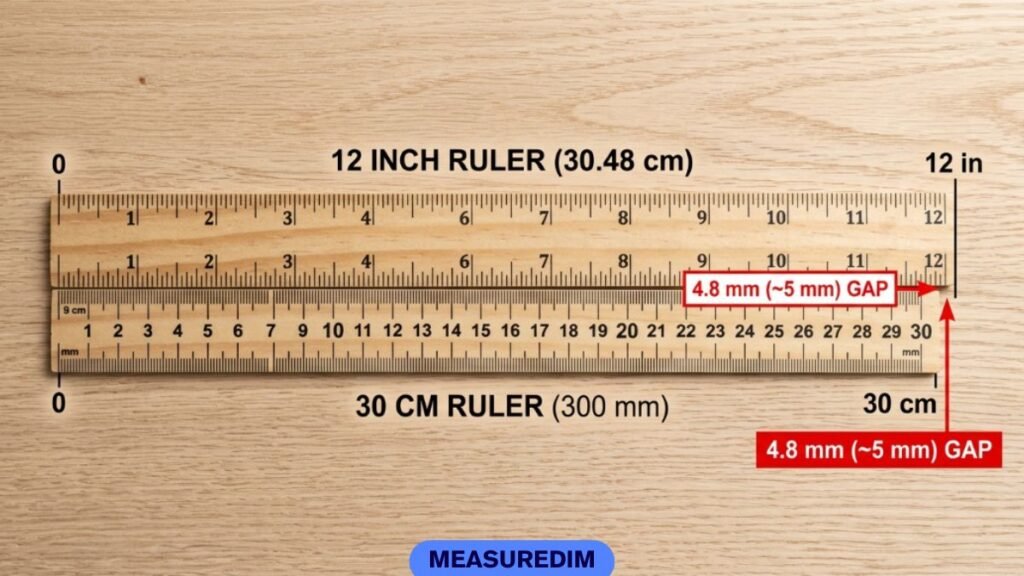
The obvious one, and the reason the unit sticks. A schoolroom ruler marked 12 inches is a foot edge to edge, exactly. Watch the metric-only ones, though: a 30 cm ruler measures 11.81 inches, which is about 5 mm short of a true foot. Same-looking tool, not the same length.
I keep a 12-inch ruler flat on my desk purely to recalibrate my eye every few days, because visual memory for length drifts fast. If you’re eyeballing anything under a foot all day — cable runs, picture spacing, plant pots — one glance at a real ruler resets your internal scale better than any trick on this list.
A Vinyl LP Record
A standard LP is 12 inches across — exactly 30 cm in diameter — which makes it one of the most reliable foot-sized objects in a home. Don’t confuse it with its smaller cousins: the 7-inch single and the 10-inch record are both well under a foot.
Because the format was standardized worldwide, any LP you pick up gives the same answer, factory to factory. Lay one flat and it fills two spread hands with a sliver to spare. It’s my go-to when sizing shelf depth for a record crate or checking whether a frame will swallow a full-size sleeve.
Read Also: How Long Is 13 Inches? 7 Everyday Objects to Picture It
A Square Floor Tile
The classic 12×12-inch floor tile is a foot on each side. In practice, tiles often run a whisker under twelve to leave room for grout lines, so call it near-exact rather than perfect — but for estimating, it’s superb.
Nothing beats a tiled floor as an accidental ruler. Count the tiles across a room and you’ve measured it in feet without lifting a tape. On any hardware-store run, one tile on the display wall is the fastest foot reference in the building.
A North American License Plate
A standard US and Canadian plate measures 12 inches wide by 6 inches tall (305 × 152 mm), a size regulated since the late 1950s. The width is your foot; the height, conveniently, is half a foot.
Because the dimensions are legally fixed, every parked car in the lot is quietly wearing a ruler. I use plate-widths constantly to gauge a tight parking gap or judge how far a bumper sticks out. Two plate-widths stacked mentally, and you’ve got two feet.
A “Footlong” Sub Sandwich
Marketed at 12 inches — hence the name — though real ones wander. A widely reported 2013 dispute found some sandwiches measuring closer to 11 inches as baked bread shrinks and settles, and the chain later settled the resulting lawsuit. So treat it as nominal: usually 11.5–12 in, sometimes a touch under.
Still, it’s a sticky reference because almost everyone has held one. It’s roughly a forearm’s length of bread. Handy for a lunchbox or cooler-packing sanity check — just don’t trust it to the millimeter.
A 12-Inch Skillet
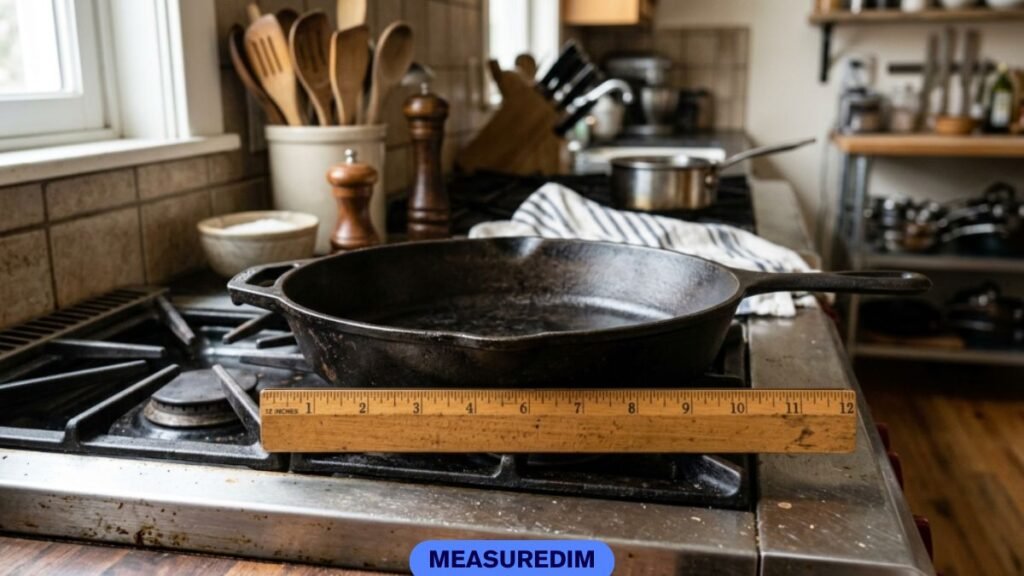
A “12-inch” pan is measured across the top rim — that span is the honest twelve inches. The flat cooking surface at the bottom is smaller, usually around 9.5 to 10 inches, because the walls slope outward. Two different numbers, one pan, and knowing which is which saves confusion at the stove.
For a foot reference, use the rim. It’s a dependable kitchen yardstick for checking burner spacing or whether a cabinet shelf will clear the pan. Flip it and the base gives you a bonus ~10-inch gauge.
Two Dollar Bills End to End
A US bill is 6.14 inches long, so two laid tip to tip come to 12.28 inches — about a quarter inch over a foot. Approximate, but the error is tiny and predictable.
This is the wallet trick I reach for while traveling with no ruler in sight. Lay two bills nose to tail on a table and you’ve drawn a foot with a rounding error smaller than the width of the bill’s border. Works with any two bills, since US denominations share one size.
A 2-Liter Soda Bottle
A full 2-liter bottle stands roughly 12.5 inches tall, though brands vary between about 12 and 13 inches depending on cap and base design. Call it approximate, leaning slightly over a foot.
It’s a solid pantry-height reference precisely because it’s always around. Stand one next to a fridge shelf or a shipping box and you’ve got an instant “is this a foot?” check. Just remember the shape tapers, so the height is your measurement, not the width.
A Sheet of Letter Paper, the Long Way
US Letter paper is 8.5 × 11 inches, so its long edge is 11 inches — one inch shy of a foot. If you’re on A-series paper, A4’s long edge is 11.7 inches, a little closer but still under.
Paper is the most abundant object on this list, which makes it a great “just under a foot” gauge. Line a sheet up long-ways, add a thumb-width past the end, and you’ve hit twelve inches. I use it constantly for quick desk measurements when the actual ruler has wandered off.
A Large Dinner Charger
Here’s where a common object splits in two. A charger — the big service plate that sits under a dinner plate — typically runs 12 to 13 inches across, right at or just over a foot. A standard dinner plate is smaller, usually 10.5–11 inches, so it under-shoots. Use the charger, not the plate.
That distinction is exactly the kind of detail people get wrong, and it matters when you’re setting a table or sizing cabinet depth. Pull a charger from the cupboard and you’re holding a foot-wide disc; pull a dinner plate and you’re an inch or two short.
The Foot-Long Lineup at a Glance
| Object | Length / diameter | Exact or approx | Vs. a foot |
| 12-inch ruler | 12 in / 30.48 cm | Exact | Dead-on |
| Vinyl LP record | 12 in / 30.48 cm | Exact | Dead-on (diameter) |
| 12×12 floor tile | ~12 in / ~30.5 cm | Near-exact | Dead-on per side |
| NA license plate | 12 in / 30.48 cm | Exact | Dead-on (width) |
| Footlong sub | ~11–12 in / 28–30 cm | Nominal | Often a touch short |
| 12-inch skillet | 12 in / 30.48 cm | Exact (rim) | Dead-on across top |
| Two $1 bills | 12.28 in / 31.2 cm | Approx | ~¼ in over |
| 2-liter bottle | ~12.5 in / ~31.8 cm | Approx | ~½ in over |
| Letter paper (long) | 11 in / 27.9 cm | Exact | 1 in under |
| Dinner charger | 12–13 in / 30–33 cm | Range | At or just over |
Measuring a Foot When You Don’t Have a Ruler
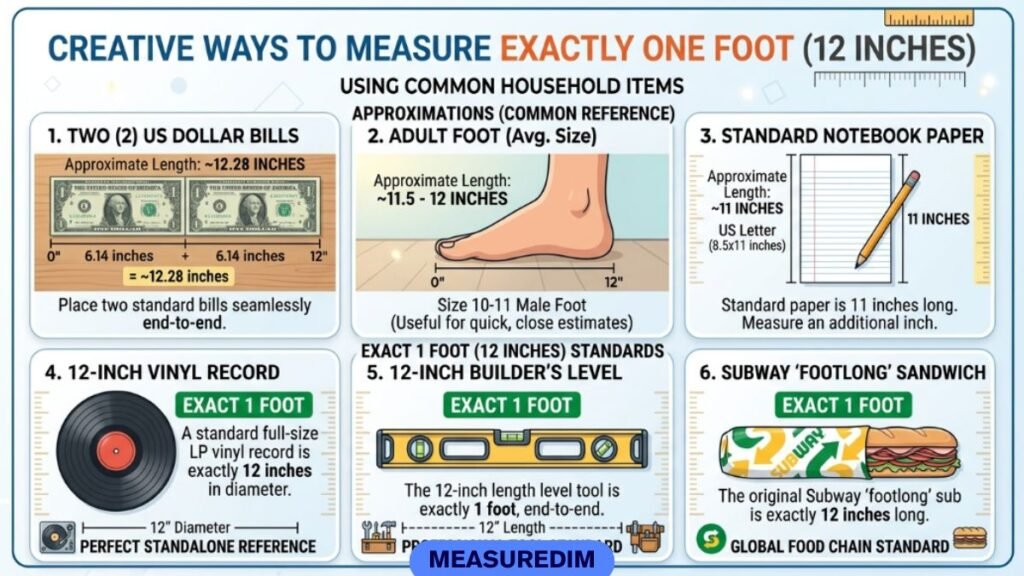
No tape, no ruler, no tile floor? Your body still works, as long as you calibrate it once.
Most adult hands span 7 to 9 inches from thumb-tip to pinky-tip when stretched wide, so a foot is a little more than one full hand-span plus a couple of fingers. Measure your own span against a real ruler once and memorize it — then you’re carrying a rough scale everywhere.
A few more field-tested cues: an adult’s shoe (the shoe, not the bare foot) often lands close to a foot in men’s larger sizes; the distance across a standard sheet of printer paper plus a thumb hits twelve inches; and two dollar bills, as covered above, get you there with a quarter-inch to spare. Chain any of these and you can pace out several feet by feel.
Read Also: How Big Is 6mm? Size Examples You Can Actually Picture
Why a “Foot” Is Longer Than Your Actual Foot
This trips people up constantly, so it’s worth stating plainly: the unit called a “foot” is not the length of a real foot. The average adult foot measures somewhere around 9.5 to 11 inches — even a large men’s size 12 comes in near 11 inches — which is shorter than the 12-inch unit by an inch or two. The word points at the human foot; the measurement outgrew it.
The unit traces back to body-based systems used across the ancient world, where a “foot” hovered near the length of a grown man’s foot but varied by region — the Roman pes, for instance, sat around 11.6 inches. Centuries of local variation ended in 1959, when the international yard-and-pound agreement fixed the foot at exactly 0.3048 m. (A slightly different “US survey foot,” used in geodetic work, was retired at the start of 2023, leaving one standard foot for everyone.) So today’s foot is a clean, universal number — just don’t expect it to match the thing at the end of your leg.
The Sizes Right Next to a Foot
Knowing a foot’s neighbors sharpens your eye for all of them.
- 6 inches (half a foot): a dollar bill’s length, or the height of a license plate. Half of everything above.
- 11 inches: the long edge of Letter paper — that persistent “almost a foot” that fools people.
- 18 inches (1.5 feet): a standard rolling-pin length, or a school-desk depth.
- 1 yard (3 feet / 36 inches): three of anything on the lineup table, or roughly the width of a doorway.
Slot a foot between the 11-inch sheet of paper and the 12.5-inch soda bottle and you’ve bracketed it from both sides.
Where Getting a Foot Right Actually Matters
Twelve inches is the working unit for a huge slice of everyday life, which is why a wrong guess costs real money or effort:
- Furniture and rooms are still spec’d in feet, so misjudging a foot when measuring a couch against a wall means a return trip.
- Shipping rates hinge on dimensions; a box you eyeball as “about a foot” can bump into the next price tier if it’s really thirteen inches.
- Home projects — shelf spacing, tile counts, curtain drops — all lean on quick foot estimates before the tape comes out.
- Screens and gear get described loosely in feet for viewing distance and mounting height.
In every case, a calibrated mental foot saves you from measuring twice.
Questions People Actually Ask
Is a foot exactly 12 inches?
Yes, exactly 12 inches — no rounding. That equals 30.48 cm or 0.3048 meters.
What does 1 ft look like?
It looks like a vinyl record’s width or a license plate. Both are a clean 12 inches across.
How long is 1 ft visually?
Picture one square floor tile or two dollar bills laid end to end. Each one lands right at a foot.
How long is 1 foot length?
One foot equals 12 inches, or 30.48 cm. It is one-third of a yard.
How to measure 1 foot by hand?
An adult hand spans about 8 inches, so a foot is roughly one hand-span plus a few fingers. Check yours against a ruler once to calibrate it.
Now You’ll Never Second-Guess a Foot
So, how long is a foot? A foot is exactly 12 inches. That equals 30.48 centimeters or 0.3048 meters. This number never changes. It stays the same all over the world. You now know the exact answer, and you can trust it every time. Keep this simple fact in your mind. It will help you in class, at home, and in daily life. A foot is one of the most common units you will ever use.
You can also picture a foot with ease. A vinyl record spans 12 inches. A license plate matches that width. One square floor tile does the same. These objects turn a plain number into a clear picture. Remember them, and you will spot a foot at a glance anywhere you go.
Written by a dimensions writer who has measured more everyday objects against a tape than is strictly reasonable — every figure here is cross-checked, and the exact ones are exact.
Related Guides:
1: How Big Is 9 Inches? Everyday Objects That Show You Instantly
2: How Long Is 3 Meters? A Visual Guide With Real Objects
3: How Big Is 8 mm? A Clear, Real-World Size Guide
4: How Big Is 5 mm? Everyday Objects That Show the Size
5: How Big Is 3 mm? Real-World Objects and Quick Conversions