
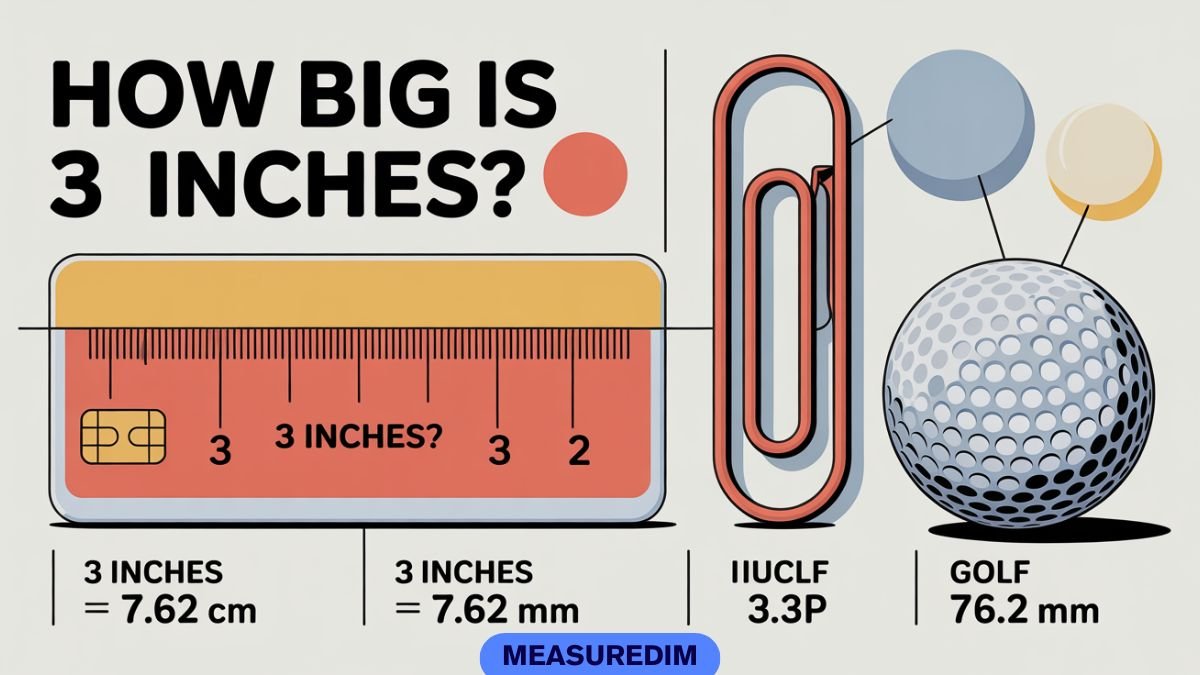
How Big Is 3 Inches? Real Objects, Sizes & Conversions
Three inches is a short length. It equals 7.62 centimeters or 76.2 millimeters. It is also exactly one-quarter of a foot.
Picture a hockey puck in your hand. That flat circle is 3 inches wide. You already know this size better than you think.
Many everyday things measure about 3 inches. A Post-it note, an index card’s short edge, and a baseball all fit. Once you spot one, you can guess the rest.
3 Inches at a Glance
Three inches equals 7.62 centimeters, 76.2 millimeters, or exactly a quarter of a foot. The quickest mental image: a standard hockey puck is 3 inches across, and a classic Post-it note is 3 inches on each side. Line up three U.S. quarters in a row and you’ll land just a hair under 3 inches. That’s the whole answer — everything below just makes it stick.
3 Inches in Every Unit You’ll Need
Because 1 inch is defined as exactly 2.54 centimeters, every conversion below is precise, not rounded guesswork. Keep this handy whenever you’re switching between the imperial and metric systems.
| Unit | 3 inches equals | Notes |
| Centimeters (cm) | 7.62 cm | 3 × 2.54 |
| Millimeters (mm) | 76.2 mm | 7.62 cm × 10 |
| Feet (ft) | 0.25 ft | Exactly one-quarter foot |
| Yards (yd) | 0.083 yd | One-twelfth of a yard |
| Meters (m) | 0.0762 m | Just under 8 cm |
If you only remember one figure, make it 7.62 cm — it’s the number you’ll actually type into a shipping form or a fabric order.
What Three Inches Actually Feels Like
Three inches is roughly the span from the tip of an adult thumb down to where it joins the palm. It’s a comfortable “small but not tiny” length — big enough to hold, too short to call long. On a screen, it’s about the width of a modern flagship phone. In your kitchen drawer, it’s a little longer than a stack of three poker chips. Once you anchor it to something in your own hands, the number stops being abstract.
Everyday Things That Land Right Around 3 Inches
Here’s the core of it: real objects, real measurements, and an honest note on how close each one truly sits to the 3-inch mark. Some are dead-on; a few run a whisker under. I’ve flagged which is which so you’re never working off a fake number.
A Classic Sticky Note
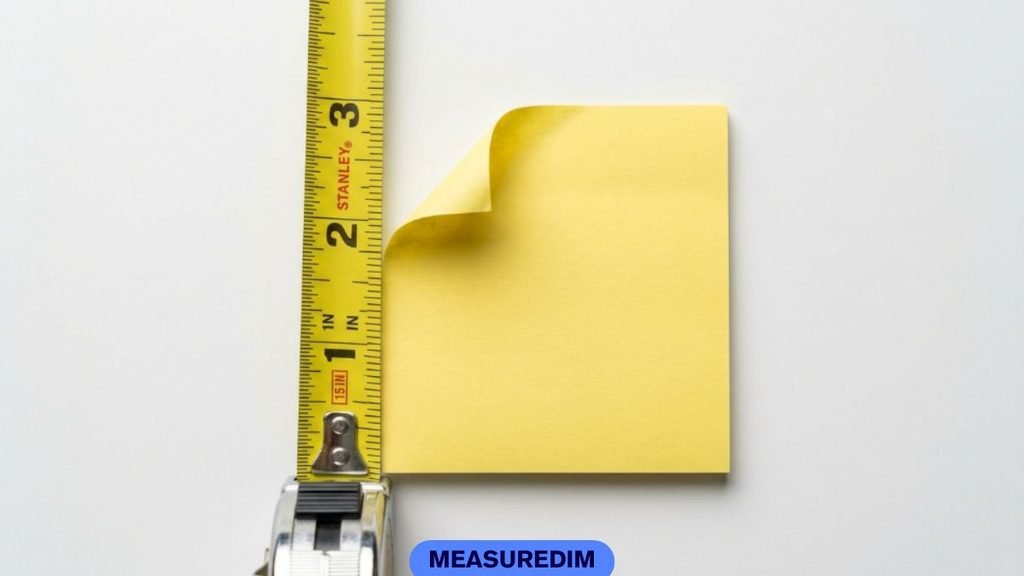
The original Post-it note is 3 inches by 3 inches (76.2 mm square), a size 3M has held steady for decades. Peel one off the pad and you’re holding an exact 3-inch reference in both directions — length and width at once. That dual-axis accuracy is rare and genuinely useful.
Because sticky notes live on nearly every desk, this is my favorite go-to when someone needs a quick size check and there’s no ruler in reach. Stick one flat against a phone, a photo, or a drawer front and you’ve instantly got a calibrated 3-inch square to compare against. It’s the cheapest measuring aid you already own.
A Hockey Puck
A regulation hockey puck measures exactly 3 inches in diameter and 1 inch thick, weighing between 5.5 and 6 ounces. The diameter is the number that matters here, and it’s a clean, official 3 inches (76.2 mm) — no rounding involved.
What makes the puck such a solid benchmark is that it’s rigidly standardized; unlike fruit or hand sizes, every regulation puck is identical. Stack three pucks and you also get a 3-inch tower, since each is an inch thick. If you’ve ever handled one, you already know the feel — palm it once and that 3-inch circle is locked into memory.
Read Also: How Long Is 18 Inches? 10 Objects to Picture It Fast
The Short Edge of an Index Card
A standard 3×5 index card is 3 inches on its short side and 5 inches on the long side. That short edge is a precise, everyday 3-inch ruler hiding in your junk drawer or recipe box.
Index cards are handy because they’re stiff and flat, so you can lay one against an object without it flexing or curling the way a sticky note might. Teaching a kid what an inch or three looks like? The card’s clean right angles make it easy to demonstrate length and width.
A Tube of Lipstick
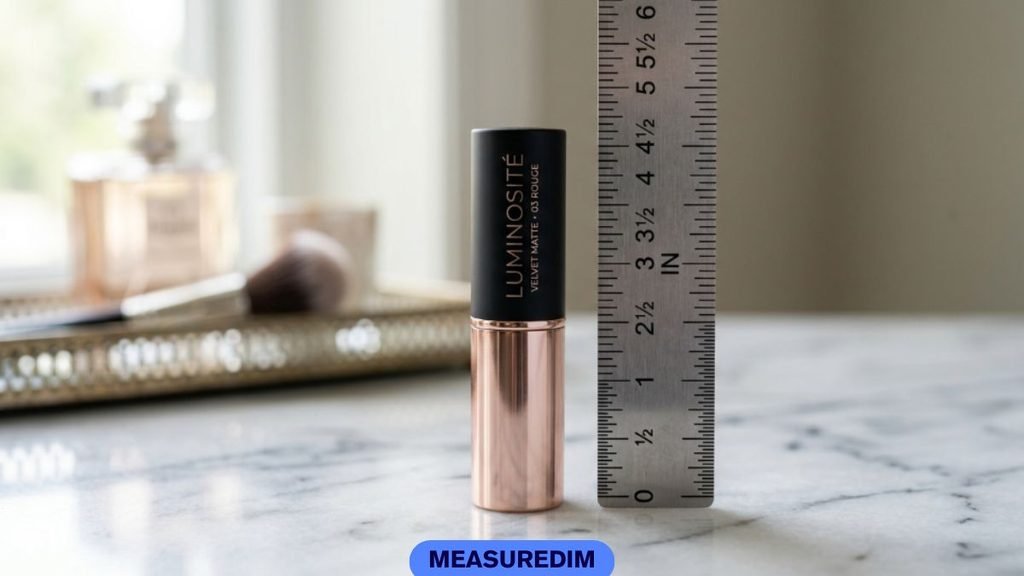
A typical lipstick tube runs about 3 inches long, give or take a few millimeters depending on the brand and whether it’s a slim or full-size case. Call it approximately 3 inches — most fall in the 2.75-to-3.25-inch band, clustering right around 3.
The reason it’s worth citing is portability: a lipstick lives in a bag or pocket, so it’s often the nearest 3-ish-inch object when you’re out and about. It won’t match a hockey puck for precision, but for a rough field estimate — “is this roughly palm-length?” — it does the job well.
A Flagship Smartphone’s Width
Most large modern phones measure 2.8 to 3.0 inches across, with the biggest “Pro Max” and “Ultra” models nudging just past the 3-inch line. So the width of the phone in your hand is a live, always-with-you approximation of 3 inches.
This one shines for online shopping. Trying to picture whether a 3-inch item — a coaster, a candle, a phone grip — will feel small or substantial? Hold your phone sideways and compare its short dimension. Because phone widths vary by model, treat this as a close estimate rather than an exact match, but it’s rarely off by more than a few millimeters.
A Baseball
A regulation baseball is about 2.9 inches in diameter (2.86–2.94 inches, from its 9-to-9.25-inch circumference). That’s a touch under a full 3 inches — close enough to visualize the size, honest enough not to call it exact.
Baseballs are useful because their firm, spherical shape reads the same from every angle; there’s no “which way are you measuring” ambiguity. If you can picture a ball resting in your palm, you’re picturing a hair under 3 inches. It’s a great reference for anything round — think jar lids, tennis balls, or a scoop of ice cream. [INTERNAL LINK: how big is 4 inches]
Three Quarters in a Row
Line up three U.S. quarters edge to edge and you get about 2.87 inches, since each coin is 0.955 inches (24.26 mm) wide. That’s just shy of 3 inches — an easy trick when you happen to have loose change and nothing else.
Coins make a reliable makeshift ruler because their diameters are struck to exact government specs and never vary. Four quarters would overshoot to about 3.82 inches, so three is your closest whole-coin match. Handy at a checkout counter or a coffee shop when you need to sanity-check a size on the spot.
Your Thumb, Tip to Base
For many adults, the thumb measures roughly 2.5 to 3 inches from the very tip down to the base joint where it meets the palm. Hand size varies a lot, so this is a personal estimate you should calibrate once — but the classic “thumb tip to first knuckle equals about 1 inch” rule holds up surprisingly well, and three of those knuckle-lengths gets you near 3 inches.
The beauty of a thumb reference is that it’s literally always attached to you. Measure your own thumb against a ruler once, remember whether you run short or long of 3 inches, and you’ll carry a rough tape measure everywhere. This is the ultimate no-tools backup.
A Golf Tee
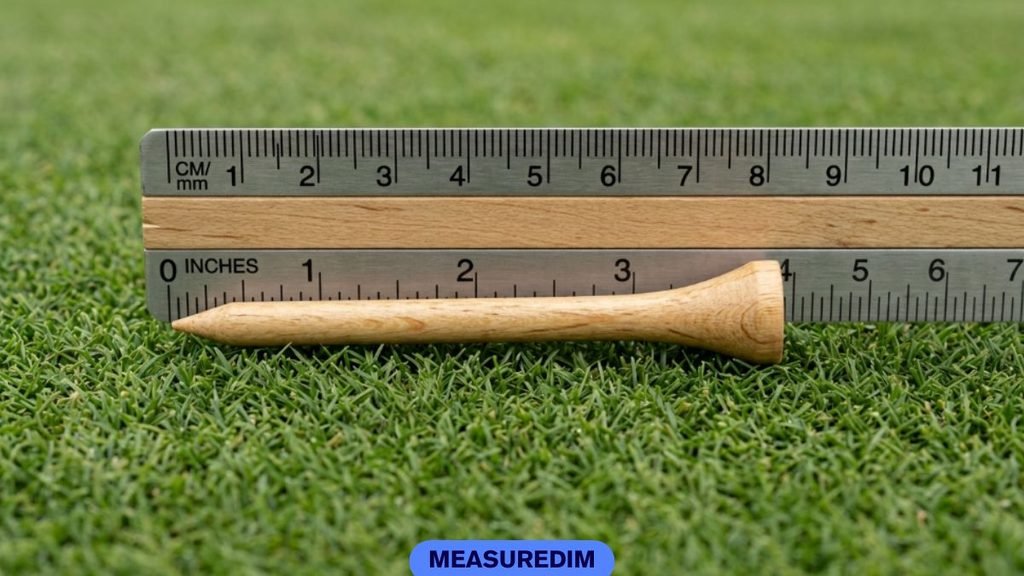
A common golf tee is about 2.75 inches long, though the taller tees favored for oversized drivers stretch to 3.25 inches and beyond. Standard tees land slightly under 3 inches, so treat this as an approximate, model-dependent reference.
Golfers reach for this one instinctively. If you play, you already have a feel for a tee’s length, and the regular size sits close enough to 3 inches to serve as a quick gauge on the course — for spacing, marking, or judging a small object against something in your pocket.
The 3-Inch Lineup at a Glance
| Object | Real measurement | How it compares to 3 in |
| Post-it note (side) | 3.00 in / 76.2 mm | Exact |
| Hockey puck (diameter) | 3.00 in / 76.2 mm | Exact |
| Index card (short edge) | 3.00 in / 76.2 mm | Exact |
| Lipstick tube (length) | ~3.0 in / ~76 mm | Right about there |
| Smartphone width (flagship) | 2.8–3.0 in / 71–77 mm | Just under to spot-on |
| Baseball (diameter) | ~2.9 in / ~73.7 mm | A hair under |
| Three quarters (in a row) | ~2.87 in / ~72.8 mm | A hair under |
| Golf tee (standard) | ~2.75 in / ~70 mm | Slightly under |
| Adult thumb (tip to base) | ~2.5–3 in / ~64–76 mm | Around it, varies |
Three objects hit the mark exactly — the sticky note, the puck, and the index card’s short edge. Reach for one of those when precision matters, and use the rest for fast, in-the-field estimates.
No Tape Measure? Use Your Hands
When there’s no ruler in sight, your own body is a decent backup — as long as you calibrate it once.
The simplest method: your thumb from tip to base joint sits close to 3 inches for many adults. Measure yours against a ruler a single time so you know whether you run over or under, and you’ll never be fully guessing again.
Prefer fingers? The width of your first three fingers held together (index, middle, ring) spans roughly 2.5 to 3 inches for a lot of people at the base knuckles. It’s rougher than the thumb trick, but useful in a pinch.
And if you’ve got anything from the lineup above nearby — a phone, a coin, a sticky note — hold it against whatever you’re sizing up. A real object beats a body estimate every time, because it removes the “how big are my hands” variable entirely.
Read Also: How Big Is 5 cm? Everyday Objects to Help You Picture It
Where People Get 3 Inches Wrong
A few honest traps trip people up when they picture this length:
- Confusing it with a credit card’s edge. A credit card’s long side is actually 3.37 inches, not 3. Close, but that extra third of an inch adds up in tight fits.
- Assuming a soda can is 3 inches across. A standard 12-oz can is only about 2.6 inches in diameter — noticeably slimmer than a puck.
- Thinking a golf ball is 3 inches. A golf ball is just 1.68 inches wide — barely over half of 3 inches. It feels bigger in the hand than it measures.
- Mixing up 3 inches with 3 centimeters. This is the big one. 3 cm is only about 1.18 inches — less than half of 3 inches. If a listing says “3 cm,” don’t picture a puck; picture a large coin.
- Trusting your thumb without checking it. Hands differ by an inch or more across adults. Calibrate once against a real ruler instead of assuming.
3 Inches vs. 2 Inches and 4 Inches
Seeing the neighbors makes the middle number sharper.
One inch smaller (2 inches): think of a AA battery, which stands almost exactly 2 inches tall (50.5 mm). A golf ball, at 1.68 inches, sits between 1½ and 2 inches. Two inches feels distinctly small and pinchable.
Three inches (the target): the puck, the sticky note, the palm-fitting baseball. This is the “holds comfortably in one hand” zone.
One inch larger (4 inches): picture the short side of a 4×6 photo, which is a clean 4 inches. That extra inch reads as a real jump — a 4-inch object starts to feel like something you’d grip with your whole hand rather than your fingertips.
Between 2 and 3 inches sits the soda-can diameter (~2.6 in); between 3 and 4 sits the credit card’s long edge (3.37 in). Slotting those in helps you interpolate any size in the range.
When 3 Inches Actually Matters
This isn’t a trivia length — it shows up in plenty of real decisions:
- Phone cases and grips. Since flagship phones are about 3 inches wide, accessory sizing lives in this range.
- Plumbing. A 3-inch drain pipe is a standard DWV (drain-waste-vent) size in homes, distinct from the smaller 2-inch and larger 4-inch lines.
- Baking. A 3-inch ring mold or biscuit cutter is a common size for individual tarts, English muffins, and scones.
- Gardening. Seed packets often call for spacing seedlings about 3 inches apart — roughly a puck’s width between each.
- Footwear. A 3-inch heel is a familiar “high but wearable” height, a useful benchmark when shopping for shoes.
- Shipping and crafts. Small parcels, jewelry boxes, and organizer compartments frequently hover right around this dimension.
Questions People Actually Ask
What is an example of 3 inches?
A hockey puck is a perfect example, measuring exactly 3 inches across. A Post-it note and the short edge of an index card match it too.
How many fingers is 3 inches?
About three to four fingers held together equal 3 inches, depending on hand size. Measure your own fingers once so you know your exact count.
How big is three inches visually?
Picture a baseball resting in your palm, which sits just under 3 inches wide. It fills most of your hand and reads as small but solid.
How much is 3 inches in fingers?
Roughly three adult fingers side by side add up to about 3 inches. Wider fingers may reach the same length with just three, not four.
How can I measure 3 inches without a ruler?
Hold up a hockey puck, a Post-it note, or three quarters in a row. Any of these gives you a close 3-inch guide with no ruler needed.
Lock It In: The 3-Inch Cheat Sheet
So now you know how big is 3 inches. It is the same as 7.62 centimeters or 76.2 millimeters. A hockey puck shows this size well. A Post-it note and the short side of an index card match it too. You can use these things instead of a ruler. Just hold one next to your object and compare. This simple trick works fast, and it works anywhere.
Keep three easy pictures in your mind. A puck, a sticky note, and a baseball all sit near 3 inches. Remember that 7.62 centimeters is the metric twin. These small facts help you measure with more confidence every day. Next time you read “3 inches” on a label, you will see the length right away. Now you own this size for good.
Related Guides:
1: How Long Is 10 Feet? 10 Everyday Objects to Picture It
2: How Long Is 1 Meter? 7 Everyday Objects That Show It
3: How Tall Is 40 Inches? Everyday Comparisons & Conversions
4: How Big Is 7 cm? A Visual Guide With Real-World Comparisons
5: How Long Is 20 Feet? 11 Everyday Objects Compared

2 Comments