How Big Is 10mm? Everyday Objects, Conversions & Size Comparisons
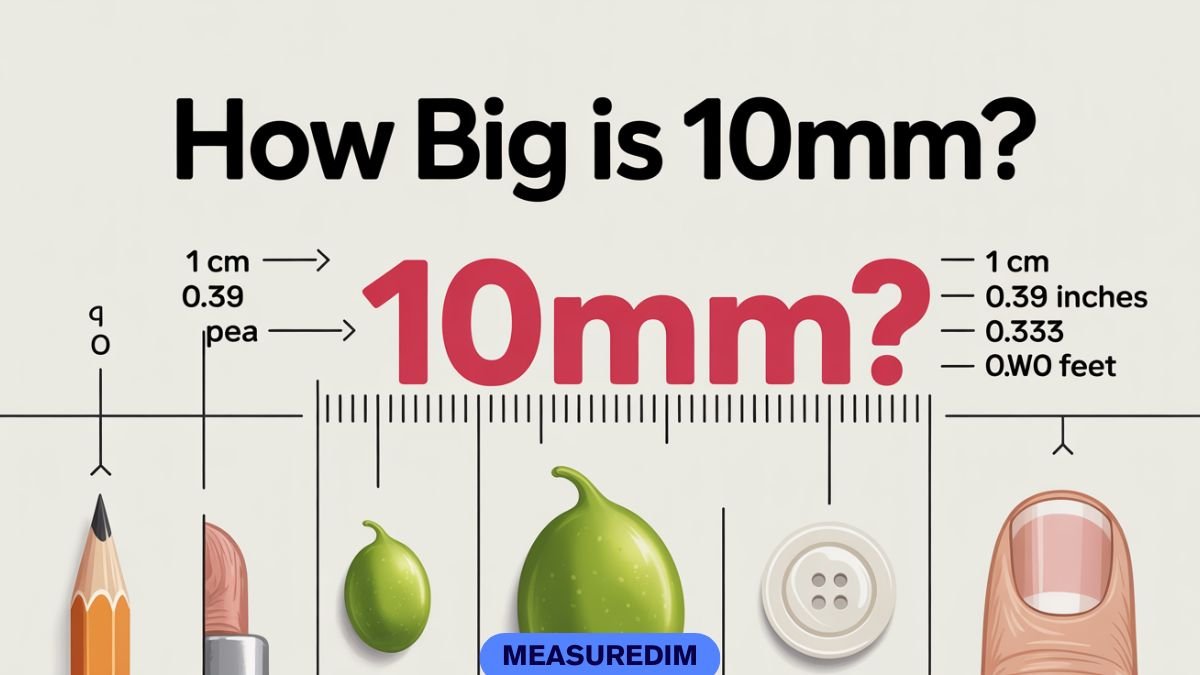
Ten millimeters is a small but visible length. It equals exactly one centimeter. In inches, that’s about 0.39, just under four-tenths. Picture the flat width of a AAA battery. That round shape is almost exactly 10mm across.
Say “millimeter” and your brain thinks tiny. But 10mm is bigger than you’d guess. You can pinch it between two fingers and clearly see it. It’s the width of a shirt button or a plump pea. Once you spot it, you’ll notice it everywhere.
This size pops up all over daily life. Think bolt heads, beads, pearls, and small pills. A 10mm socket and a large pearl are both this wide. Your pinky fingernail is close too, around 10 to 12mm. Learn it once, and you can eyeball 10mm without any ruler.
How Big Is 10mm? Here’s the Instant Answer
10mm is exactly 1 centimeter — a hair under four-tenths of an inch (0.39″, or 0.3937″ to be precise). Picture the flat width of a standard AAA battery, or the round face of a shirt button, and you’re looking at almost exactly 10 millimeters.
That’s the whole answer in one breath. But “1 cm” only clicks once you can attach it to something you can actually hold, so the rest of this page lines 10mm up against objects sitting in your kitchen drawer, your toolbox, and your jewelry box. By the end you’ll be able to eyeball this measurement without reaching for a ruler.
10mm Converted Into Every Unit You Might Need
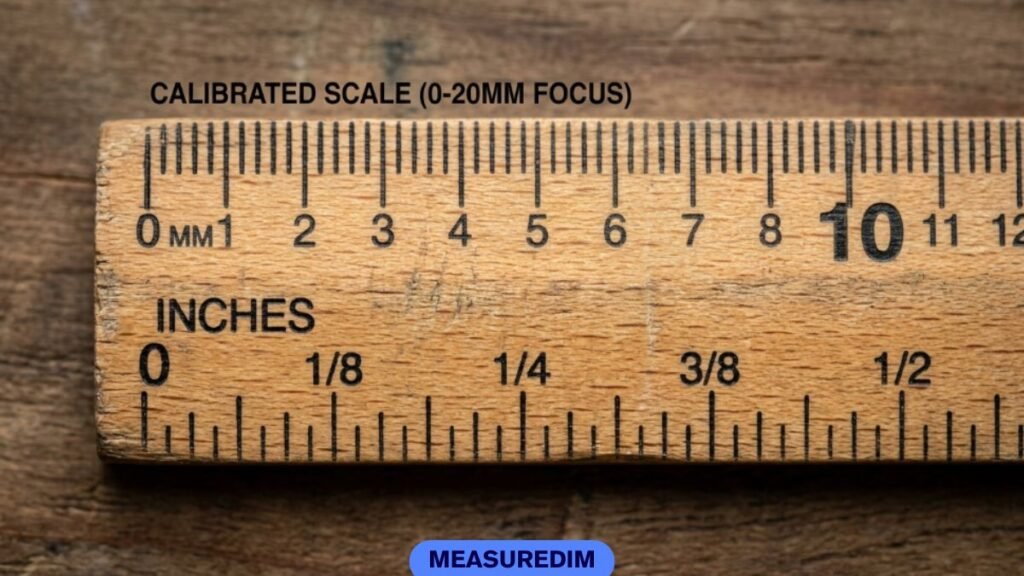
Ten millimeters is a friendly number to convert because it lands on a clean metric mark. Here’s the full breakdown so you never have to second-guess a spec sheet again.
| Unit | Value | Notes |
| Millimeters | 10 mm | The starting point |
| Centimeters | 1 cm | Exact — this is the easy one |
| Meters | 0.01 m | One-hundredth of a meter |
| Inches (decimal) | 0.3937″ ≈ 0.39″ | Just under 4/10 of an inch |
| Inches (fraction) | ~25/64″ | A whisker over 3/8″ (which is 9.53mm) |
| Feet | 0.0328 ft | Tiny fraction of a foot |
| Yards | 0.0109 yd | Rarely used at this scale |
The one to memorize: 10mm = 1cm = about 0.39 inch. Every other figure in this table flows from that.
What One Centimeter Actually Feels Like
Ten millimeters is bigger than most people guess. Say “millimeter” and the brain jumps to something microscopic, but stack ten of them together and you get a chunk of length you can pinch between two fingers and clearly see.
It’s roughly the gap between the tip of your thumb and the first knuckle crease — not the whole thumb, just that little top segment. It’s the thickness of a small stack of coins, the width of a pea, the diameter of a decent-sized bead. Small, yes, but solidly in “hold it in your hand” territory rather than “squint at it” territory.
Keep that mental anchor as we walk through the comparisons below.
Everyday Objects That Measure About 10mm
Each object here is something you can find quickly and picture instantly. I’ve flagged where a measurement is essentially exact and where it’s a close approximation, because honest ranges beat fake precision every time.
AAA Battery (Across Its Width)
A standard AAA battery measures 10.5mm across its cylindrical body — the single closest everyday match to 10mm you’ll find. That half-millimeter of overshoot is well within eyeballing range, so for all practical purposes, the width of a AAA is your gold-standard reference for this size.
Almost every home has one rattling around in a remote, a wall clock, or a drawer of spares. Pull one out, look at it end-on, and you’re staring at a circle just a touch wider than 10mm. When a product listing says a component is “10mm,” roll a AAA next to it in your mind and you’ll know exactly what to expect — handy when you’re buying beads, grommets, or small hardware online.
A 10mm Socket or Bolt Head
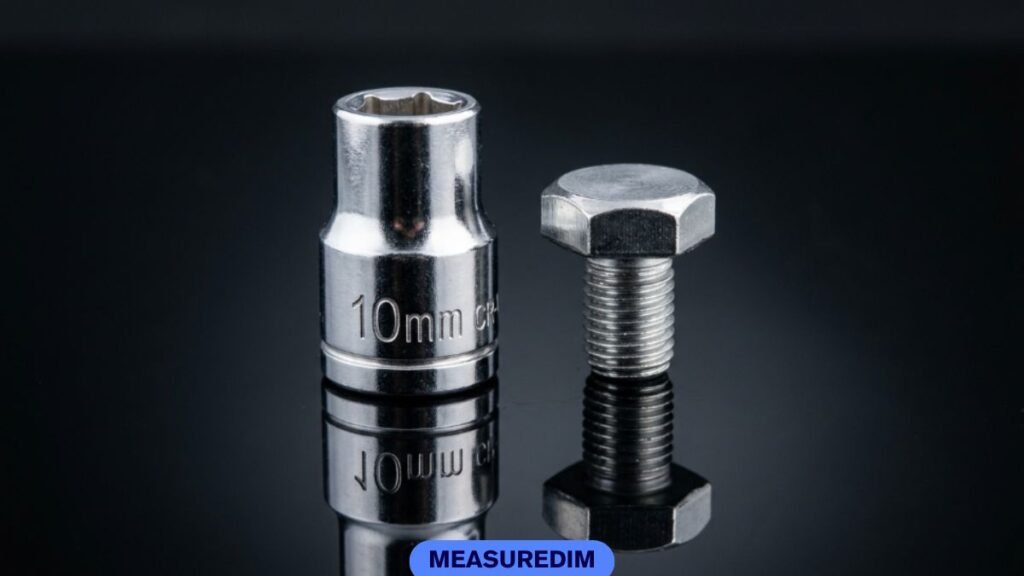
The famous, forever-lost 10mm socket is named for the distance across the flats of the bolt head it grips — exactly 10mm, by definition. This isn’t an approximation; it’s a machined standard, which makes a hex bolt an ideal way to see the measurement rather than just imagine it.
If you own a socket set, the 10mm is usually the one you reach for most on cars, bikes, and flat-pack furniture. Lay the open jaws of a 10mm wrench flat and the span between them is your target size, measured to engineering tolerance. Mechanics develop an instinct for this width precisely because they handle it daily.
Read Also: How Big Is 16 Inches? 8 Everyday Objects to Picture It
A Standard Shirt Button
A front button on a men’s dress shirt typically runs 10–11mm across (roughly a 16-to-18 ligne button, in the sizing lingo tailors use). The smaller end of that range sits almost dead-on 10mm.
Buttons are everywhere and easy to grab, so this is a great reference when no tools are nearby. Press one against a diagram or a screen and you’ve got a quick sanity check for anything spec’d in the 10mm neighborhood — useful when you’re gauging bead holes, snap sizes, or the diameter of a small dowel.
One Cheerio
A single Cheerio measures roughly 10–11mm across its outer ring. Cereal isn’t a precision instrument, but the shape is consistent enough that one little oat “O” is a surprisingly reliable stand-in for 10mm.
The appeal here is that everyone has an intuitive feel for how big a Cheerio is. Next time you need to explain 10mm to a kid — or to yourself at breakfast — one piece of this cereal does the job. It also helps when you’re picturing small round things like ball bearings or watch crowns.
A Regular-Strength Aspirin Tablet
A standard adult aspirin tablet (the 325mg size) is about 10–11mm in diameter. Low-dose “baby” aspirin is noticeably smaller, so stick to the full-strength tablet as your reference.
Most medicine cabinets have a bottle within arm’s reach, which makes this a convenient real-world yardstick. Set a tablet on your fingertip and you’re holding a circle right around 10mm wide — a good cue when you’re sizing up pills, small buttons, or the head of a large screw.
The Width of Your Pinky Fingernail
An adult little-finger nail is roughly 10–12mm wide across the nail bed. Bodies vary, so measure yours once against a ruler and you’ll carry a calibrated 10mm-ish gauge with you forever.
This is the reference I lean on most in the wild, because your hands are always with you. Glance at your pinky nail and you’ve got a built-in ruler for anything in the 10-to-12mm range — perfect for quickly judging bolt heads, beads, or gaps when shopping in person.
A Large (10mm) Pearl
In jewelry, a 10mm pearl is considered big — most strung necklace pearls sit at 7–8mm, so a 10mm bead has real presence on the strand. The figure is exact because pearls are graded and sold by precise millimeter diameter.
Bead and pearl sizing is one of the most common reasons people search this exact question, so it’s worth anchoring. If a listing says 10mm, expect a pearl noticeably chunkier than the everyday 7mm strand — the kind that reads as a statement piece rather than a subtle one.
A Coffee Bean (End to End)
A roasted coffee bean runs about 10mm long, give or take, depending on the variety and roast. Arabica beans tend to sit right around this length, so one bean laid flat is a tidy little 10mm ruler.
Coffee beans are easy to grab and consistent enough for a rough gauge. Line up a few and you get a quick sense of 10, 20, 30mm — a trick that’s genuinely useful in a kitchen where beans are the nearest small object to hand.
A Plump Garden Pea
A fresh garden pea measures roughly 8–10mm across, with the fuller ones landing near the top of that range. It’s an approximation — peas aren’t standardized — but a good, ripe one gets you close.
“Pea-sized” is one of the most common ways people describe small round objects, and now you can put a number on it. When a source says something is “about the size of a pea,” you’re safely in 8-to-10mm territory, which is handy for everything from gemstones to hail to swelling described in plain language.
The Head of a Thumbtack or Push Pin
The flat top of a standard thumbtack (drawing pin) is about 10mm across. It’s a near-match and, better yet, a flat circle you can press directly against whatever you’re measuring.
Office and corkboard supplies make this one easy to test on the spot. Push a tack into a board and the visible disc is your 10mm reference — a quick way to picture small round features like buttons, snaps, or the caps on model-kit parts.
A Stack of About 100 Sheets of Paper
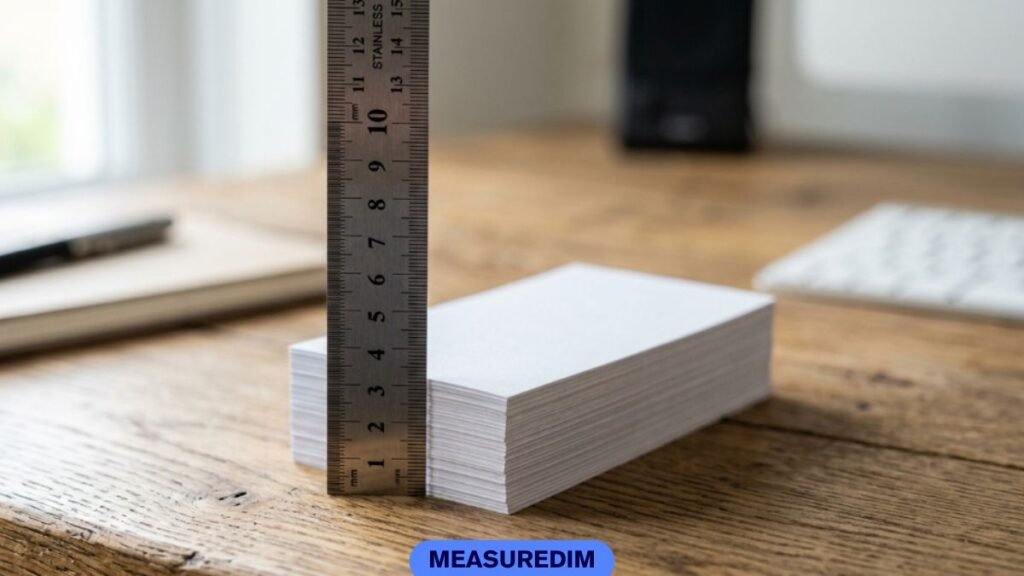
Here’s one for thickness rather than diameter: roughly 100 sheets of standard 20lb printer paper stack up to about 10mm tall. A single sheet is around a tenth of a millimeter, so a hundred of them lands near 1cm.
This flips the measurement into vertical intuition, which matters when you’re picturing depth or height rather than width. Next time you pull a wad of paper from the tray, that thumb’s-worth of stack is a live demonstration of 10mm — useful for judging spacer thickness, gap tolerances, or how deep a 10mm recess really is.
The 10mm Comparison Chart at a Glance
Here’s every reference above in one scannable place. “Exact” means machined or graded to the number; “approx.” means a close, honest estimate.
| Object | Real Size | Match to 10mm |
| AAA battery width | 10.5 mm | Approx. (near-exact) |
| 10mm socket / bolt head | 10.0 mm | Exact |
| Shirt button | 10–11 mm | Approx. |
| Cheerio (outer) | 10–11 mm | Approx. |
| Aspirin tablet (325mg) | 10–11 mm | Approx. |
| Pinky fingernail width | 10–12 mm | Approx. |
| Large pearl | 10.0 mm | Exact (graded) |
| Coffee bean length | ~10 mm | Approx. |
| Garden pea | 8–10 mm | Approx. |
| Thumbtack head | ~10 mm | Approx. |
| ~100 sheets of paper (stacked) | ~10 mm | Approx. |
No Ruler Nearby? Gauge 10mm With Your Body
You almost always have a measuring tool on you — your own hands. A few reliable tricks:
- Pinky nail width. For most adults, the little-finger nail spans about 10–12mm. Calibrate yours once and it becomes a pocket ruler.
- Thumb-tip segment. The distance from your thumbnail tip to the first crease is often close to 10–15mm. Good for a rough call.
- Two stacked coins. Depending on currency, two thicker coins stacked can approach 10mm of height — a quick vertical check.
- Pinch test. Hold your thumb and forefinger a pea’s-width apart. That small, deliberate gap is your 10mm.
None of these is laboratory-grade, but for shopping, DIY, and “is this the right bead?” moments, they’re more than enough. Verify once with an actual ruler and your estimates get sharper fast.
Read Also: How Big Is 40 cm? Real Objects to Picture It Instantly
Where 10mm Actually Shows Up in Real Life
This size appears far more often than people notice once they start looking:
- Hardware and DIY. The 10mm bolt head is one of the most common fasteners on cars, bicycles, and assemble-yourself furniture.
- Jewelry and crafts. Bead and pearl diameters are quoted in millimeters; 10mm is a popular chunky size for bracelets and statement necklaces.
- Electronics. Small connectors, buttons, and camera lens elements frequently land right around this figure.
- Medical imaging. Scan reports often describe a stone, cyst, or nodule in millimeters, and 10mm (1cm) is a frequently cited threshold. This page is about the size only — any actual finding is a conversation for your doctor, not a blog post.
- Stationery and office life. Thumbtack heads, hole-punch diameters, and binder ring gaps all cluster near this number.
Knowing what 10mm looks like turns all of those specs from abstract digits into something you can instantly picture.
10mm Next to Its Neighbors: 8mm and 12mm
Sizes rarely matter in isolation. Seeing what sits just below and just above 10mm sharpens your sense of the whole neighborhood.
| Size | Inches | Everyday Match |
| 8 mm | ~0.31″ (5/16″) | A standard drinking straw’s width, or a small stud earring |
| 10 mm | ~0.39″ (25/64″) | AAA battery width, shirt button, large pearl |
| 12 mm | ~0.47″ (15/32″) | Just shy of half an inch — a standard staple’s crown, a small green olive |
The jump from 8mm to 12mm is only 4 millimeters, yet each step is visible to the naked eye. That’s worth remembering when a spec sheet lists options a couple of millimeters apart — the difference is real, not academic.
Common Mix-Ups People Make With 10mm
A few errors trip people up again and again:
Assuming it’s basically nothing. “Millimeter” sounds vanishingly small, so people underestimate 10 of them. In reality, 10mm is a clearly visible, holdable size — a full centimeter.
Confusing it with 1mm. Dropping or adding a zero is the classic slip. Ten millimeters is ten times one millimeter; a 10mm bead and a 1mm bead are not in the same universe. Always double-check whether a spec reads 1mm or 10mm.
Treating 10mm as 3/8 inch exactly. Close, but not quite. 3/8″ is 9.53mm, so 10mm is a touch larger. For rough work the gap is ignorable; for precision fitting, it isn’t.
Mixing diameter with radius on round objects. A 10mm-diameter bead is 5mm from center to edge. When a listing gives a number, confirm whether it’s the full width or the half-width before you buy.
Quick-Fire Q&A
What is an example of a 10 mm size?
The width of a AAA battery (10.5mm) is the closest example. A 10mm bolt head and a large pearl are exact matches too.
Is 10 mm the size of a pea?
Yes, roughly. A plump garden pea measures about 8–10mm, so it sits right near 10mm.
How big is 10 mm visually?
It looks like a round shirt button or the width of your pinky fingernail. Small, but clearly visible in your hand.
What is the actual size of 10mm?
10mm equals exactly 1 centimeter, or about 0.39 inch (0.3937″). That is just over 3/8 of an inch.
What size is comparable to 10 mm?
A AAA battery’s width, a Cheerio, a coffee bean, and a 325mg aspirin tablet all sit right around 10mm.
Lock This Size Into Memory
So now you know how big is 10mm. It is exactly one centimeter. In inches, that is about 0.39, just a little under four-tenths. The width of a AAA battery shows you this size best. A shirt button, a large pearl, and a 10mm bolt head all match it too. Your pinky fingernail sits close, around 10 to 12mm wide. These simple objects turn a plain number into something you can picture in your hand.
Keep one easy fact in your mind. 10mm equals 1cm, and it looks like a AAA battery. Anchor the size to that battery or to your own pinky nail. Then you will spot 10mm fast, without a ruler, every single time.
Related Guides:
1: How Big Is 7mm? A Plain-English Guide to a Very Small SizeAa
2: How Tall Is a Monster Can? Every Size, Measured
3: How Big Is 6 cm? Compare It to Real Everyday Objects
4: How Big Is 11 Inches? 9 Everyday Objects That Show You the Size
5: How Tall Is 60 Inches? A 5-Foot Size Guide With Real Examples