
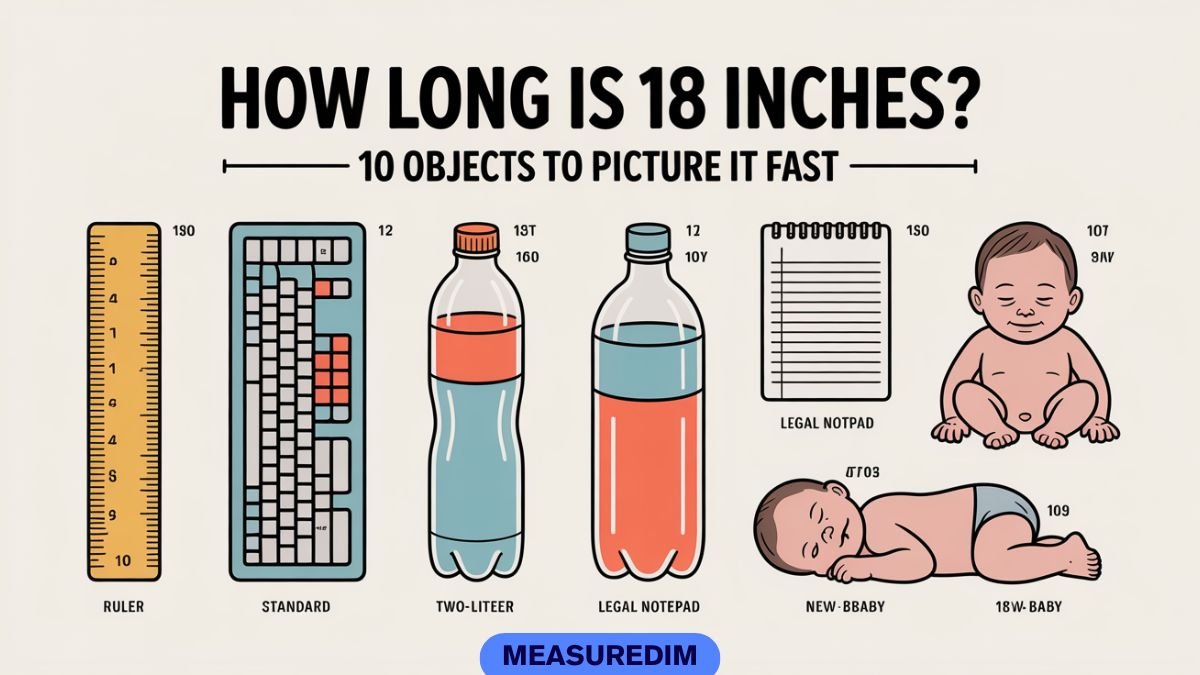
How Long Is 18 Inches? 10 Objects to Picture It Fast
Eighteen inches is a length equal to one and a half feet. In the metric system, it measures 45.72 centimeters, or 457.2 millimeters. It is a common size used to describe shelves, necklaces, and everyday objects.
Ever tried to picture 18 inches without grabbing a ruler? It is closer than you think. In fact, the distance from your elbow to your fingertips is almost exactly this long.
Many familiar things measure about 18 inches, like a large keyboard or a house cat’s body. It also equals half of a standard yardstick. Learning this size helps you measure and compare objects fast.
The Short Answer
Eighteen inches is a foot and a half — 45.72 centimeters, or 457.2 millimeters. Picture the distance from your elbow to your fingertips: for most adults, that’s almost exactly 18 inches. It’s also half of a standard yardstick, or one full ruler plus half of another.
18 Inches in Every Unit You Might Need
Here’s 18 inches translated across the units you’re most likely to bump into, whether you think in imperial or metric.
| Unit | Value |
| Inches | 18 in |
| Centimeters | 45.72 cm |
| Millimeters | 457.2 mm |
| Feet | 1.5 ft |
| Yards | 0.5 yd |
| Meters | 0.4572 m |
Every figure above comes from the fixed rate of 1 inch = 2.54 cm, so they’ll stay consistent no matter where you see 18 inches quoted.
What 18 Inches Actually Feels Like
Eighteen inches sits in a friendly middle zone. It’s longer than a sheet of paper but well short of a yard. It’s the kind of length you can bracket with your two hands held apart — wide enough to feel deliberate, small enough to still be “one gesture.”
If you want a single anchor to carry around in your head, use your own arm. Bend your elbow, look at the run from that bony point to the tip of your middle finger, and you’re staring at roughly 18 inches. Ancient builders used this exact span and called it a cubit. Your body has been carrying a rough 18-inch ruler the whole time.
10 Everyday Things That Are About 18 Inches Long
Each object below is measured along its longest useful dimension. I’ve flagged which ones are exact and which are close-enough estimates, because honesty about tolerance is the whole point.
An 18-Inch Play Doll
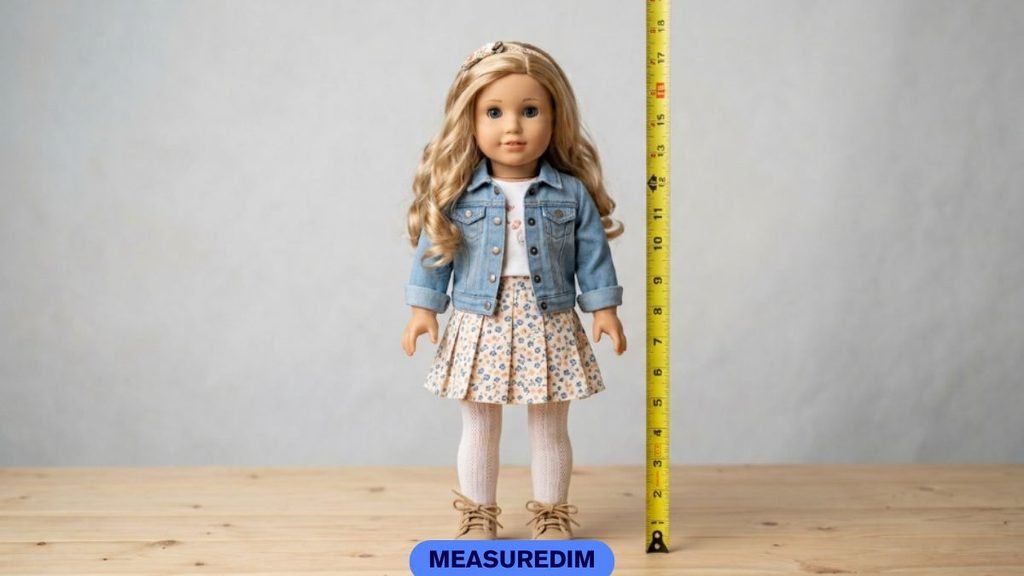
A classic play doll — the American Girl size being the best-known example — stands exactly 18 inches from the top of its head to the soles of its feet. That’s not a rough figure; it’s the design spec the whole product line is built around, which is why doll clothing and furniture in that category all assume an 18-inch body.
Hold one upright next to whatever you’re trying to gauge and you’ve got a reliable, repeatable yardstick with a face. Parents already know this length intimately from buying accessories that have to fit “just right.” If you’re checking whether a shelf cubby or a toy box will actually hold one of these dolls standing up, the doll is your measuring tool.
Half of a Yardstick
A yardstick is 36 inches long, so the halfway mark lands on 18 inches exactly — no estimation involved. If you own a yardstick, you own a perfect 18-inch reference; just find the middle.
This one is worth committing to memory because yardsticks turn up in garages, classrooms, and sewing rooms everywhere. When someone quotes you a length in the high teens, silently splitting a yard in two is often the fastest sanity check you can do. It’s the cleanest math on this list.
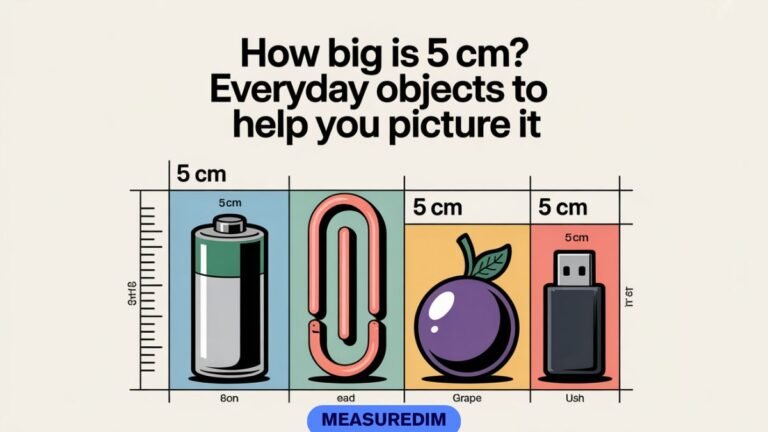
Read Also: How Big Is 5 cm? Everyday Objects to Help You Picture It
A Full-Size Computer Keyboard
A standard full-size keyboard — the kind with a number pad on the right — runs about 17 to 18 inches wide, usually landing near 17.5. There’s slight variation between brands, but the 104-key layout doesn’t leave much room to drift.
Glance down at your desk and you may already have an 18-inch ruler sitting under your hands. This makes a handy stand-in when you’re shopping online and trying to imagine whether an 18-inch-wide gadget or organizer will crowd your workspace. Line the item’s stated width up against your keyboard in your mind, and the fit becomes obvious.
Three U.S. Dollar Bills in a Row
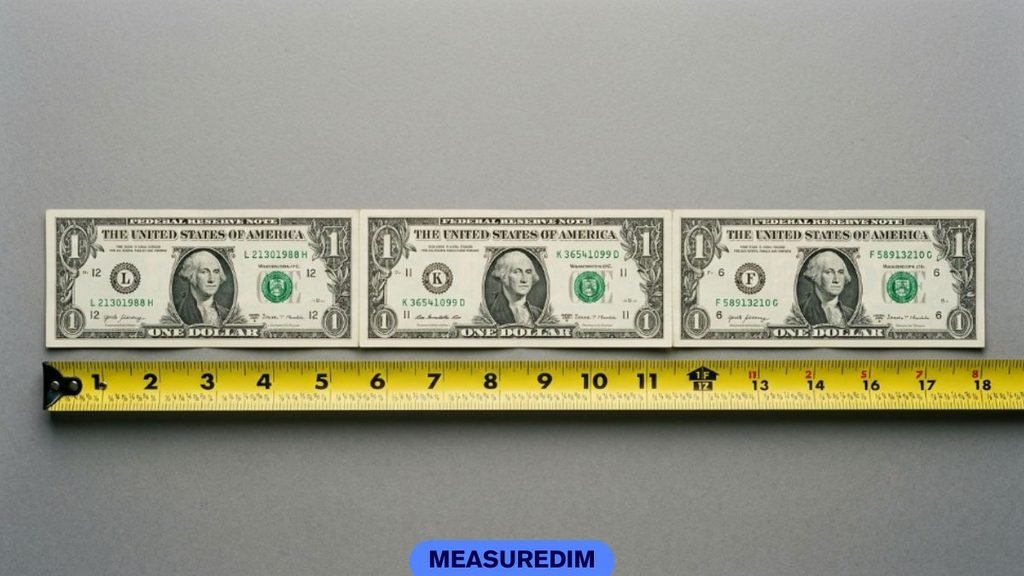
A dollar bill measures 6.14 inches along its long edge. Lay three of them end to end and you reach about 18.4 inches — just a hair over 18. Call it a close approximation rather than an exact match.
The appeal here is availability: almost everyone has a few bills in a wallet. When there’s no ruler and no tape, three notes butted together give you a surprisingly trustworthy 18-inch line. I’ve used this trick to rough out picture-frame spacing on a wall before committing to a nail.
A Princess-Length Necklace
In jewelry, the “princess” length is a standard 18-inch chain — the most common necklace length sold, sitting just below the collarbone on an average adult. It’s a fixed industry convention, so if you own a princess necklace, you own a soft, flexible 18-inch reference.
Because it drapes rather than lies flat, it’s less useful for measuring rigid objects, but it’s perfect for picturing how 18 inches wraps around something curved. Anyone shopping for a chain online can lean on this: if 18 inches is “princess,” you already know roughly where it’ll fall. [INTERNAL LINK: standard necklace length chart]
Your Forearm, Elbow to Fingertip
Measured from the point of the elbow to the tip of the middle finger, most adult arms span 17 to 19 inches, clustering right around 18. It’s an estimate — arm length varies with height — but it’s the single most convenient one you’ll ever have.
This is the reference I reach for first in real life, because it’s always with me and needs no props. Checking whether a box will fit a gap, or whether a plant needs more spacing? Lay your forearm across it. Once you’ve measured your own arm against a ruler a single time, you’ll trust this cue for years.
A House Cat, Nose to Tail Base
An average adult domestic cat measures roughly 18 inches from the nose to the base of the tail (the tail then adds another 10 inches or so on top). Breeds and body types push this around, so treat it as a typical figure rather than a fixed one.
Still, it’s a vivid one — most people can picture a cat curled on a couch cushion far more easily than an abstract number. If you’re eyeballing whether an 18-inch pet bed or carrier gives your cat enough room, remember that 18 inches is roughly the cat’s own body length, minus the tail.
A Compact Countertop Microwave
Compact countertop microwaves typically measure about 18 inches across the front. Larger family models run wider, but the small single-person units hover right at this width, give or take an inch.
This is a genuinely useful kitchen reference because so many people have a microwave at eye level on the counter. When you’re deciding whether an 18-inch appliance or bin will fit a stretch of counter, mentally sliding your microwave into that spot answers the question quickly. It turns an abstract spec into a footprint you already know.
A Large Cutting Board
A big kitchen cutting board commonly measures around 18 inches along its long side (often paired with a 12-inch depth). Sizes vary by brand, so this is a close approximation, but the large boards sold for carving and prep sit right in this range.
Chances are one is leaning against your backsplash right now. It makes a rigid, flat 18-inch straightedge — better than a floppy tape for checking that a drawer, shelf, or slot is deep enough. Next time you’re prepping dinner, glance at the board’s long edge and lock the length in.
A Standard Ruler and a Half
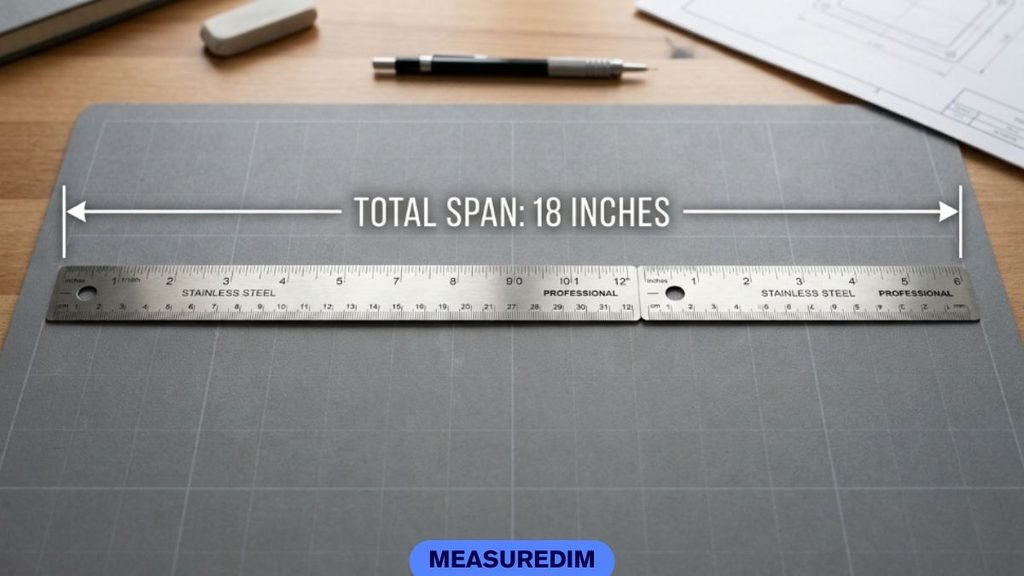
The most literal reference on the list: a 12-inch ruler plus half of a second one equals 18 inches exactly. It’s obvious, but it’s also foolproof when precision matters and you don’t have a longer tool on hand.
Two rulers cost almost nothing and live in most junk drawers, so this pairing is easy to reproduce anytime. It’s my go-to when I need a confirmed 18 inches rather than a rough guess — for instance, marking a clean cut on a plank. No conversion, no doubt.
The 18-Inch Lineup at a Glance
Here’s the whole set summarized, with how close each one really is to a true 18 inches.
| Object | Measured dimension | Real size | Match |
| 18-inch play doll | Height | 18 in | Exact |
| Half a yardstick | Length | 18 in | Exact |
| Ruler + half a ruler | Length | 18 in | Exact |
| Princess necklace | Chain length | 18 in | Standard spec |
| Full-size keyboard | Width | ~17.5 in | Very close |
| Compact microwave | Width | ~18 in | Close |
| Large cutting board | Long side | ~18 in | Close |
| Adult forearm | Elbow to fingertip | 17–19 in | Estimate |
| House cat | Nose to tail base | ~18 in | Typical average |
| Three dollar bills | End to end | 18.4 in | Just over |
No Tape Measure? Use Your Body
When there’s nothing to measure with, your own proportions get you remarkably close. The forearm span from Object #6 is the star here — elbow to fingertip is your built-in 18-inch stick, and it never leaves the house without you.
Two other quick methods back it up. Spread one hand wide: an adult hand span from thumb tip to pinky tip runs about 8 to 9 inches, so two spans laid in a line land near 18. And if a ruler is nearby, the ruler-and-a-half method gives you an exact answer. Pick whichever tool your situation hands you — arm for speed, rulers for certainty.
One honest caveat: body-based estimates depend on your build. Measure your own forearm and hand span against a real ruler once, jot the numbers down, and every future guess gets sharper.
Read Also: How Long Is 10 Feet? 10 Everyday Objects to Picture It
Where 18 Inches Quietly Shows Up
This length is baked into a surprising number of everyday standards, which is part of why it’s worth knowing on sight.
In kitchens, the gap between a countertop and the bottom of the upper cabinets is conventionally 18 inches — enough clearance for small appliances without wasting wall space. In living rooms, designers often leave about 18 inches between a sofa and a coffee table, close enough to reach your drink but roomy enough to walk past.
It also governs plenty of practical spacing. Many vegetables get planted 18 inches apart to give roots room to spread. Shipping and storage boxes frequently come in an 18-inch size that balances capacity against what one person can comfortably lift. Once you start noticing 18 inches, you’ll see it structuring the spaces around you.
18 Inches vs. Its Neighbors: 16 and 20
Sizes this close are easy to mix up, so it helps to pin down what sits on either side.
Drop two inches to 16 inches and you’re at the length firewood is typically cut to, and close to a bowling pin standing 15 inches tall. It reads as noticeably more compact — a hair shorter than the forearm cue, and clearly under half a yard.
Add two inches to 20 inches and you reach the short side of a standard bed pillow, and roughly the length of a newborn baby (average is about 19.5 inches). That’s the jump from “forearm” toward “knee-to-floor on a seated adult.” The takeaway: 18 inches is the sweet spot right between firewood and a pillow, and confusing it with either throws you off by only a couple of inches — but in tight fits, a couple of inches decides everything.
Where People Get 18 Inches Wrong
A few predictable mix-ups trip people up, and all of them are easy to avoid once named.
The biggest is confusing 18 inches with 18 centimeters. They sound interchangeable but aren’t close — 18 centimeters is only about 7 inches, less than half the length. Always confirm which unit you’re reading.
Second, people assume 18 inches equals half a meter. It doesn’t. Half a meter is 50 centimeters, which works out to about 19.7 inches — nearly two inches longer than 18. If precision matters, don’t treat them as the same.
Third, watch out for wheel and rim sizes. An “18-inch bike wheel” or “18-inch tire” refers to a diameter, not a straight-line length of the object, and a mounted tire’s outer diameter runs larger than the rim number suggests. Finally, don’t assume an “18-inch pizza” and an “18-inch necklace” describe the same thing — one is a diameter across a circle, the other a length of chain. Same number, completely different measurement.
Quick-Fire Q&A
What is 18 inches compared to an object?
Eighteen inches matches the width of a full-size computer keyboard. It also equals the long side of a large cutting board.
How to visualize 18 inches?
Picture one and a half rulers placed end to end. You can also imagine half of a standard 36-inch yardstick.
What does 18 inches look like?
It looks like the body of an average house cat, from nose to tail base. A princess-length necklace shows the same length.
How long is an example of 18 inches?
An 18-inch play doll, like the American Girl size, stands exactly this tall. Three dollar bills in a row reach about the same.
How big is 18 inches compared to a human?
It equals the distance from your elbow to your fingertips. That is roughly the length of a grown adult’s forearm.
Locking It In
So now you know how long is 18 inches. It is the same as one and a half feet, or 45.72 centimeters. You can picture it with simple things around you. A full-size keyboard, a large cutting board, or your own forearm all match this length. Half of a yardstick also equals 18 inches. These easy examples turn a plain number into a clear picture in your mind.
You can measure 18 inches even without a ruler. Just stretch your arm and look from your elbow to your fingertips. Two hand spans in a line also come close. Keep these tricks in mind, and you will spot this length with ease. Small skills like this help you measure and compare things every day with real confidence.
Related Guides:
1: How Long Is 1 Meter? 7 Everyday Objects That Show It
2: How Tall Is 40 Inches? Everyday Comparisons & Conversions
3: How Big Is 7 cm? A Visual Guide With Real-World Comparisons
4: How Long Is 20 Feet? 11 Everyday Objects Compared
5: How Big Is 3 cm? Real-Life Examples and Conversions

2 Comments