How Big Is 7mm? A Plain-English Guide to a Very Small SizeAa
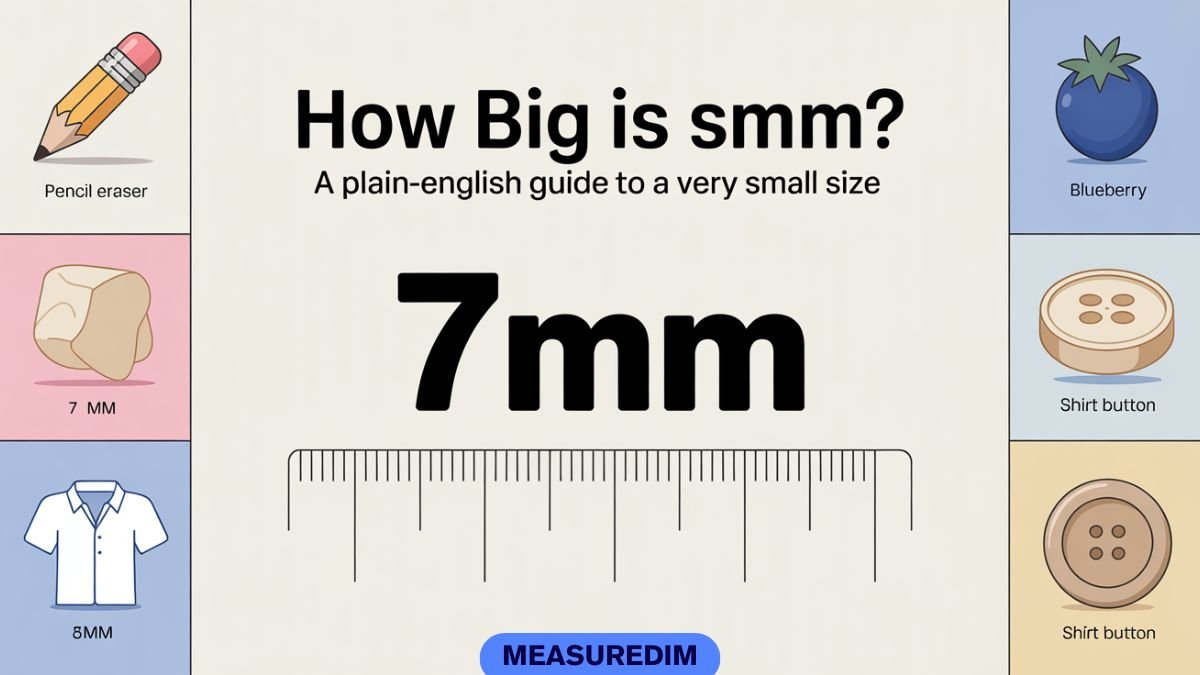
Seven millimeters is a very small length. It equals 0.7 centimeters, or about 0.28 inches. In simple terms, it is just past a quarter inch on a ruler.
Ever held a single green pea? That tiny ball is close to 7mm wide. Once you see it, you will spot this size everywhere.
You meet 7mm more than you think. A pencil’s width, a small pearl, and a grain of rice all sit near it. It is small, but easy to picture.
The Short Answer, Before Anything Else
7mm is about 0.28 inches — a shade over a quarter inch, and almost exactly 9/32 of an inch. In metric, it’s 0.7 centimeters. Picture the width of a standard wooden pencil, or a single green pea, and you’re within a hair of 7mm.
That’s the whole thing in one breath. The rest of this page is about making that number stick.
7mm Converted Into Every Unit You Might Need
Whether you think in imperial or metric, here’s 7mm translated cleanly. Every figure below is rounded honestly, and I’ve kept them consistent throughout the article so nothing contradicts.
| Unit | 7mm equals |
| Millimeters | 7 mm |
| Centimeters | 0.7 cm |
| Inches (decimal) | ≈ 0.276 in (~0.28 in) |
| Inches (fraction) | ≈ 9/32 in |
| Feet | ≈ 0.023 ft |
| Yards | ≈ 0.0077 yd |
| Meters | 0.007 m |
A quick note on the fraction: 9/32 inch is 7.14mm, so it’s the closest common fraction to 7mm — off by only about 0.14mm. A quarter inch (6.35mm) is noticeably smaller, and 5/16 inch (7.94mm) is noticeably larger. So when a US ruler is all you’ve got, 7mm sits just past the quarter-inch mark.
What Seven Millimeters Actually Looks Like
Here’s the intuition, without numbers for a second. Hold up your hand and look at the width of your smallest fingernail near its base — for most adults, that’s in the neighborhood of 7mm. It’s small enough to disappear under a fingertip, but big enough that you’d never lose it in a rug the way you might a grain of sand.
Think of it as the gap between “grain of rice” and “pencil eraser.” Below 5mm, things start to feel like specks. Above 10mm, they read as centimeter-scale. Seven millimeters lives in that in-between zone where a thing is clearly an object you can pinch, count, and roll between two fingers.
Everyday Things That Are Roughly 7mm
Below are nine references you can actually reach for. Each one gets its real-world size and a note on whether the match is exact or approximate — because pretending a pea is precisely 7mm would be exactly the kind of fake precision this guide avoids. [IMAGE: nine 7mm reference objects laid in a row with a labelled 7mm arrow]
A Standard Wooden Pencil (Across the Body)
A classic hexagonal #2 pencil measures roughly 6.5–7mm flat-to-flat, and a touch more corner to corner — so its body width lands right around 7mm. Look down the length of a pencil at the hexagon end and that width is your target. Because pencils are mass-produced to tight, consistent dimensions, the number barely shifts from brand to brand.
That consistency is what makes it my go-to reference: there’s almost always one within arm’s reach, on a desk or in a drawer. Say a listing describes a 7mm dowel, cable, or curtain rod and you can’t picture it — lay the item against a pencil. If the diameters match, you’ve confirmed 7mm without a single measuring tool.
A Single Green Pea
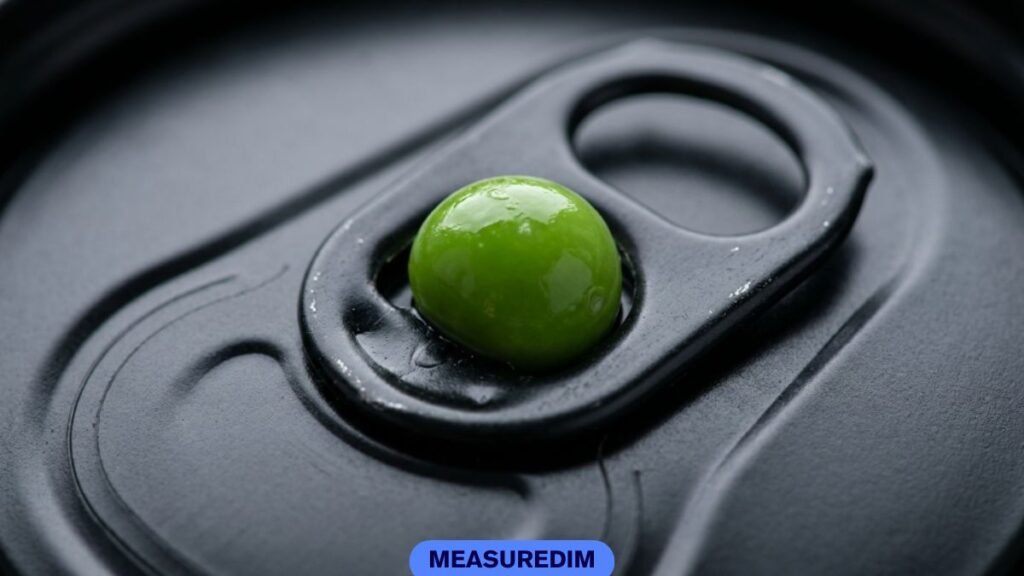
A garden or frozen pea is usually 7–8mm across, and plenty of them sit right at about 7.5mm. This is an approximate match — peas vary with variety and ripeness — but it’s one of the most vivid edible yardsticks for this size. Everyone knows how a pea looks between two fingers.
I like it because you can literally grab one from the freezer and set it beside whatever you’re sizing up. It works beautifully for judging bead diameters in jewelry making, or picturing how wide the head of a small drawer-knob screw will be. Roll one on the counter and you’ve got a live 7mm sphere.
Read Also: How Tall Is a Monster Can? Every Size, Measured
A Grain of Long-Grain Rice, Measured End to End
A grain of long-grain white rice runs about 6–7mm lengthwise (and only ~2mm across). Turned the long way, it’s a neat approximate marker for 7mm. It’s shorter than a pearl and thinner than a pea, which makes it handy for length rather than diameter.
Rice is in nearly every kitchen and stays consistent within a given type, so it’s a dependable reference you don’t have to buy specially. Reach for it when you’re gauging the length of a tiny screw, a watch-link pin, or a seed you’re identifying in the garden.
A Classic 7mm Pearl
In jewelry, 7mm isn’t an approximation — it’s a standard graded size. Freshwater and Akoya pearls are sorted and sold at 7mm (often labelled 6.5–7mm or 7–7.5mm), and it’s one of the most popular sizes for a “classic medium” strand. This one is exact by definition.
If you’ve ever handled a pearl necklace, you already carry a physical memory of 7mm — you just didn’t file it under that name. That makes it genuinely useful when shopping: knowing that 7mm is the timeless in-between size (not dainty, not bold) helps you choose studs or a strand with confidence.
A Seven-Spot Ladybug
A common seven-spot ladybird beetle is about 7mm long; the wider ladybug family spans roughly 5–8mm. It’s an approximate match, but its rounded little body is one of the friendliest natural references for this size, and it’s memorable in a way a screw thread never will be.
That memorability is the point. When you’re explaining a small measurement to a kid — or to yourself — “about as long as a ladybug” does more work than “0.276 inches.” It’s a reference you can point at on a summer afternoon.
The Thickness of a Modern Smartphone
Look at your phone edge-on. Many current phones are 7–8mm thick, with plenty of slim models sitting near 7mm and today’s flagships hovering around 7.8mm. It’s an approximate reference that varies by model, but the beauty is that it’s always in your pocket.
Because your phone is your most constant companion, its profile is a reference you can summon anywhere. Use it to picture how thick a 7mm foam gasket, laptop port, or rubber pad will be before it arrives — turn the phone sideways and there it is.
An Apple Seed
An apple pip is about 6–8mm long, most commonly landing near 7mm. It’s that small, dark, teardrop-shaped seed you fish out of the core. Approximate, but reliably in that range across common apple varieties.
It’s a throwaway reference in the best sense — you generate one every time you eat an apple. When a bit of small hardware like a grommet, a tiny bolt head, or a bead is listed at 7mm, the apple seed gives you an instant mental stand-in.
Five US Dimes, Stacked
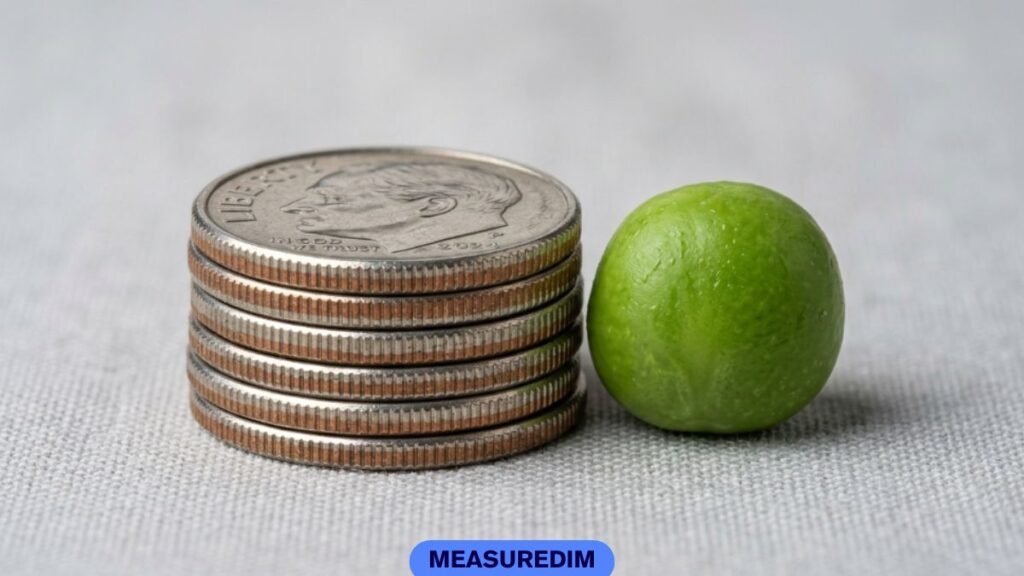
Here’s a measuring hack instead of a single object. A US dime is 1.35mm thick, so five of them stacked come to 6.75mm — just shy of 7mm. The coin math is exact; the resulting stack is your ~7mm gauge.
Coin dimensions are fixed by the mint, which makes this trick genuinely repeatable rather than a rough guess. When you need to set a roughly 7mm gap or check a thickness and there’s no ruler around, count out five dimes and you’re within a fraction of a millimeter.
A Standard Drinking Straw
A regular plastic or paper drinking straw is about 6mm across the opening and ~7mm on the outside. Pinch one and you’re holding a 7mm circle. This is approximate — smoothie and bubble-tea straws are far wider — so picture the everyday cafeteria straw, not the fat one.
It’s cheap, disposable, and everywhere, which makes it an easy grab-and-compare reference. Reach for a straw when you want to picture the bore of a 7mm tube, a small hose fitting, or the outer diameter of a thick cable.
The 7mm Lineup, Side by Side
Here’s every reference above in one scannable table, with how each maps to 7mm and whether the match is exact or a close approximation.
| Object | Real size | Match to 7mm |
| Wooden pencil (body width) | ~6.5–7 mm | Very close, approximate |
| Green pea (diameter) | ~7–8 mm | Close, approximate |
| Long-grain rice (length) | ~6–7 mm | Close, approximate |
| Cultured pearl (7mm grade) | 7 mm | Exact (by grading) |
| Seven-spot ladybug (length) | ~5–8 mm | Close, approximate |
| Smartphone (thickness) | ~7–8 mm | Close, model-dependent |
| Apple seed (length) | ~6–8 mm | Close, approximate |
| Five US dimes (stacked) | 6.75 mm | Just under, exact math |
| Drinking straw (outer diameter) | ~7 mm | Close, approximate |
No Tape Measure? Here’s How to Judge 7mm
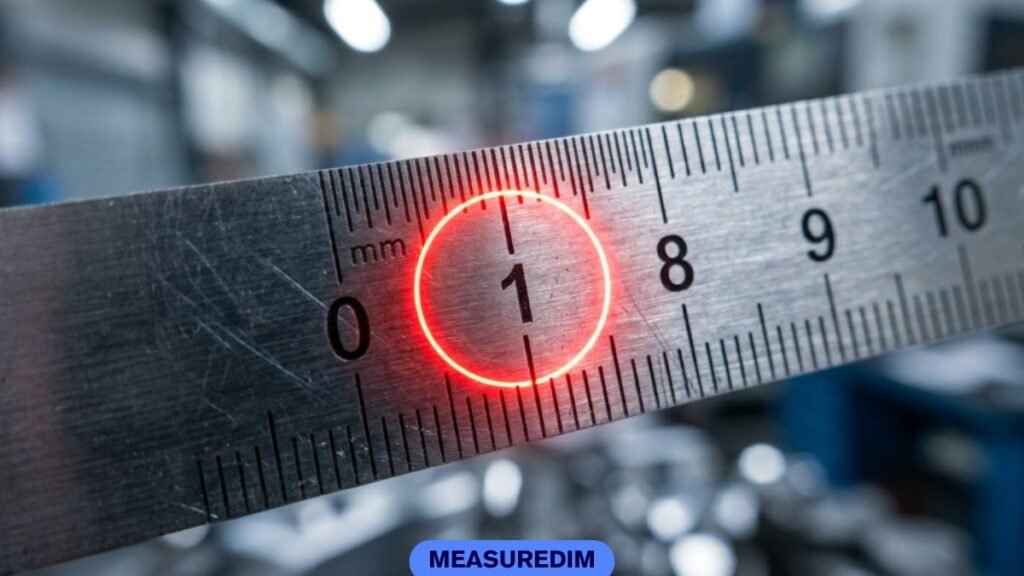
You don’t always have a ruler, so borrow your body and your pocket instead.
The fingernail trick is the fastest: the width of an average adult’s pinky nail near its base is close to 7mm. It’s not calibrated — nails differ — but it gets you in the ballpark instantly.
The dime stack is the most accurate no-ruler method: five dimes give you 6.75mm, essentially 7mm, and coins never change size. Keep that number in your back pocket.
For a rough on-the-spot check, remember that 7mm is just past the quarter-inch line on any US ruler, or seven of the smallest ticks on the millimeter edge of a metric one. Count the little lines from zero; the seventh is your mark.
Read Also: How Big Is 6 cm? Compare It to Real Everyday Objects
How 7mm Sits Between 6mm and 8mm
Small sizes blur together, so it helps to see the neighbors. A single millimeter feels like nothing until you’re choosing a drill bit or a bead — then it’s the difference between a snug fit and a loose one.
| Size | In inches | A quick mental image |
| 6 mm | ~0.236 in (~15/64 in) | A peppercorn; just under a quarter inch |
| 7 mm | ~0.276 in (~9/32 in) | A pencil’s width; a green pea |
| 8 mm | ~0.315 in (~5/16 in) | A standard pencil eraser’s diameter |
Notice the jump: 6mm is barely under a quarter inch (6.35mm), while 8mm is essentially five-sixteenths (7.94mm). Seven millimeters is the tidy middle — bigger than a peppercorn, smaller than an eraser cap.
Where a 7mm Measurement Actually Shows Up
This size turns up in more corners of daily life than you’d guess.
In tools, 7mm is a real metric socket and wrench size — one of those sizes you reach for on small bolts and bike hardware. In jewelry, beyond pearls, 7mm is a popular band width for a substantial men’s ring and a common bead diameter. In electronics, it’s roughly a phone’s thickness and the scale of many ports and connectors.
There’s also a well-known firearms meaning: “7mm” names a family of cartridges (the bullet diameter is 7mm, about .284 inch), used in rounds like the 7mm Remington Magnum and 7mm-08. And in a medical context, people often search this size because of kidney stones — a 7mm stone is on the larger side and may not pass on its own. That’s general information only; anything about your own health belongs with a doctor, not a size chart.
Mix-Ups People Make With 7mm
A few errors come up again and again, and each one throws the size off by a lot.
The biggest is confusing 7mm with 0.7mm — the width of a common mechanical pencil lead. Those differ by a factor of ten. If something feels absurdly thin for “7mm,” check whether the decimal wandered.
The second is swapping millimeters for centimeters. Seven centimeters is ten times 7mm — about 2.75 inches, closer to the width of a credit card than a pea. One is a seed; the other is a chunk.
The third is assuming 7mm equals a quarter inch exactly. It doesn’t — a quarter inch is 6.35mm, so 7mm is meaningfully larger, closest to 9/32 inch. That 0.65mm gap matters when you’re matching a drill bit or a bolt.
Questions People Actually Ask About 7mm
What size does 7mm look like?
It looks like a small green pea or the width of a standard pencil. That is about 0.28 inches, or 0.7 cm.
Is 7 mm the size of a pea?
Yes, nearly. A garden pea is about 7–8mm across, so it sits right at 7mm.
Is 7 mm bigger than 1 cm?
No. One centimeter equals 10mm, so 7mm is smaller than 1 cm by 3mm.
How big is 7mm visually on a ruler?
It falls just past the quarter-inch mark, or on the seventh small line of the millimeter side.
How small is 7 mm?
It is very small — about the length of a rice grain or an apple seed, and it hides under a fingertip.
Locking 7mm Into Your Mind’s Eye
So now you know how big is 7mm. It is a small size, but you can picture it fast. Just think of a green pea or the width of a pencil. Both sit very close to 7mm. You can also stack five dimes to reach nearly the same height. These simple tricks help you see this size in your mind. You no longer need a ruler every time.
Keep one easy fact in your head. Seven millimeters equals 0.7 centimeters, or about 0.28 inches. That places it just past the quarter-inch line on a ruler. Remember the pea and the pencil, and this size will feel clear. With practice, you will spot 7mm all around you. Now you can measure the small world with real confidence.
Related Guides:
1: How Big Is 11 Inches? 9 Everyday Objects That Show You the Size
2: How Tall Is 60 Inches? A 5-Foot Size Guide With Real Examples
3: How Long Is 30 Feet? 10 Everyday Objects to Picture It
4: How Big Is 30cm? 11 Everyday Objects That Show the Length
5: How Big Is 20cm? 11 Everyday Objects That Nail the Size