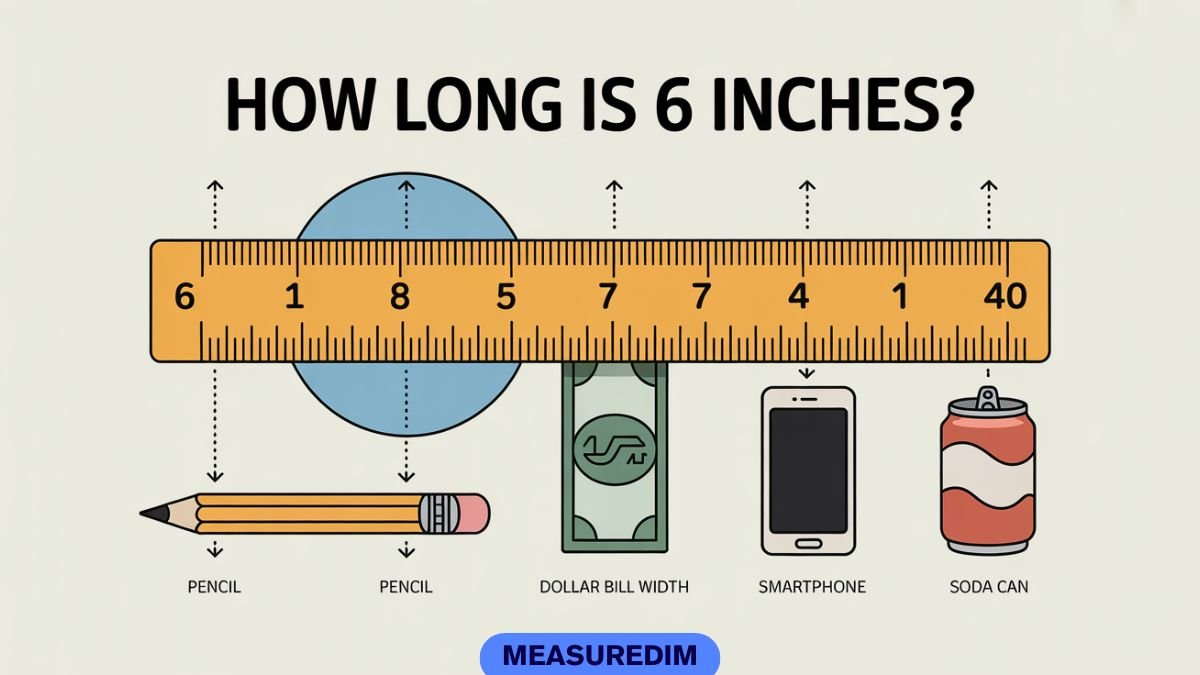
How Long Is 6 Inches? Real Objects to Picture It Fast
Six inches is a small unit of length. It equals exactly half a foot, or 15.24 centimeters. You can picture it as the long edge of a 4×6 photo print.
Ever tried to explain a size with no ruler nearby? It happens all the time. Once you learn a few everyday objects, you’ll judge 6 inches in a second.
This length shows up almost everywhere you look. A dollar bill, a hot dog, and a big phone are all close to it. Learn these markers and you’ll never be stuck guessing again.
Six Inches at a Glance
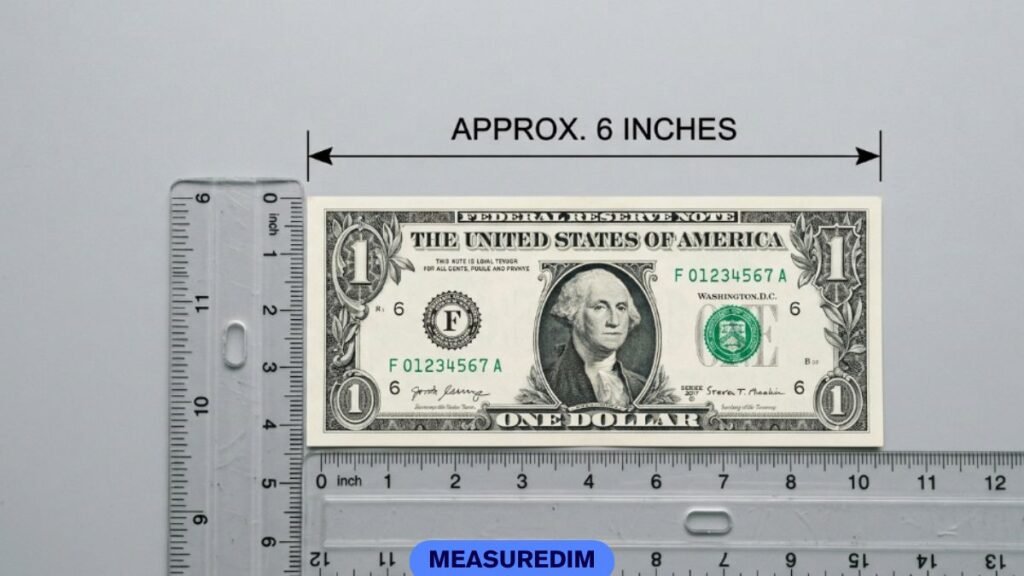
Six inches is exactly half a foot, or 15.24 centimeters. The cleanest real-world stand-in is the long edge of a standard 4×6 photo print, which measures precisely 6 inches. A US dollar bill is a hair longer at 6.14 inches, so if you have one in your wallet, you’re carrying a near-perfect 6-inch reference at all times.
That’s the short version. Below are the exact numbers, the objects, and the tricks.
6 Inches Converted Into Every Unit You’ll Need
Inches belong to the imperial system, but you’ll often need the metric equivalents for shipping labels, product specs, or school work. One inch equals exactly 2.54 cm, so every figure here is straight multiplication — no rounding guesswork.
| Unit | 6 inches equals |
| Centimeters | 15.24 cm |
| Millimeters | 152.4 mm |
| Feet | 0.5 ft |
| Yards | ≈ 0.167 yd |
| Meters | 0.1524 m |
Keep the 15.24 cm figure in mind — it’s the one that trips people up most, because 6 centimeters (just 2.36 inches) is an entirely different, much smaller length. More on that mistake later.
What Six Inches Actually Feels Like in Your Hand
Picture the space between your outstretched thumb and pinky — for most adults that spread is around 8 to 9 inches, so 6 inches is a touch shorter than a full hand span. It’s about the length of a chunky TV remote, or the reach from your wrist crease to the base of your fingers plus a little extra.
Held vertically, 6 inches is roughly how far a large smartphone stands when you set it on a table. It’s short enough to tuck into a jacket pocket, long enough that it won’t disappear in your palm. That in-between quality is exactly why so many everyday products settle on this size.
Everyday Objects That Land Right Around Six Inches
Here’s the practical part. Each object below is something you likely have within arm’s reach, with its real measurement and how closely it maps to 6 inches.
A Standard 4×6 Photo Print
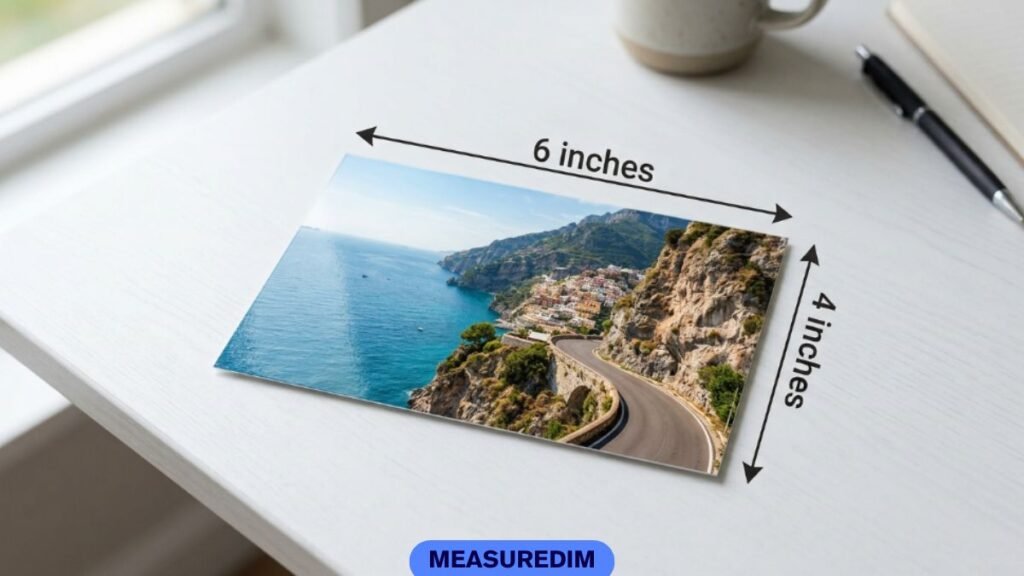
A classic printed photo measures 4 inches by 6 inches, which makes its longer edge an exact 6-inch ruler. This isn’t an approximation or a “close enough” — the 6-inch side is a fixed industry standard used by every photo lab and home printer.
Because these prints are so common, they’re one of the most reliable references you can grab. Pull one off the fridge or out of an album, and you have a calibrated straightedge. Next time you need to check whether a shelf bracket or a phone stand fits a 6-inch gap, hold a photo against it — the long side answers the question in a second.
Read Also: How Long Is 8 Inches? Everyday Objects to Picture It
A US Dollar Bill
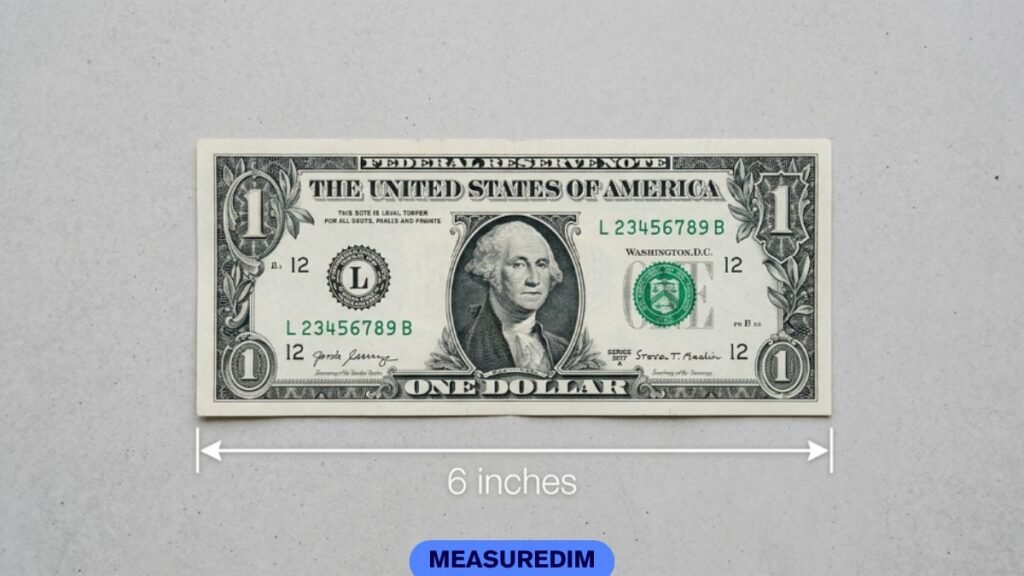
Every US banknote, from the single to the hundred, measures 6.14 inches long and 2.61 inches tall. That’s just 0.14 inch over our target, close enough that folding a bill in from one end by a sliver gives you a dead-on 6 inches.
I keep coming back to this one because almost everyone has cash on hand, and paper money is printed to strict tolerances that never vary. Lay a bill flat along the edge of a package or a plant pot and you’ve got an instant estimate. It’s the reference I reach for first when I’m away from a tape measure.
A Bun-Length Hot Dog
A standard bun-length frank runs right around 6 inches, which is why the buns that hold them are cut to match. Regular franks (the eight-to-a-pack kind) sit closer to 5 inches, while jumbo quarter-pounders stretch toward 7, so “hot dog” only works as a reference if you picture the bun-length version.
This one sticks in memory because the length is baked into the food itself — the sausage, the bun, and the sandwich all share the same footprint. It’s a handy mental image at a barbecue or when you’re eyeballing how much counter space a 6-inch item needs.
A Large Smartphone
Big-screen flagship phones like the iPhone Pro Max or a Galaxy Ultra measure roughly 6.1 to 6.4 inches tall from top to bottom. The Pro Max sits at about 6.29 inches, so it slightly overshoots 6 inches by a quarter-inch or less.
Note that the screen size you see advertised (a “6.7-inch display,” for example) is the diagonal, not the phone’s length — a common source of confusion I’ll return to. But the physical body height of a large handset is one of the most current, always-in-your-pocket ways to visualize this length. Set your phone upright and you’re looking at very nearly 6 inches.
A Bic Cristal Ballpoint Pen
The everyday clear-barrel Bic Cristal pen measures about 5.9 inches with its cap on — just a whisker under 6 inches. It’s one of the most manufactured objects on earth, so the dimension is remarkably consistent from pen to pen.
Because pens live in every drawer, bag, and desk cup, this is a reference you can produce almost anywhere. Lay one down next to whatever you’re sizing up and add a fingernail’s width to reach a true 6 inches. It’s my go-to for quick checks at a desk.
A Teaspoon
A typical teaspoon from a cutlery set runs about 5.5 to 6 inches end to end. Sizes drift a little between brands and styles — a delicate café spoon sits at the shorter end, a chunkier modern set at the longer — but most land in that band.
Cutlery is worth remembering because it’s standardized enough to trust and present in every kitchen. Pull a teaspoon from the drawer and you’ve got a rough 6-inch gauge for measuring recipe pans, jar heights, or drawer organizers while you cook.
A Small-to-Medium Banana
A modest banana measures roughly 6 inches along its curve, though this is the loosest reference on the list — supermarket bananas commonly reach 7 to 8 inches, and the curve itself adds length that a straight ruler wouldn’t. Treat it as a ballpark, not a precise stand-in.
Still, it earns a spot because it’s such a vivid, universal mental picture. When you want to convey “about half a foot” to someone without any tools nearby, “roughly a small banana” lands instantly. Just remember you’re estimating, not measuring.
A Subway “6-Inch” Sub
The famous 6-inch sandwich is named for this exact length, and the roll is cut to target it — real-world subs land around 5.5 to 6 inches depending on how the bread bakes and settles. It’s approximate by nature, since bread rises unevenly, but the intent is a 6-inch loaf.
The value here is purely mnemonic: a size with the number right in its name is easy to recall. Picture that sandwich and you’ve got a food-scale sense of the length, useful when you’re describing dimensions to a friend rather than measuring a shelf.
Two Credit Cards End to End
A single credit or debit card is 3.37 inches long (a global banking standard), so laying two end to end gives you 6.74 inches. That’s about three-quarters of an inch over 6 inches, so it’s a slight overshoot rather than a match.
I include it because cards are precisely sized and always in your wallet — handy when you have nothing else. Just subtract a fingertip’s width from the far end and you’ll land near a true 6 inches. Use it as a quick approximation, not a calibrated ruler.
The 6-Inch Lineup, Side by Side
| Object | Real length | In centimeters | Fit against 6″ |
| 4×6 photo (long edge) | 6.0 in | 15.24 cm | Exact |
| Bic Cristal pen | 5.9 in | 15.0 cm | Just under |
| US dollar bill | 6.14 in | 15.6 cm | Just over |
| Bun-length hot dog | ~6 in | ~15.2 cm | Approximate |
| Teaspoon | 5.5–6 in | 14–15.2 cm | Approximate |
| Large smartphone | 6.1–6.4 in | 15.5–16.3 cm | Slightly over |
| Small banana | ~6 in | ~15.2 cm | Rough (varies) |
| Subway “6-inch” sub | 5.5–6 in | 14–15.2 cm | Named, approx. |
| Two credit cards | 6.74 in | 17.1 cm | Overshoots |
Left Your Ruler Behind? Use Your Body
You carry several 6-inch estimators without realizing it. None are perfectly precise, but each gets you close enough for everyday judgment calls.
The simplest trick uses your thumb. The tip of an adult thumb to its first knuckle is close to 1 inch, so stepping that distance off six times walks you to roughly 6 inches. Slow but reliable.
Your hand width helps too. Across the knuckles of four fingers (thumb tucked away) most adults measure about 3 to 3.5 inches, so two hand-widths laid side by side land near 6 to 7 inches — nudge slightly tighter for a true 6.
The most accurate no-tool option is the dollar bill from your wallet at 6.14 inches. Fold a sliver off one end and you’ve calibrated it exactly. Between your thumb, your hand, and a banknote, you can gauge 6 inches almost anywhere.
Read Also: How Big Is 4 Inches? A Complete Size Guide With Real Objects
Where People Get Six Inches Wrong
A few misconceptions come up again and again, and each one throws estimates way off.
The biggest is confusing inches with centimeters. Six centimeters is only 2.36 inches — less than half our length. If a product listing feels absurdly small or large, check which unit it’s using before you panic.
Another is trusting the wrong kitchen object. A soda can stands 4.83 inches tall, not 6, and a brand-new pencil is 7.5 inches long. Both get casually cited as “about 6 inches” and both are wrong by more than an inch.
The third trap is phone screen size. A “6.5-inch display” describes the diagonal across the glass, which is always longer than the phone’s actual height or width. Don’t use the advertised screen number as a length reference — measure the body instead.
Six Inches vs. Its Neighbours: Five and Seven
Sizing something correctly often means knowing what sits just below and just above.
Five inches is the long edge of a 3×5 index card (exactly 5 in) and roughly the height of a standard soda can at 4.83 inches. Hold one against a 6-inch object and the extra inch is clearly visible — 6 inches is noticeably longer.
Seven inches shows up as a mass-market paperback‘s height (about 6.75–7 in), a standard dinner fork (~7 in), or that fresh unsharpened pencil (7.5 in). The jump from 6 to 7 is subtle to the eye but real; a hot dog next to a pencil makes the gap obvious.
Why Six Inches Shows Up Everywhere
This length isn’t random — it’s a sweet spot that product designers return to constantly.
In the kitchen, 6-inch cake pans and personal pizzas hit the size for a single serving or a small household. In gardening, a 6-inch plant pot is the standard step up for a growing seedling. Bakers, cooks, and hobbyists all learn this number by heart.
It surfaces in construction as 6-inch flooring planks and fastener lengths, in tech as the roughly 6-inch diagonal of a compact tablet or large phone, and in fashion as the popular 6-inch inseam on men’s shorts. Once you start noticing, half a foot is one of the most common dimensions in daily life.
Questions People Actually Ask
How long is 6 inches using fingers?
Six thumb-knuckle widths in a row equal about 6 inches, since each adult thumb tip to its first knuckle is close to 1 inch.
How much does 6 inches look like?
It looks like half a foot, or 15.24 cm — a little shorter than a full adult hand span from thumb to pinky.
What is an example of 6 inches?
The long edge of a 4×6 photo print is exactly 6 inches, and a US dollar bill is very close at 6.14 inches.
How long is 6 inches compared to an object?
It matches a bun-length hot dog and stands nearly as tall as a large smartphone, which runs about 6.1 to 6.4 inches.
How to visualize 6 inches?
Picture a dollar bill from your wallet or the long side of a 4×6 photo, then trim a sliver off to land dead-on 6 inches.
The One-Line Takeaway
So now you know how long is 6 inches. It is half of a foot. It is the same as 15.24 centimeters. The long edge of a 4×6 photo matches it exactly. A dollar bill sits very close at 6.14 inches. A big phone stands nearly this tall. These simple markers help you picture the size fast. You can keep them in your mind and use them any day.
You can also measure 6 inches with your own body. Six thumb-knuckle steps walk you to this length. Two hand-widths land you near it too. These tricks work when you have no ruler at hand. Practice them once and the size will stick with you. From today, you will spot 6 inches with ease and confidence.
Written by a dimensions writer who has spent more time holding rulers against household objects than is strictly reasonable.
Related Guides:
1: How Big Is 7 Inches? 10 Everyday Objects to Picture It