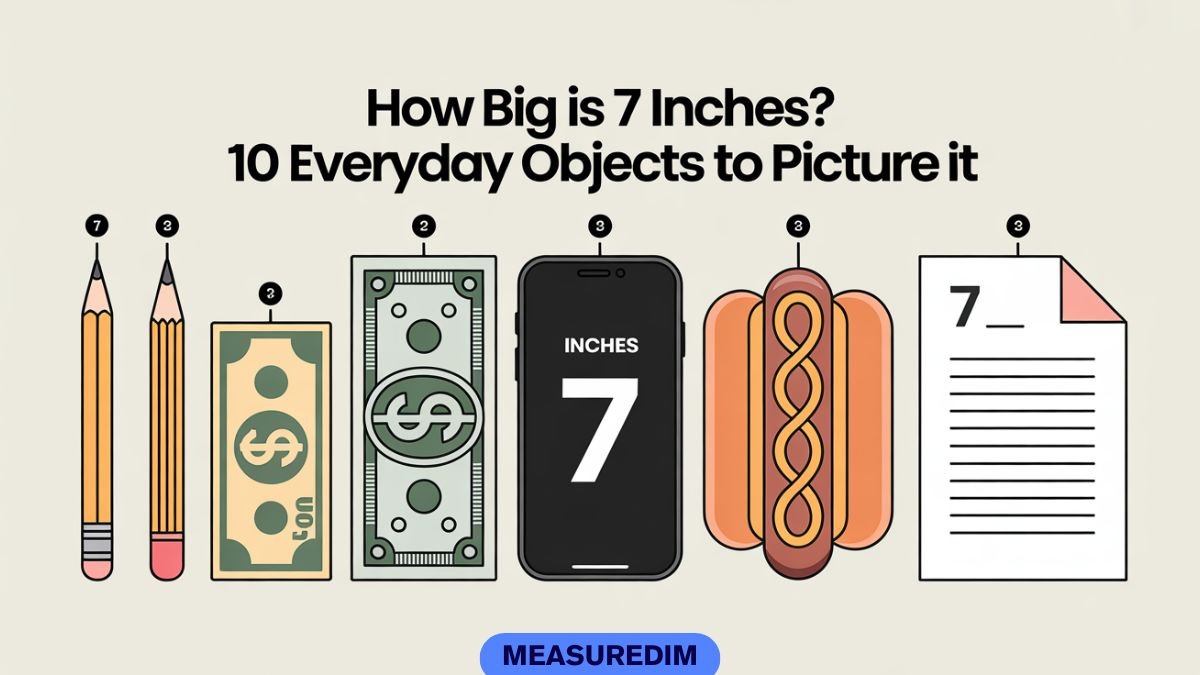
How Big Is 7 Inches? 10 Everyday Objects to Picture It
Seven inches is a simple length that people measure every day. It equals 17.78 centimeters, or 177.8 millimeters. That works out to one full inch more than half a foot.
Most people cannot picture 7 inches from the number alone. The digits give no real shape in your mind. A few common objects solve that problem in seconds.
The long edge of a 5×7 photo is exactly 7 inches. A medium banana lands very close to this length. A brand-new pencil and a dinner fork match it too.
7 Inches at a Glance
Seven inches equals 17.78 centimeters (177.8 mm). That’s a hair under 18 cm, a bit more than half a foot, and roughly the length of an average adult hand from the wrist crease to the tip of the middle finger. Hold your hand flat, and you’re already looking at a live reference.
If you only remember one thing: 7 inches ≈ 17.8 cm ≈ the long edge of a 5×7 photo.
7 Inches in Every Unit You’ll Need
Because 1 inch is defined as exactly 2.54 cm, every conversion below is precise — not rounded guesswork.
| Unit | 7 inches equals |
| Centimeters | 17.78 cm |
| Millimeters | 177.8 mm |
| Feet | 0.583 ft (7⁄12 of a foot) |
| Yards | 0.194 yd |
| Meters | 0.178 m |
| Half-foot check | 7 in = 6 in + 1 in |
Two quick anchors worth memorizing: 7 inches is one inch past half a foot, and in metric it’s just shy of 18 cm. Those two facts alone will get you close in almost any situation.
What 7 Inches Actually Feels Like in Your Hand
Numbers are abstract; your body isn’t. Lay a new pencil across your palm and it runs from your wrist past your fingertips — that overshoot is roughly the gap between an average hand and a true 7 inches. Stretch your thumb and index finger as wide as they’ll go and you’ll span about 7 to 8 inches for most adults, so 7 inches sits comfortably inside a single wide finger-spread.
It’s a “one-handed” size. Big enough that you can’t hide it under your fingers, small enough that it never needs two hands to hold. Think of the reach across a dinner plate’s rim, or the drop of a standard fork resting on a table.
10 Everyday Objects That Measure Right Around 7 Inches
Each item below includes its real dimension and how tightly it maps to 7 inches. I’ve labeled every entry exact or approximate so you know when to trust it to the millimeter and when to treat it as a ballpark.
A 5×7 Photo Print or Index Card
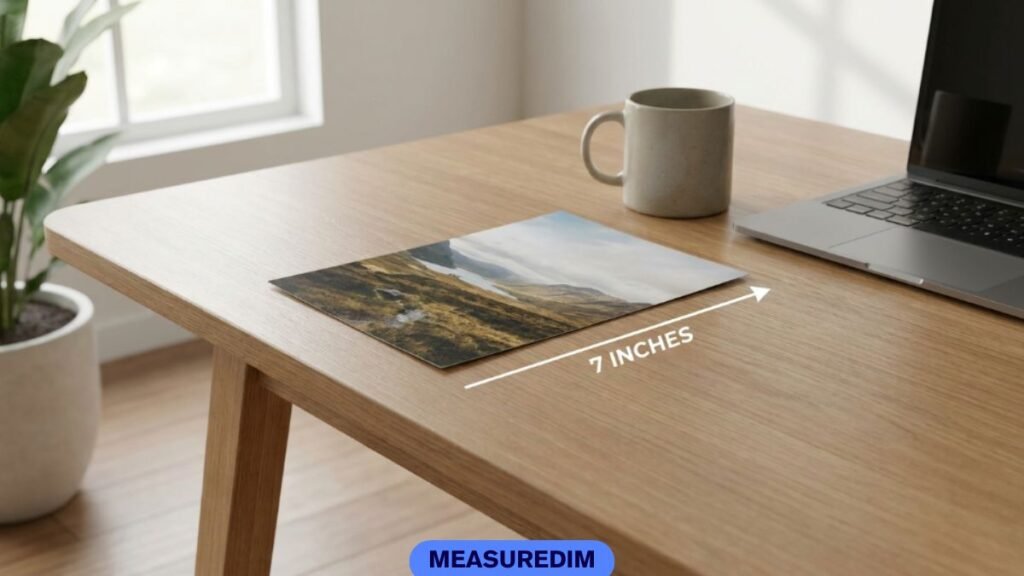
A standard 5×7 print measures exactly 5 inches by 7 inches, so its long edge is a precise 7-inch ruler you probably already own. The same is true of a 5×7 index card, a common frame insert, and many greeting cards sized to fit 5×7 envelopes. No estimation needed — the number is baked into the product.
This is the single most reliable reference on the list because it’s manufactured to spec, not grown or hand-assembled. Keep one in a drawer and you have a repeatable 7-inch check for wrapping, framing, and measuring shelf clearance. When a spec sheet says “7 inches” and you want to sanity-check it, this is the object I reach for first. (Exact.)
A Medium Banana
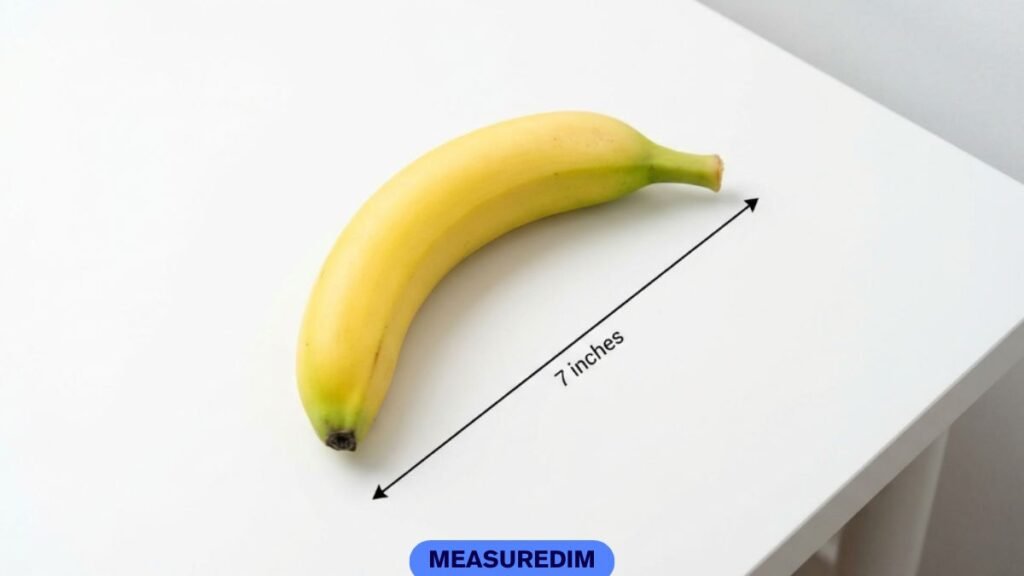
A medium Cavendish banana — the kind stacked in nearly every grocery store — usually runs 7 to 8 inches along the outer curve, with a typical fruit landing close to 7.5 inches. Straighten that measurement to a flat length and a medium banana sits right in the 7-inch neighborhood. Larger “extra-large” bananas push past 8 inches, and smaller ones dip toward 6.
Fruit varies with growing conditions, so treat this as a friendly estimate rather than a caliper reading. Still, it’s brilliant for kitchen and lunchbox math: if you’re eyeballing how much space a 7-inch item needs in a bag or a container, mentally drop a banana next to it. Almost everyone has held one in the last week. (Approximate.)
A Brand-New Wooden Pencil
An unsharpened #2 pencil straight from the box measures about 7.5 inches (19 cm), which puts it a half-inch over 7. Sharpen it a few times and it drops right through the 7-inch mark, so a lightly used pencil is often a near-perfect stand-in.
Pencils are consistent because they’re mass-produced to a standard length, which makes them one of the better desk-drawer references. If you’re at a desk with no ruler, a fresh pencil minus a fingertip’s worth is your 7 inches. I use this constantly for quick page-layout and packaging checks. (Approximate — slightly over when new.)
A Dinner Fork
A full-size dinner fork — not the shorter salad fork — typically measures 7 to 7.5 inches from tine tip to handle end. Restaurant and household flatware clusters tightly around this range, which is why a place setting is a surprisingly good pocket ruler when you’re out.
The reliability comes from convention: dinner forks are sized for adult hands and standard table settings, so they don’t wander much between brands. Next time you’re at a table trying to judge whether something is “about 7 inches,” rest a fork beside it. Salad and dessert forks run shorter (around 6 inches), so make sure you grab the big one. (Approximate.)
An Adult Manual Toothbrush
A standard adult manual toothbrush lands around 7 to 7.5 inches from bristle tip to handle base. Compact and kids’ brushes are shorter, but the everyday full-size version most adults use hovers right near our target.
Because it’s an object you handle every single morning, it builds fast intuition for the length. It’s also a handy travel reference — if you’re gauging whether a 7-inch gadget will fit a toiletry pouch, your toothbrush is already the yardstick sitting in that same pouch. (Approximate.)
A 7-Inch Tablet or E-Reader
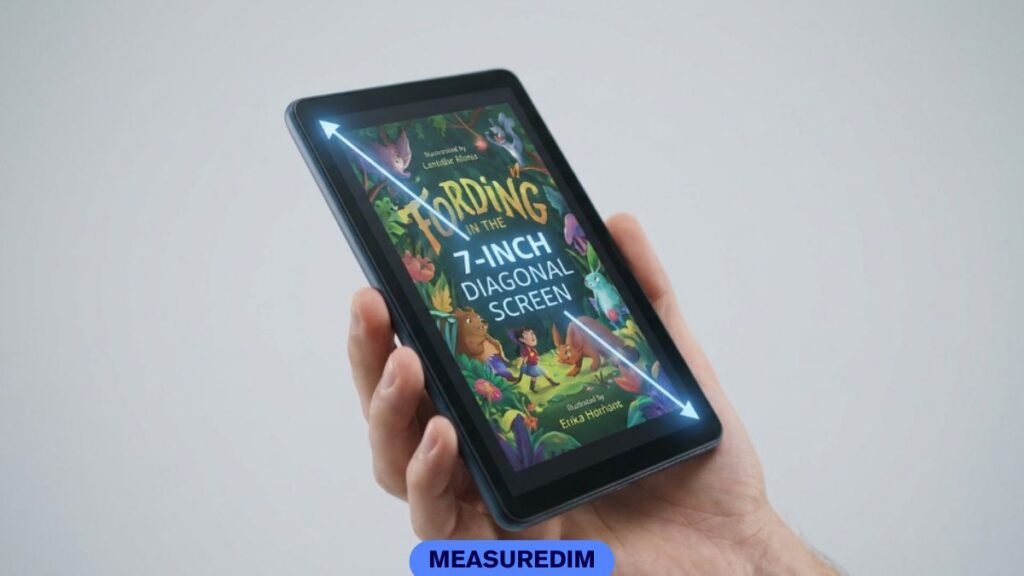
Budget tablets and e-readers advertised as “7-inch” — think the Amazon Fire 7 class of device — are measured diagonally across the screen, corner to corner, not along an edge. So the 7 inches here describes the display diagonal, and the physical body is a little larger than that. Worth knowing before you assume the whole slab is 7 inches wide.
This matters because screen sizes are always quoted as diagonals, a convention that trips people up constantly. If someone hands you a 7-inch tablet, the glass diagonal is your 7-inch reference, while the outer casing (with bezels) adds roughly an inch. Great for visualizing a compact screen; just don’t confuse the diagonal with the width. (Exact — but diagonal, not edge.)
Two Credit Cards End to End
A single card follows the ISO ID-1 standard at 3.37 inches long, so two laid end to end reach about 6.75 inches — a whisker under 7. Add a couple of millimeters of gap between them and you’re essentially there.
Every credit card, debit card, and driver’s license shares that exact width by international standard, which makes this one of the most globally consistent references available. Nearly everyone carries the components in a wallet. When I need a quick, repeatable “just under 7 inches,” two cards in a line beat guessing every time. (Precise per card; the pair lands ~0.25 in short of 7.)
A Standard TV or Streaming Remote
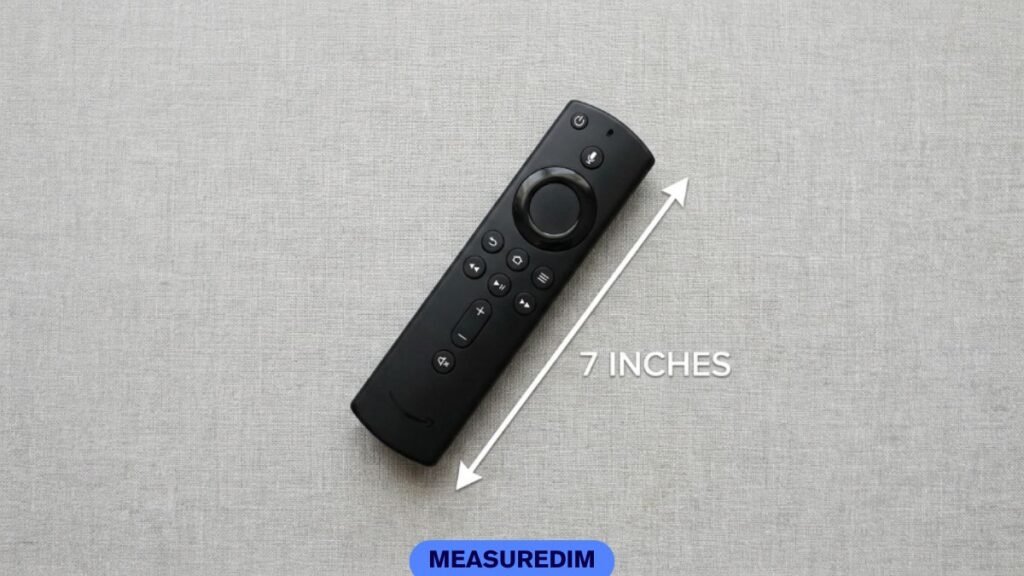
Many cable and streaming remotes measure around 6.5 to 7 inches tall. There’s real spread here — minimalist streaming sticks ship remotes closer to 5 inches, while older cable clickers can stretch to 8 — but the common living-room remote sits right in the 7-inch band.
Because the range is wide, treat this as a rough visual cue rather than a firm measurement. Its value is availability: there’s almost always one on the couch. If you’re picturing whether a 7-inch object fits a shelf or a drawer, grab the remote and compare. (Approximate — verify the specific model.)
An Average Adult Hand
Measured from the wrist crease to the tip of the middle finger, the average adult hand runs about 6.8 to 7.6 inches, with a rough overall average near 7.2 inches. Larger hands exceed 7.5 inches; smaller ones sit closer to 6.5.
This is your always-on ruler — the reference you can never leave at home. It won’t be millimeter-accurate because hands vary, so measure your own hand once against a ruler and remember the number. After that, you carry a personalized 7-inch gauge everywhere you go. (Approximate — calibrate to your own hand.)
A Mass-Market Paperback (Height)
The classic mass-market paperback — the pocket-sized novel format — stands about 6.75 to 7 inches tall. Trade paperbacks and hardcovers are larger, but the rack-sized paperback you’d grab at an airport is right on the mark.
Book dimensions follow printing conventions, so this format stays consistent across publishers. If you own a shelf of pocket paperbacks, you own a shelf of ~7-inch references. It’s an easy one for judging vertical clearance — will a 7-inch item stand up under that cabinet? Stand a paperback there and see. (Approximate.)
Every Reference, Side by Side
Here’s the whole set ranked by how close each object sits to a true 7 inches.
| Object | Real length | Vs. 7 inches | Type |
| 5×7 photo / index card (long edge) | 7.0 in | Exact | Exact |
| 7-inch tablet (screen diagonal) | 7.0 in | Exact (diagonal) | Exact |
| Average adult hand | ~7.2 in | +0.2 in | Approx. |
| Dinner fork | 7.0–7.5 in | 0 to +0.5 in | Approx. |
| Adult toothbrush | 7.0–7.5 in | 0 to +0.5 in | Approx. |
| Medium banana | 7.0–8.0 in | 0 to +1 in | Approx. |
| New wooden pencil | 7.5 in | +0.5 in | Approx. |
| TV / streaming remote | 6.5–7.0 in | −0.5 to 0 in | Approx. |
| Mass-market paperback (height) | 6.75–7.0 in | −0.25 to 0 in | Approx. |
| Two credit cards end to end | ~6.75 in | −0.25 in | Precise pair |
Judging 7 Inches With Nothing but Your Body
No ruler, no objects, no problem. Your body carries several built-in scales.
The cleanest trick is hand length: measure once from your wrist crease to your middle fingertip, note whether you’re above or below 7 inches, and use that offset forever. Most adults land within half an inch, so a single calibration makes your hand a lifelong tool.
A second method uses your finger-thumb span. Spread your thumb and index finger as far apart as they’ll comfortably go — for many adults that’s about 7 to 8 inches. Close the gap slightly and you’ve bracketed 7 inches with two fingertips.
Third, stack knowns. A dollar bill is 6.14 inches long, so 7 inches is a dollar bill plus roughly the width of your thumb (about three-quarters of an inch). That combination is oddly accurate because both pieces are standardized. Any of these three beats a blind guess by a wide margin.
Where People Get 7 Inches Wrong
The most common slip is confusing a screen diagonal with a straight edge. A “7-inch tablet” is 7 inches corner to corner, not 7 inches across — the flat width is smaller, and the body with bezels is larger. Always ask whether a quoted 7 inches is a diagonal.
Another is assuming metric and imperial swap cleanly. Seven inches is 17.78 cm, not 17 or 18 exactly; rounding to a whole centimeter quietly loses a few millimeters. For most estimates that’s fine, but not when tolerances are tight, like framing or drilling.
People also over-trust natural objects. Bananas and hands vary, so treat them as ranges, not fixed rulers. When precision matters, lean on the manufactured references — the 5×7 card and the credit-card pair won’t drift.
6 Inches vs 7 Inches vs 8 Inches
Seeing the neighbors sharpens the mental picture.
Six inches is exactly half a foot — the length of a standard sub roll or a dollar bill’s near-length. Seven inches adds a single inch to that: think of the dollar bill plus a thumb width. Eight inches climbs to two-thirds of a foot — the reach of a standard tablespoon or a large kitchen knife blade. Slotting 7 inches between “half a foot” and “two-thirds of a foot” gives you two hard anchors on either side, so you rarely overshoot.
When 7 Inches Actually Comes Up in Real Life
This length shows up more than you’d expect. Photo printing and framing revolve around the 5×7 format, so knowing the edge length helps you buy frames and mats without a tape measure. Compact electronics — small tablets, e-readers, and handheld consoles — cluster near a 7-inch diagonal, which matters when you’re checking case and sleeve fit.
It’s also a packing and shipping sweet spot: many small parcels, phone boxes, and gadget sleeves hover around 7 inches on one side, so gauging it by eye speeds up whether something fits a padded mailer. And in the kitchen, dinner forks and medium produce sit right here, handy for portioning and container-fit decisions. Once you’ve locked the size in, you’ll start noticing it everywhere.
Quick-Fire Questions on 7 Inches
How many cm is 7 inches?
Seven inches equals 17.78 cm exactly, since one inch is defined as 2.54 cm. In millimeters that’s 177.8 mm. For rough mental math, call it “just under 18 cm.”
Is 7 inches bigger than a standard smartphone?
Usually yes. Even large modern phones measure roughly 6.3 to 6.5 inches tall, so 7 inches is slightly longer than almost any mainstream handset. Only oversized “phablets” or unfolded devices approach it.
What household item is exactly 7 inches?
The long edge of a 5×7 photo print or index card is exactly 7 inches. It’s the most dependable everyday reference because it’s manufactured to that precise spec.
How can I measure 7 inches without a ruler?
Use your hand: an average adult hand from wrist to middle fingertip is about 7 inches. Or place two credit cards end to end (about 6.75 inches) and add a small gap to reach 7.
Is 7 inches half a foot?
No — half a foot is 6 inches. Seven inches is one inch more than half a foot, or 7⁄12 of a foot (0.583 ft).
How big is a 7-inch tablet, really?
The 7 inches refers to the screen measured diagonally, corner to corner. The physical body is a bit larger once you add the bezels around the display.
Lock 7 Inches Into Memory
So, how big is 7 inches? It is 17.78 centimeters, or 177.8 millimeters. That is one inch more than half a foot. You now have simple ways to picture it. The long edge of a 5×7 photo shows the exact length. A medium banana, a new pencil, and a dinner fork all sit close to this size too. Your own hand helps as well, since most adult hands reach about 7 inches from the wrist to the fingertip.
Keep these objects in your mind. They turn a plain number into a real, clear size. Next time you need to measure 7 inches, you will spot it fast. You will not need a ruler to feel sure. This small skill helps you every day.