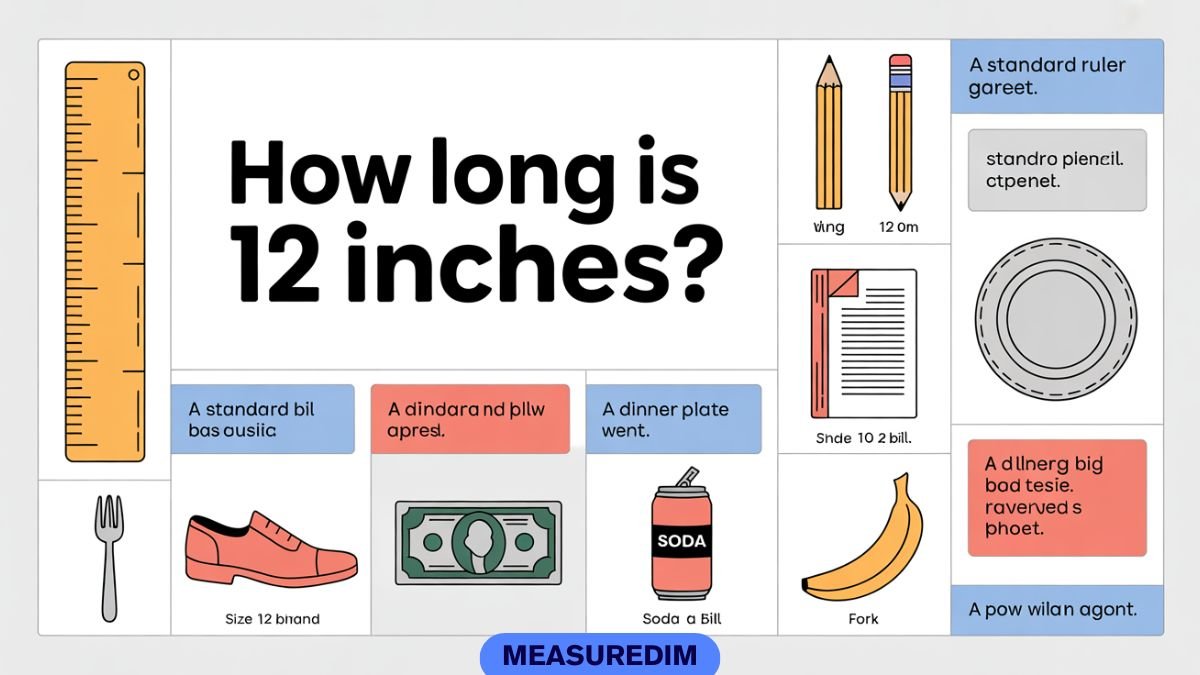
How Long Is 12 Inches? 9 Everyday Things to Picture It
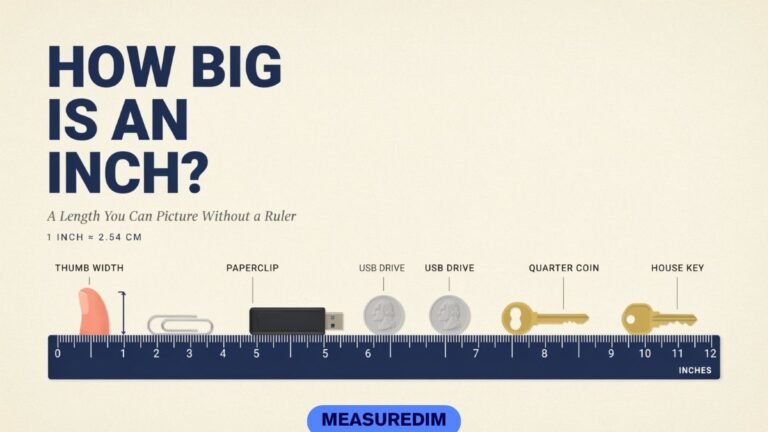
Twelve inches is one foot. That is exactly 30.48 centimeters. It is a fixed measurement, not a rough guess. One inch always equals 2.54 centimeters. So 12 inches never changes. Picture a full school ruler, tip to tip.
Hold your hands apart and guess a foot. Most people miss by an inch or two. It is harder to picture than you think. But once you learn it, you will spot it fast. A few everyday objects make it stick. After that, you will never second-guess it again.
Many common things measure close to a foot. A vinyl record is about 12 inches wide. A floor tile is often 12 inches on each side. Two dollar bills end to end come near it too. Your own forearm is roughly a foot long. These give you a ruler you always carry.
The One-Line Answer
Twelve inches is exactly one foot — that’s 30.48 cm, or 304.8 mm. It’s a defined, exact conversion, not a rounded guess, because one inch is officially 2.54 cm. Picture a standard school ruler laid flat: that whole strip, tip to tip, is your 12 inches.
Every Conversion You’ll Actually Need
The inch-to-centimeter relationship is fixed by definition, so every figure below is exact rather than approximate.
| Unit | 12 inches equals |
| Feet | 1 foot (exact) |
| Centimeters | 30.48 cm |
| Millimeters | 304.8 mm |
| Yards | 0.333 yd (one-third of a yard) |
| Meters | 0.3048 m |
Keep one anchor in your head — 12 in = 30.48 cm — and you can rebuild the rest. Millimeters is just that number times ten; meters is it divided by a hundred.
What a Foot Actually Feels Like in the Hand
Numbers are abstract, so here’s the intuition. Twelve inches is roughly the span from the tip of an average man’s elbow to the base of his palm. It’s a little longer than a sheet of A4 paper turned the tall way (that page is 11.7 inches), and a little shorter than the long edge of US legal paper (14 inches). It’s the width of a big kitchen cutting board, the height of a tall drink bottle, the diameter of a large dinner platter.
Crucially, it’s a length you can carry around without a tool — which is exactly why the “foot” became a unit in the first place. Once a few of the objects below are locked into memory, you’ll gauge a foot by eye and rarely be more than an inch out.
Nine Everyday Objects That Land on the One-Foot Mark
I’ve split these into two groups: things that are a foot by design, and things that happen to measure close to it. Where a comparison is an estimate rather than an exact match, I say so plainly.
The Classic 12-Inch Ruler
The obvious one, and the most reliable: a standard 12-inch ruler is exactly 12 inches — one full foot — by definition. It’s manufactured to that length precisely so it can double as a foot-long straightedge, which is why the markings run 1 through 12 with the final line sitting dead on the end.
This is your calibration object. If you own one, you already have a physical foot in a drawer. Hold it up, memorize how far apart your hands sit, and you’ve got a portable reference for every other estimate on this page. When you’re eyeballing a shelf gap or a parcel and thinking “is that a foot?”, the ruler is the mental yardstick you’re comparing against.
A 12-Inch Vinyl Record
A standard LP vinyl record is a “12-inch” by name, and the disc itself measures about 11.9 inches across — near enough to a foot that the difference is invisible to the eye. The nominal 12-inch spec is where the format gets its shorthand; hold one and you’re holding a circle a foot wide.
Records make a great reference because the size is consistent worldwide — an LP pressed in Tokyo matches one pressed in Nashville. If you’ve got a crate of them, that round sleeve corner-to-side gives you an instant foot. It’s a handy gauge when you’re measuring anything circular, like checking whether a serving tray or a wall clock will read as “about a foot” across.
Read Also: How Big Is 10mm? Everyday Objects, Conversions & Size Comparisons
Two US Dollar Bills, End to End
A single US banknote is 6.14 inches long, so laying two dollar bills end to end gives you 12.28 inches — just a hair over a foot. Call it a foot plus a fingernail’s width. This is an approximate match, but a dependable one, because every US bill from the $1 to the $100 shares that identical 6.14-inch length.
Money is the reference you almost always have on you. Pull two notes from your wallet, line them up on a table, and you’ve built a foot-long ruler out of cash. It’s genuinely useful at a flea market or yard sale when you need to size up whether something will fit a shelf and there’s no tape measure in sight.
A Standard Floor or Ceiling Tile
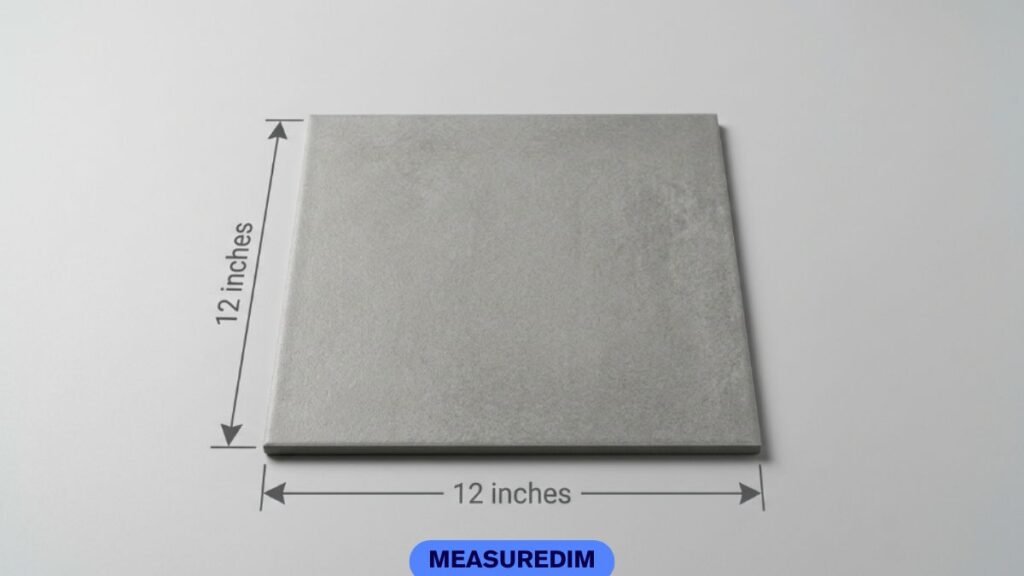
The most common square floor tile sold in North America is 12 × 12 inches — a foot on every side. Ceiling tiles and peel-and-stick vinyl squares follow the same one-foot grid, which is exactly why flooring is often priced and counted by the square foot.
Because they tile a room in a predictable grid, they’re a brilliant real-world scale. Next time you’re standing on a tiled floor, count the squares — each one is a foot, so a room that’s ten tiles wide is roughly ten feet across. That grid turns any tiled kitchen or bathroom into a giant built-in ruler.
A 12-Inch Skillet
A large cast-iron or nonstick skillet sold as a “12-inch” pan measures about 12 inches across the top rim — the widest point. Worth knowing: the actual cooking surface at the bottom is smaller, usually 9 to 10 inches, because the walls slope outward. So the “12 inches” is the rim diameter, not the base.
Kitchen cookware is a fine everyday gauge precisely because the sizing is printed on the box and stamped on the handle. If a recipe or a fridge shelf has you wondering about a foot of clearance, that big frying pan across its widest span settles it. Just remember the rim-versus-base distinction so you don’t undersell the pan’s true width.
A 2-Liter Soda Bottle
A full 2-liter soft-drink bottle stands roughly 12.4 inches tall, cap included — so a shade taller than a foot. Exact height wanders a little between brands and bottle designs, which is why I’d file this as “about a foot, leaning slightly over” rather than a precise match.
Still, it’s one of the handiest references going, because almost every household has one in the fridge or recycling. Stand it next to whatever you’re sizing up and you’ve got a quick, upright foot-plus. It’s especially useful for gauging vertical space — the headroom under a shelf, or whether a box is roughly a foot deep.
A 750 ml Wine Bottle
A standard 750 ml wine bottle typically runs 11.5 to 12.5 inches tall, with most landing right around a foot. Bordeaux-style bottles sit toward the shorter end; slender Burgundy and Alsace bottles stretch a little taller. So treat this as “approximately 12 inches, with real variation by shape.”
Because that range straddles a foot so neatly, a wine bottle is a reliable dinner-party ruler. Set one upright beside a candlestick, a vase, or a stack of books and you can call the height to within an inch. The variation between bottle styles is exactly why I’d reach for the ruler if you need certainty rather than a good eyeball.
Your Own Forearm
Here’s the tool you never leave home without. For many adults, the distance from the elbow crease to the wrist — the length of the forearm — runs close to 10 to 12 inches. It’s often a touch under a full foot, so read this as an estimate rather than an exact foot, and check your own arm against a ruler once to learn your personal offset.
That one-time calibration is what makes the forearm so valuable. Once you know that yours is, say, an inch short of a foot, you can measure anything by laying your arm along it and adding the correction. It’s the fastest way to size furniture in a store, spacing on a wall, or a length of fabric when your hands are your only tools.
Roughly 13 Quarters in a Row
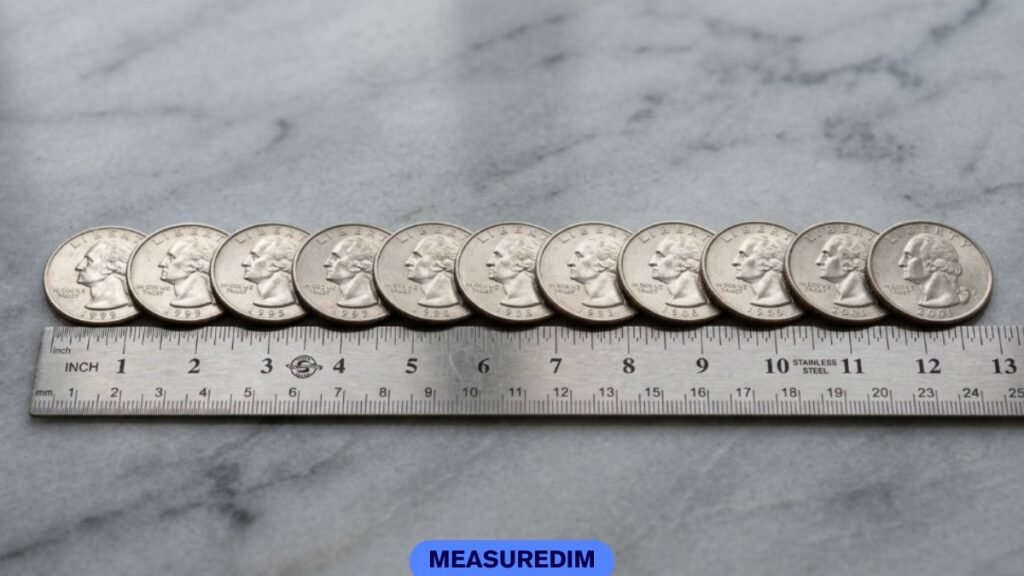
A US quarter is 0.955 inches in diameter, so lining up about 13 quarters edge to edge spans close to 12.4 inches — a foot with a little to spare. Twelve quarters gets you to about 11.5 inches; thirteen nudges you just past a foot. It’s an approximate method, best for small lengths.
Coins shine when you’re measuring something short and need better precision than a guess. Because every quarter is minted to the same diameter, the row is consistent and repeatable. It’s a neat trick for sizing a phone screen, a book spine, or a gap where a full ruler won’t reach.
The Objects at a Glance
| Object | Real measurement | How it maps to 12 in |
| 12-inch ruler | 12 in | Exact |
| Vinyl LP record | ~11.9 in across | Near-exact |
| 12 × 12 floor tile | 12 in per side | Exact |
| 12-inch skillet | ~12 in at the rim | Exact (nominal) |
| Two $1 bills, end to end | 12.28 in | Just over a foot |
| 2-liter soda bottle | ~12.4 in tall | Slightly over |
| 750 ml wine bottle | 11.5–12.5 in tall | Around a foot |
| Adult forearm | ~10–12 in | Usually just under |
| 13 quarters in a row | ~12.4 in | Slightly over |
Estimating a Foot Without Any Tools
When there’s no ruler in reach, your body is the backup. The forearm method above is the single most accurate — elbow to wrist is close to a foot for most adults, and one quick check against a real ruler tells you your exact offset for life.
Two more work in a pinch. A wide hand span — thumb tip to pinky tip, fingers stretched — averages around 8 to 9 inches for adult men, so a span plus a few extra fingers-width lands near a foot. And your own foot (the body part) averages roughly 9.5 to 11 inches, a little under the unit that borrowed its name — so a foot-length plus a knuckle or two gets you close. Calibrate each of these once and they become genuinely dependable, no metric-versus-imperial math required.
Read Also: How Big Is 16 Inches? 8 Everyday Objects to Picture It
Where a Foot Turns Up in the Real World
Twelve inches is everywhere once you notice it. Shipping and storage revolve around it — carriers price and size boxes in inches, and a one-foot cube is a mental baseline for parcels. Flooring and construction run on the foot grid, from tiles to stud spacing to how lumber is sold.
Screens borrow it too: a 12-inch laptop describes the diagonal of the display, and monitor and TV sizes all follow the same diagonal-inch convention. In the kitchen, cookware, cutting boards, and serving platters cluster right around the foot mark. Even audio gear leans on it — a 12-inch subwoofer names the driver’s diameter. Knowing the size by feel makes online shopping far less of a gamble, because you can visualize the product before it ships.
12 Inches Versus the Sizes Beside It
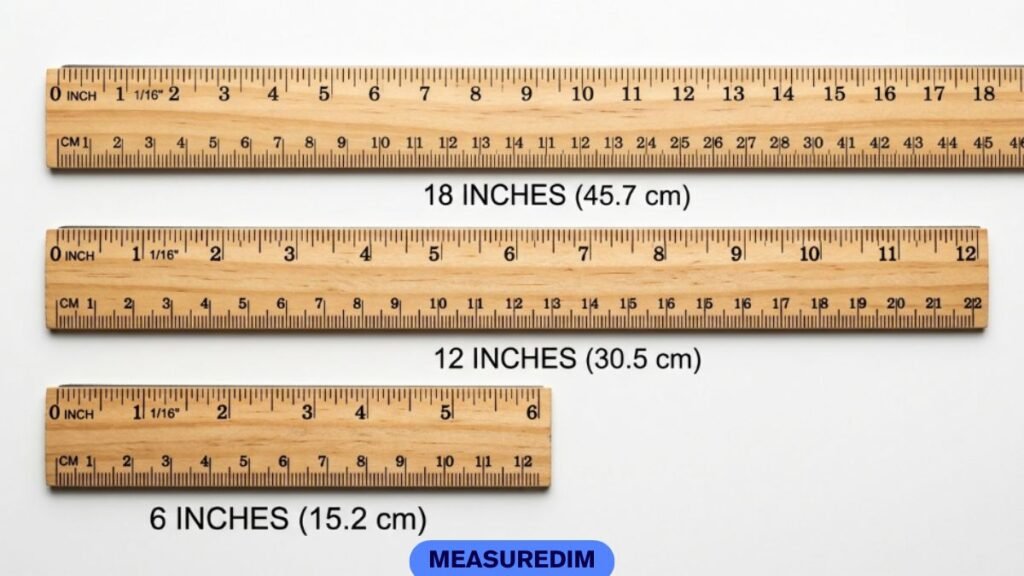
Context sharpens a measurement. Here’s how a foot sits between its close neighbors.
Ten inches (25.4 cm) is the size of a standard dinner plate — noticeably smaller, the sort of gap you’d see between a plate and the platter it sits on. Eleven inches (27.94 cm) is roughly the long edge of US letter paper, just shy of a foot. Step up to fourteen inches (35.56 cm) and you’re at the long side of legal paper or a common “large” pizza — clearly bigger, about two inches of extra reach. And eighteen inches is a foot and a half, the height of a small end table. Sliding along this scale is the best way to feel how much — or how little — an inch or two actually changes things.
Where People Trip Up With the One-Foot Mark
The most common slip is confusing a product’s name with its exact length. A “footlong” sandwich is marketed at 12 inches, but real-world measurements have shown some come up around 11 inches — a naming convention isn’t a guarantee. The same caution applies to any object called a foot: verify if precision matters.
Another is the rim-versus-surface trap on cookware — that 12-inch skillet only measures 12 inches across the top edge, not the cooking base. People also mix up diameter and length: a 12-inch record and a 12-inch ruler share a number but describe different shapes, so don’t assume a “12-inch” item is a foot in every direction. Finally, watch the metric near-misses. A “30 cm” ruler sold internationally is 11.8 inches, not a true foot — close, but a fraction short, which matters over longer runs.
Quick-Fire Q&A
What body part is 12 inches long?
No single body part is reliably 12 inches, but an adult forearm (elbow to wrist) comes closest at about 10 to 12 inches. Check yours against a ruler once to learn your exact length.
How long is 12 inches compared to an object?
A standard 12-inch ruler, a vinyl record (about 11.9 inches wide), and a 12×12 floor tile all match a foot. Two US dollar bills laid end to end reach 12.28 inches — just over.
How long does 12 inches look like?
It looks like one full foot — a little longer than the tall side of A4 paper and about the width of a large dinner platter. Picture a school ruler laid flat, tip to tip.
How long is 12 inches on a ruler?
It is the entire length of a standard ruler, from the 0 mark to the 12 mark. That final line sits exactly on the end, since 12 inches equals one foot.
Can I use my phone as a ruler?
Yes, in a pinch. Most large phones measure about 6 to 6.5 inches tall, so laying it down twice spans close to a foot. Ruler apps also work, though they are less precise than the real thing.
Now You’ll Never Second-Guess a Foot
Now you know how long is 12 inches. It is one foot. It is 30.48 centimeters. That number never changes. You can trust it every time. The best part is simple. You do not always need a ruler. Many everyday things match this size. A vinyl record is about 12 inches wide. A floor tile is 12 inches on each side. Two dollar bills end to end come very close.
Pick one object that stays near you. Keep it in your mind. Your forearm works well for this job. Line it up and you will guess a foot fast. Practice this a few times. Soon you will spot 12 inches by eye. This small skill helps you every day. It makes measuring quick and easy.
Related Guides:
1: How Big Is 40 cm? Real Objects to Picture It Instantly
2: How Big Is 7mm? A Plain-English Guide to a Very Small SizeAa
3: How Tall Is a Monster Can? Every Size, Measured
4: How Big Is 6 cm? Compare It to Real Everyday Objects
5: How Big Is 11 Inches? 9 Everyday Objects That Show You the Size