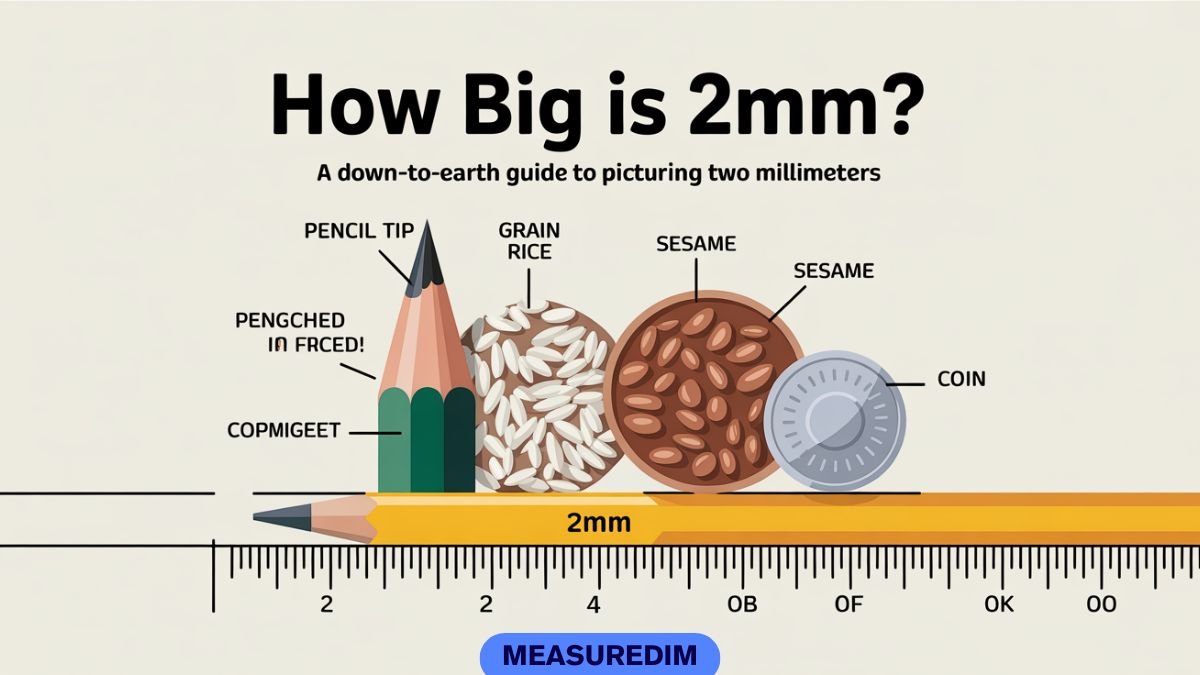
How Big Is 2mm? A Down-to-Earth Guide to Picturing Two Millimeters
Two millimeters is a very small length. It equals 0.2 centimeters, or about 0.08 of an inch. That is close to the thickness of a US nickel.
Have you ever seen a number and had no idea how small it was? That happens a lot with 2mm. Once you match it to a real object, it clicks fast.
You meet 2mm more often than you think. It shows up in beads, drill bits, and pencil lead. A single strand of dry spaghetti is also about this wide.
The Short Version
Two millimeters is about the thickness of a US nickel (a nickel is actually 1.95 mm, so it’s almost dead-on). In imperial terms, 2 mm works out to 0.0787 inches — roughly 5/64″, which is a touch under a tenth of an inch. It’s one-fifth of a centimeter, and it’s clearly visible to the naked eye — not “invisible” or “basically nothing,” despite what people assume about a two-digit millimeter figure.
2mm Converted Into Every Unit You Might Need
Here’s the full spread, so you never have to reach for a calculator. These are rounded sensibly, not to fake decimal places.
| Unit | 2mm equals | Handy way to say it |
| Millimeters | 2 mm | The starting point |
| Centimeters | 0.2 cm | One-fifth of a cm |
| Meters | 0.002 m | Two-thousandths of a meter |
| Inches | 0.0787 in | About 0.08″, or ~5/64″ |
| Feet | 0.00656 ft | Basically nothing in feet |
| Yards | 0.00219 yd | Ignore feet and yards here |
The two conversions that matter in daily life are the metric-to-inch jump and the mm-to-cm shift. Keep 2 mm ≈ 5/64″ and 2 mm = 0.2 cm in your head and you’ve covered 95% of real situations.
What Two Millimeters Actually Feels Like
Imagine the edge of a coin between your fingers. That slim band of metal — not the flat face, the rim — is roughly what 2 mm covers. It’s thick enough to feel as a distinct step when you run a fingernail over it, yet thin enough that a stack of a few of them still fits in a coin slot.
Another way in: 2 mm is about the diameter of the graphite you sharpen a pencil down to. It reads as a small, deliberate dot on paper, not a hairline. So while 2 mm sounds tiny, it’s firmly in “you can measure this by eye once you’ve trained it” territory.
Everyday Things That Land Right at 2mm
This is the useful part — real objects with real, checkable dimensions. I’ve flagged which ones are exact and which are close, because honest ranges beat fake precision every time.
A Nickel Standing on Its Edge
A US nickel measures 1.95 mm thick, which is as close to 2 mm as any coin in your pocket gets. Set one on its edge and that sliver of metal is your ready-made reference. It’s not exactly 2 mm — it’s about 0.05 mm shy — but for eyeballing purposes it’s a bullseye.
The reason a nickel beats a ruler here is that it’s always on you and it never lies about its size; coin dimensions are set by the mint to tight tolerances. Next time a listing says “2 mm band” or “2 mm gap,” pull out a nickel and hold its edge against the item — you’ll know instantly whether the number is honest.
The Lead in a Clutch Pencil
Draughting and leadholder pencils use a 2.0 mm lead — this one is exact, not an estimate. Artists, drafters, and engineers have carried these for decades precisely because that fat 2 mm core is sturdier than the 0.5 mm and 0.7 mm sticks in an everyday mechanical pencil.
If you own one, you’re holding a calibrated 2 mm rod. Lay it against a small part and compare — the lead’s diameter is your gauge. This is the single most precise household reference for 2 mm that most people already have in a drawer.
The Core of an Ordinary Wooden Pencil
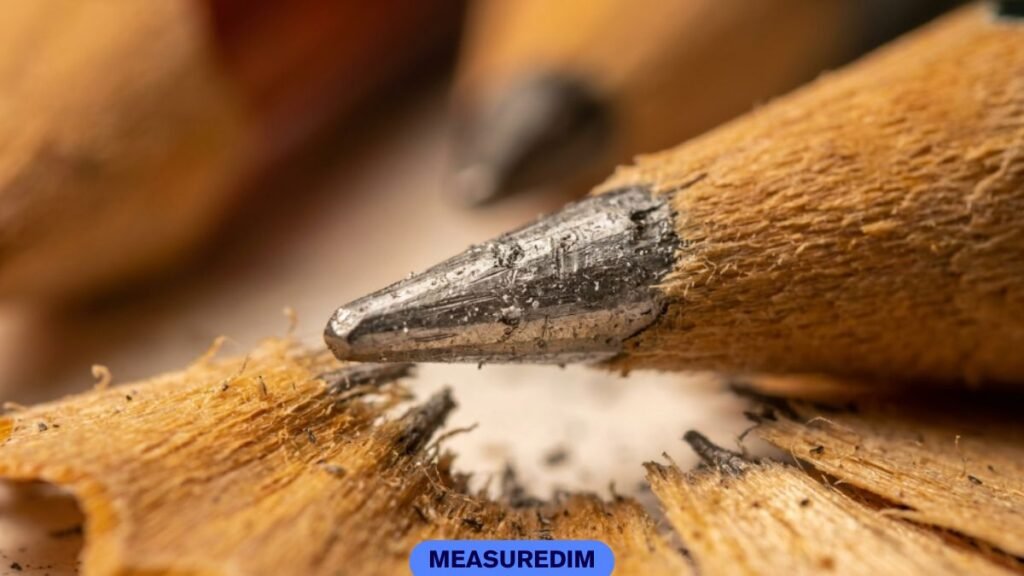
The graphite core inside a standard #2 wooden pencil is about 2 mm across (cores run roughly 1.5–2.5 mm depending on the brand and grade, with everyday HB pencils landing near the top of that range). Sharpen one and look at the exposed tip before it wears to a point.
It’s a good backup reference because pencils are everywhere — junk drawers, classrooms, hotel rooms. Teaching a kid what a millimeter or two looks like? Point at the graphite, not an abstract line on a ruler. The object does the explaining for you.
Read Also: How Long Is 20 Inches? 10 Everyday Objects to Picture It
A Strand of Dry Spaghetti
Dry spaghetti is close to 2 mm in diameter, typically landing between 1.8 and 2 mm (spaghettini and vermicelli are thinner; bucatini is much fatter). Pull a single strand from the box and roll it between two fingers.
Spaghetti is a surprisingly reliable kitchen ruler because pasta dies are manufactured to consistent gauges. When a recipe or a craft project calls for “about 2 mm thick,” a raw spaghetti strand gives you a fast side-by-side check without hunting for calipers.
The Width of a Rice Grain
A grain of long-grain white rice is roughly 2 mm wide (its length runs closer to 6–7 mm, so use the width, not the length). Drop one on a dark plate and look at the short dimension across the middle.
Grains vary by variety, which is why this is a close reference rather than exact — basmati is slender, arborio is plump. Still, for a no-tools gut check on something tiny, a single rice grain’s width sits right around the 2 mm mark and is almost always within arm’s reach in a kitchen.
The Head of a Sewing Pin
The little steel head on a standard dressmaker’s pin is about 2 mm across. Glass-headed pins are bigger and rounder, so stick to the plain flat-headed kind for this comparison. Hold one up and that dot of metal is your target size.
Sewers and crafters lean on this without thinking about it. When you’re placing 2 mm beads or checking a 2 mm seam allowance detail, the pin head already in your pincushion is a built-in comparator.
A Wooden Matchstick, End-On
A wooden safety match is roughly 2 mm square in cross-section — look at the cut end, not the length. That little square is a tidy stand-in for 2 mm by 2 mm.
Matches are cheap, disposable, and consistently milled, which makes the end-grain a decent quick reference for a small square opening or gap. If a slot needs to clear “about 2 mm,” see whether a matchstick tip slides in with room to spare.
Roughly Twenty Sheets of Printer Paper
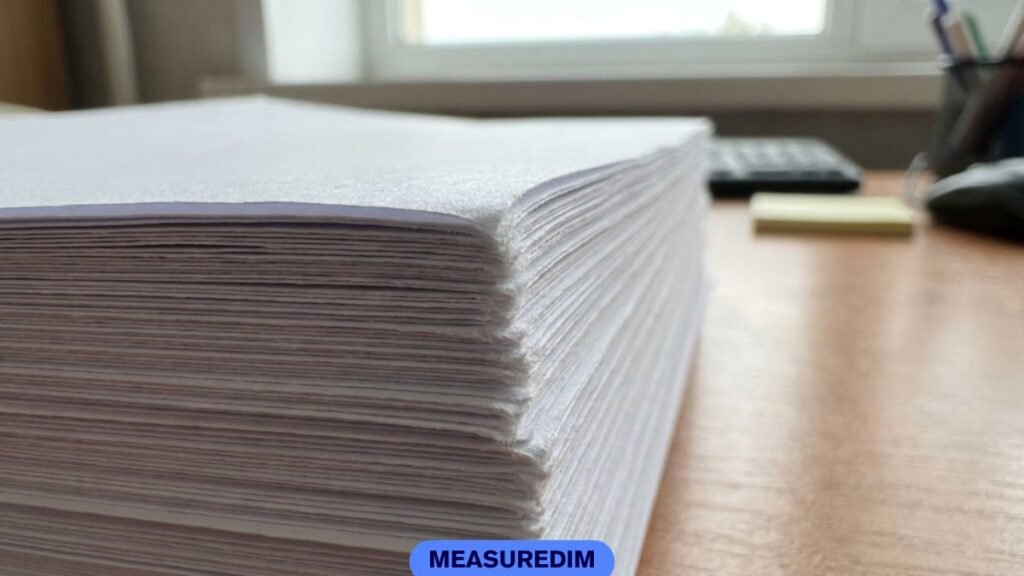
A single sheet of standard 20 lb (75 gsm) printer paper is about 0.1 mm thick, so a stack of around 20 sheets comes out near 2 mm. Fan out a small pile and press it flat to see the edge.
This one shines when you need to feel thickness rather than diameter. Two millimeters of paper is a slim, flexible wad — enough to notice, not enough to call a “stack.” It reframes 2 mm as a modest thickness rather than a razor edge.
A 2.0mm Knitting Needle
Metric knitting needles are sold by their exact diameter, and a 2.0 mm needle (US size 0, UK size 14) is precisely 2 mm through the shaft — another exact reference. Crocheters have the equivalent in a 2.0 mm hook.
If you knit, you own a calibrated 2 mm cylinder without realizing it. Roll the needle against whatever you’re sizing up. Because the diameter is stamped and standardized, there’s no guesswork about whether your “ruler” has drifted.
A Heavy “2.0” Guitar Pick
Guitar picks are graded by thickness, and a 2.0 mm pick — the chunky “extra heavy” or jazz style — is exactly 2 mm from face to face. Thin strumming picks are down around 0.5 mm, so make sure you’re comparing a genuinely heavy one.
For a musician, this is the easiest 2 mm object to grab off a desk. Pinch it edge-on and you’re feeling a certified 2 mm slab. It doubles nicely for gauging small material thicknesses in a pinch.
The 2mm Line-Up, Side by Side
Here’s the whole cast at a glance, with true measurements and whether each is spot-on or just close.
| Object | Real size | Match to 2mm |
| US nickel (thickness) | 1.95 mm | Almost exact |
| Clutch/leadholder pencil lead | 2.0 mm | Exact |
| Wooden pencil graphite core | ~2 mm | Close |
| Dry spaghetti (diameter) | 1.8–2 mm | Close |
| Long-grain rice (width) | ~2 mm | Close |
| Dressmaker’s pin head | ~2 mm | Close |
| Wooden matchstick (cross-section) | ~2 mm | Close |
| ~20 sheets of printer paper | ~2 mm | Close |
| 2.0 mm knitting needle (US 0) | 2.0 mm | Exact |
| 2.0 mm guitar pick | 2.0 mm | Exact |
[IMAGE: overhead flat-lay of a nickel, pencil, spaghetti strand, rice grain, and pin arranged with 2mm labels]
Guessing 2mm Without Reaching for a Ruler
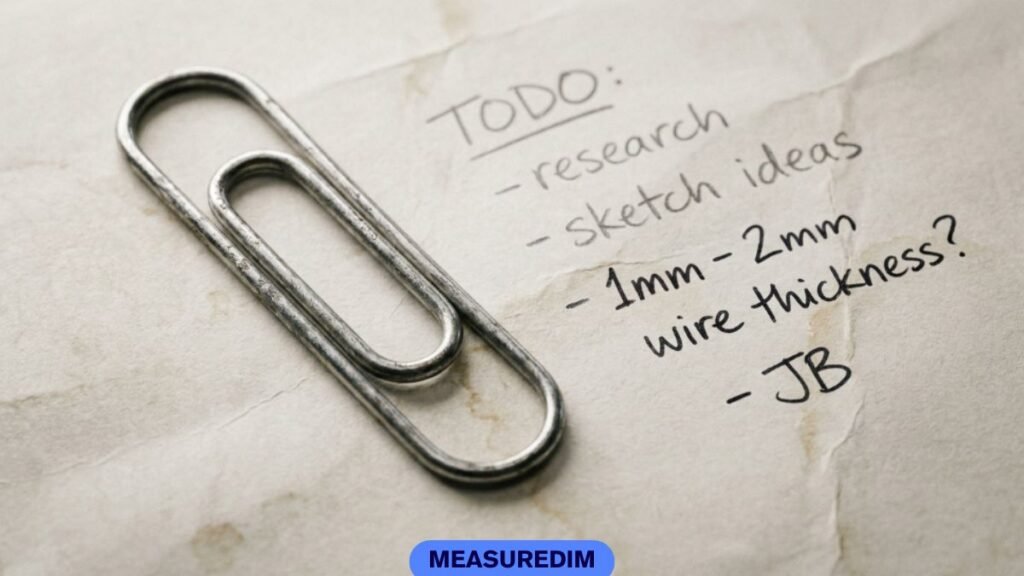
At this scale, small objects beat body parts — your fingertip is a lousy 2 mm gauge, but a coin isn’t. So the honest advice is to carry a reference rather than trust your hands.
- Best pocket trick: a nickel’s edge is ~2 mm. If you’ve got change, you’ve got a ruler.
- Best desk trick: the graphite tip of a sharpened pencil is ~2 mm across.
- Best kitchen trick: one strand of dry spaghetti, or the width of a rice grain.
- Stack-and-count: since printer paper is ~0.1 mm per sheet, roughly 20 sheets equals 2 mm.
- Coin math: a US penny is 1.52 mm and a nickel is 1.95 mm — so one nickel ≈ 2 mm, while two pennies stacked overshoot to about 3 mm.
The takeaway: don’t estimate 2 mm off your skin. Estimate it off something manufactured to a known size.
Read Also: How Big Is an Inch? A Length You Can Picture Without a Ruler
The Sizes Sitting Just Below and Just Above
Context makes 2 mm click, so here’s the neighborhood.
Just under — 1.5 mm. A US penny is 1.52 mm thick, and two credit cards stacked come to about 1.52 mm as well (a single card is only 0.76 mm). That half-millimeter down from 2 mm is subtle but real — you can feel it when you compare a penny’s edge to a nickel’s.
Just over — 2.5 mm. The sub-mini audio connector is literally a 2.5 mm jack, so if you’ve handled old headsets you know that width. Step up once more to 3 mm and you’re at the thickness of a stack of two nickels or a typical USB cable — noticeably chunkier than our target.
Seeing 1.5 mm, 2 mm, and 2.5 mm in a row is the fastest cure for the classic mistake of picturing 2 mm as far bigger than it is.
Where Two Millimeters Actually Earns Its Keep
This isn’t a trivia number — 2 mm is a working dimension in a lot of fields.
Jewelry and beading. A 2 mm round diamond weighs about 0.03 carat — a tiny accent stone, not a headline gem, which surprises a lot of first-time buyers. Two-millimeter seed beads and 2 mm ring-band widths are common, so the difference between 2 mm and 3 mm is a real design decision.
DIY and hardware. Think 2 mm drill bits, 2 mm hex keys, 2 mm acrylic or plywood sheet, and the clearance gaps you leave around a panel. A 2 mm gap in a door seal is enough to let a draft through — small, but not negligible.
Electronics. Some connectors use a 2.0 mm pin pitch (distinct from the more common 2.54 mm), and 3D-printer layer heights of 0.2 mm mean a 2 mm wall is roughly ten printed layers tall.
Weather and cooking. A 2 mm rainfall reading is a light shower; a 2 mm mandoline setting gives you thin, even slices. Different worlds, same tidy little unit.
If you ran across 2 mm on a medical scan or report, that’s genuinely small — but sizes there carry meaning your doctor is best placed to explain, so treat this page as help picturing the number, not interpreting it.
Slip-Ups People Make With This Measurement
A few errors come up again and again — dodge these and you’re ahead of most.
- Mixing up 2 mm and 2 cm. They’re a factor of ten apart. Two centimeters is nearly an inch; 2 mm is a coin’s edge. This is the single most common blunder.
- Calling 2 mm “an eighth of an inch.” It isn’t — 1/8″ is 3.175 mm. Two millimeters is closer to 5/64″, sitting between 1/16″ (1.59 mm) and 3/32″ (2.38 mm).
- Assuming it’s invisible. A 2 mm dot, gap, or bead is easy to see and often easy to feel. Small doesn’t mean imperceptible.
- Over-trusting your fingertip. Skin compresses and fingers vary; use a nickel or a pencil core instead.
Myth vs. Fact, Cleared Up
| People say… | The reality |
| “2 mm is basically nothing.” | It’s clearly visible and often meaningful — a 2 mm seal gap leaks air. |
| “2 mm ≈ 1/8 inch.” | 1/8″ is 3.18 mm; 2 mm is about 5/64″, noticeably smaller. |
| “A 2 mm diamond is a decent size.” | It’s a ~0.03-carat accent stone — quite small. |
| “You need calipers to check 2 mm.” | A nickel’s edge or a spaghetti strand gets you there. |
Questions People Actually Type In
How big is 2mm visually?
It looks like the thin edge of a US nickel. On paper, it is a small dot, not a hairline.
What is 2mm comparable to?
It matches a pencil lead, a strand of dry spaghetti, or the width of a rice grain.
How does 2mm look?
It is a tiny but clear length. You can see it and feel it, so it never looks invisible.
What does 2mm look like on a ruler?
It is two small lines past the zero mark, since each little line equals 1mm.
How can I measure 2mm?
Use the millimeter side of a ruler and count two small marks. A nickel’s edge also works as a guide.
Two Millimeters, Now Locked In
So now you know how big is 2mm. It is a very small size. It is about as thick as a US nickel. It also matches a pencil lead and one strand of dry spaghetti. You can picture it with everyday things. You do not need a ruler every time. A coin edge or a rice grain gives you a quick guide.
Keep these simple examples in your mind. They help you judge small sizes with ease. Two millimeters equals 0.2 centimeters. It also equals about 0.08 of an inch. That is just over one-sixteenth of an inch. This size matters in beads, drill bits, and craft work. Now you can spot 2mm fast and feel sure about it every single time.
Written by a measurement-and-dimensions writer who checks every figure against real-world specs before it goes on the page.
Related Guides:
1: How Much Is 10 Inches? A Real-World Size Guide
2: How Big Is 5 Inches? 9 Everyday Objects to Picture It
3: How Long Is 2 Inches? Real Objects That Show You Exactly
4: How Long Is 6 Inches? Real Objects to Picture It Fast
5: How Big Is 4 Inches? A Complete Size Guide With Real Objects